
Platychora
Platychora
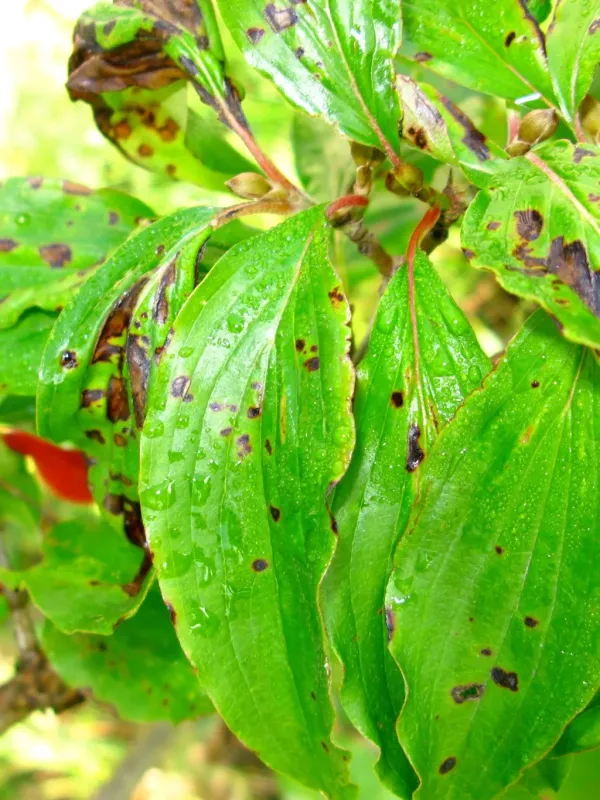
Description
Symptoms
The initial appearance of the disease is marked by necrotic spots on the leaves, which expand and darken as the infection deepens.
Small, dark, pimple-like structures, which are the fungal fruiting bodies, become visible on the upper or lower leaf surfaces.
Severely infected leaves show significant chlorosis, curling, and early desiccation, often leading to premature abscission.
The disease may impact the petioles, causing wilting and weakening the structural integrity of the leaf attachment.
- Dark necrotic leaf spots
- Visible fungal fruiting bodies (ascomata)
- Premature leaf drop
- Leaf distortion and curling
- Overall loss of photosynthetic efficiency
Pathogen
The disease is caused by fungi of the genus Platychora, which are members of the Ascomycota phylum and act as specialized plant pathogens.
The fungus develops its mycelium within the leaf tissues, systematically invading intercellular spaces and consuming the plant's nutrients.
As part of its lifecycle, the pathogen produces fruiting bodies that emerge through the plant epidermis, facilitating the release of spores.
The fungus is adapted to overwinter on fallen plant debris, remaining dormant until environmental conditions become favorable for germination.
Dissemination usually occurs through wind-borne spores or rain splash, allowing the infection to jump between neighboring hosts.
Conditions for development
High humidity and moisture are the primary drivers of Platychora development, as the spores require water to germinate effectively.
Optimal growth occurs during warm, wet spring and early summer periods when temperatures are consistently within the fungus's active range.
Poor aeration in dense plantings creates a stagnant microclimate that traps moisture on the leaf surfaces, promoting fungal proliferation.
The presence of old leaf litter from previous seasons serves as a primary reservoir for the pathogen's overwintering stage.
Plants suffering from environmental stress or nutritional deficiencies are significantly more susceptible to the disease.
Why it matters
The primary damage is caused by the substantial reduction in leaf surface area, which cripples the plant's ability to photosynthesize.
Premature leaf drop forces the plant to deplete its internal energy reserves, weakening its ability to survive winter dormancy.
In nursery settings, the infection causes significant economic losses by ruining the aesthetic appeal and vitality of young stock.
Repeated annual infection can lead to branch dieback, stunted growth, and a permanent reduction in the plant's lifespan.
Large-scale outbreaks can overwhelm healthy stands, leading to significant ecological or agricultural productivity losses.
Protection
The most effective management practice is strict sanitation, including the removal and destruction of all infected plant materials after leaf fall.
Applying protective fungicides during early leaf expansion can prevent the initial infection from becoming established in the canopy.
Pruning and thinning the canopy increases light penetration and air movement, which keeps leaves dry and inhibits fungal growth.
Choosing resistant varieties or species during the planting phase is the best long-term strategy for minimizing disease impact.
Maintaining high plant health through proper fertilization and irrigation helps plants build natural defenses against fungal invasion.
Discussion
No discussions yet — be the first.