
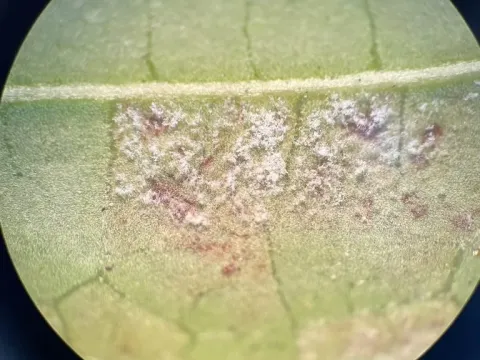
Viburnum downy mildew
Plasmopara viburni
The causative agent is Plasmopara viburni, an obligate oomycete pathogen specifically adapted to infecting various species within the Viburnum genus.
What the section contains
Viburnum downy mildew
Unlike true powdery mildew, this organism belongs to the water mold group, which relies heavily on moisture for its reproduction and life cycle.
The pathogen colonizes the intercellular spaces of leaves, utilizing specialized structures called haustoria to extract nutrients from host cells.
Under favorable conditions, it produces sporangiophores that emerge through the stomata, releasing zoospores into the environment.
Overwintering occurs primarily through oospores embedded in fallen leaf debris, allowing the pathogen to persist in the soil for extended periods.
Initial symptoms include chlorotic, angular spots on the upper leaf surface, which eventually progress to necrotic, brownish patches.
A fine, white to grayish downy growth becomes visible on the underside of the leaves, corresponding to the areas of chlorosis.
As the disease advances, affected leaves become withered, brittle, and eventually drop prematurely from the branches.
In severe cases, the tips of young shoots may show signs of infection, potentially leading to stunting or distortion of new growth.
The pattern of infection often spreads upward from the base of the plant, especially in high-density or low-airflow planting sites.
High relative humidity, typically exceeding 85 percent, is the most critical environmental trigger for the development of Plasmopara viburni.
Prolonged leaf wetness resulting from heavy rainfall, overhead irrigation, or dense morning fog facilitates the germination of sporangia.
Temperatures ranging from 15 to 22 degrees Celsius are optimal for the rapid spread and secondary infection cycles of the downy mildew fungus.
Poor aeration within the shrub canopy creates a microclimate that prevents leaves from drying out quickly, significantly increasing infection risk.
Excessive nitrogen fertilizer applications can promote succulent growth, which is often more susceptible to penetration by fungal hyphae.
The disease significantly reduces the leaf surface area available for photosynthesis, leading to stunted overall shrub vigor and health.
Premature leaf drop compromises the plant's ability to store energy for the winter, rendering it more prone to frost injury and winter dieback.
The aesthetic value of Viburnum is severely damaged, making infected plants unsuitable for high-quality landscaping and ornamental use.
Repeated yearly infections can lead to the slow decline and eventual death of the entire bush if effective management is not implemented.
Infected shrubs become stressed, making them increasingly susceptible to secondary infestations by opportunistic pests and other plant diseases.
Sanitation is paramount; all fallen leaves and infected plant material should be removed and destroyed to reduce the primary inoculum load.
Improve air circulation around and within the shrubs by implementing proper pruning techniques and maintaining adequate spacing during planting.
Avoid using overhead sprinklers that wet the foliage; opt for drip irrigation or soil-level watering to keep the leaves dry.
Apply preventive fungicide sprays, such as copper-based compounds or specialized systemic oomycete-targeting products, during wet weather conditions.
- Regular monitoring of foliage.
- Prompt removal of diseased tissues.
- Use of resistant varieties where available.