
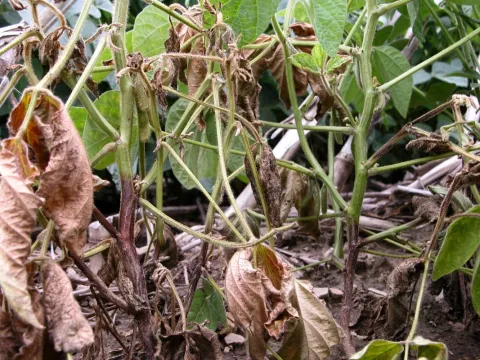
Phytophthora rot of soybean
Phytophthora sojae
The pathogen responsible for this disease is the oomycete Phytophthora sojae. It is a soil-borne pathogen capable of surviving in the soil for several years through the production of thick-walled oospores.
What the section contains
Phytophthora rot of soybean
Under moist conditions, these oospores germinate and produce sporangia, which release motile zoospores. These zoospores use flagella to swim through the soil water film towards the soybean roots.
Phytophthora sojae exhibits significant race diversity. This genetic variability complicates disease management, as resistance genes in soybean varieties may be overcome by new physiological races of the pathogen.
The infection begins when zoospores are attracted to chemical signals released by soybean roots. Once in contact, they penetrate the root tissues, causing rapid cell wall degradation and vascular tissue damage.
As a highly specialized pathogen, it focuses exclusively on soybeans, meaning the population density in the soil is directly proportional to the frequency of soybean cultivation in the rotation.
The most recognizable sign of the disease at the seedling stage is "damping-off." Seedlings become chlorotic, wither, and collapse, often leaving noticeable gaps in the crop stands.
On older plants, symptoms include stunted growth, yellowing of the lower leaves, and wilting during the heat of the day. Leaves may eventually turn brown and remain attached to the stem.
A key diagnostic feature is the presence of brown, necrotic lesions on the stem that extend upward from the soil line. These lesions can eventually girdle the stem, leading to the plant's death.
When inspecting the roots, they appear rotted and discolored. The lateral roots are often completely destroyed, and the primary root becomes brittle, making it easy to pull the plant from the soil.
In mature plants, the disease symptoms can be more localized, often appearing in patches where soil moisture has been persistent due to drainage issues or landscape topography.
The development of Phytophthora sojae is heavily dependent on soil moisture. Poorly drained, heavy clay soils that hold water are the primary hotspots for disease outbreaks.
Soil temperatures between 15°C and 25°C are ideal for the germination of zoospores. Frequent rainfall during the early part of the growing season greatly increases the risk of infection.
Soil compaction serves as an aggravating factor. Compacted zones restrict root development and create anaerobic conditions that weaken the plant's natural defenses against the pathogen.
Excessive irrigation practices in dry years can inadvertently create favorable conditions for the disease, especially if the water remains pooled in the field for several hours.
Historical presence of the pathogen in a field significantly increases the risk for subsequent soybean crops, as the pool of dormant oospores is easily reactivated when favorable environmental triggers occur.
Phytophthora rot is considered one of the most destructive soil-borne diseases of soybeans worldwide. Severe infections can lead to near-total crop loss in the affected areas.
Early-season outbreaks frequently result in poor stands, necessitating costly replanting efforts that disrupt the farm's operational schedule and increase overall production expenses.
Plants that survive an early infection typically show reduced vigor and limited root systems. This makes them highly susceptible to secondary stresses like mid-season drought, leading to drastically reduced yields.
In addition to yield loss, the quality of harvested grain may suffer. Seeds from diseased plants are often smaller, lighter, and may have lower oil and protein content, reducing their market value.
The persistent nature of the pathogen in the soil creates long-term management challenges, forcing producers to rethink their crop rotation and tillage practices to mitigate future risks.
The primary control measure is the use of resistant soybean varieties. It is crucial to select varieties that carry resistance genes effective against the prevalent Phytophthora races in the specific region.
Improving field drainage is vital for long-term management. Tiling or land leveling to prevent water ponding can significantly reduce the potential for zoospore movement.
Seed treatment with fungicides effective against oomycetes provides essential protection during the vulnerable germination phase, helping seedlings establish a healthy root system.
- Implementing long crop rotations (at least 3 years) to reduce soil pathogen load.
- Cleaning agricultural equipment to avoid spreading infested soil to new fields.
- Choosing high-quality, certified seeds with known resistance traits.
- Reducing tillage frequency to maintain soil structure and minimize compaction.
Monitoring fields after heavy rain events allows for the early detection of disease outbreaks, enabling farmers to make informed decisions for future management and variety selection.