
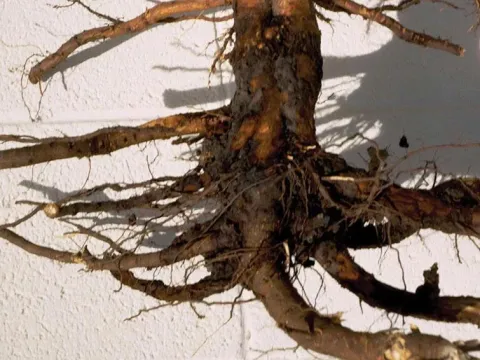
Phytophthora root rot
Phytophthora gregata
Phytophthora gregata is a specialized oomycete pathogen belonging to the genus Phytophthora, known for its significant impact on the root systems of various plant species. As a soil-borne organism, it excels in surviving adverse conditions through the production of long-lived oospores, which can remain dormant in the soil for several years.
What the section contains
Phytophthora root rot
The pathogen utilizes complex chemotactic mechanisms, responding to root exudates to locate host roots. Once contact is established, it produces zoosporangia that release motile zoospores, which travel through soil water films to infect new tissues. This invasion leads to rapid decay of the host's vascular system.
Unlike airborne fungal diseases, this pathogen is strictly tied to the soil and water environment. Its biological profile is characterized by high adaptability to moisture fluctuations, making it a persistent threat in both nurseries and open field plantations where soil drainage might be suboptimal.
Research into the genetic diversity of Phytophthora gregata reveals that its various strains pose different levels of risk, complicating the development of resistant crop cultivars. Effective management requires constant vigilance, as the pathogen is frequently introduced to new sites via contaminated soil particles, tools, or run-off water.
Understanding the life cycle of this oomycete is essential for agronomists, as it differs fundamentally from true fungi. Standard fungicide programs targeted at higher fungi are often ineffective against Phytophthora species, necessitating the use of specialized oomycide chemistry.
The symptoms caused by Phytophthora gregata are frequently misleading, as they often manifest initially as general malaise in the plant canopy. By the time crown symptoms appear, the root system is typically already extensively compromised, making early diagnosis challenging.
Visible signs include chlorosis (yellowing) of the leaves, followed by progressive wilting that does not respond to irrigation. Because the water-absorbing capacity of the roots is destroyed, the plant essentially suffers from internal physiological drought despite sufficient soil moisture.
Root system inspection is the definitive way to identify the disease. Infected roots lose their firm, light-colored appearance and turn dark brown or black. The cortex may slough off easily, exposing the central stele, which is a hallmark of oomycete root decay.
In woody species, the infection can progress to the root collar. The bark at the base of the plant may develop weeping, sunken lesions. If these lesions coalesce to girdle the stem, the plant will succumb quickly, often showing rapid death within a single growing season.
Diagnostic checklist for field scouts:
- Gradual loss of vigor and stunted plant growth.
- Uniform yellowing or browning of foliage.
- Decayed, necrotic secondary rootlets.
- Distinctive foul or rotten odor emanating from affected root tissue.
- Canopy dieback appearing during peak heat or water stress.
The proliferation of Phytophthora gregata is heavily dependent on soil moisture levels. The pathogen thrives in saturated, poorly drained soils where stagnant water provides the necessary medium for the movement of zoospores from the point of origin to healthy root systems.
Temperature plays a crucial role in disease development, with the pathogen being most active under moderate conditions, typically between 15°C and 22°C. These temperatures coincide with the peak growing season, putting young or developing plants at the highest risk of infection.
Poor soil structure, such as heavy clay soils that impede drainage, serves as a primary environmental factor facilitating outbreaks. Any management practice that reduces soil oxygen or increases water retention creates a favorable microclimate for the pathogen's life cycle.
Plants under physiological stress, whether from drought, nutrient imbalance, or physical root injury, are significantly more susceptible to infection. The integrity of the root system acts as the first line of defense, and any breach increases the likelihood of a successful pathogen attack.
Inadequate sanitation in nurseries or agricultural plots leads to the rapid buildup of the pathogen inoculum. Once established in the soil, the presence of susceptible hosts in a tight rotation pattern ensures the continuation of the disease cycle over multiple seasons.
The economic impact of Phytophthora gregata is severe, primarily because it affects the roots, leaving few options for recovery. Once symptoms are visible, the plant is usually beyond rescue, necessitating total removal and disposal to prevent the spread of inoculum.
In nurseries, the presence of this pathogen can lead to the quarantine of entire production batches, causing substantial financial loss and potential loss of market access. The cost of replacing dead plants and rehabilitating the soil is significant for long-term agricultural operations.
Moreover, the persistence of the pathogen in the soil restricts land use, forcing farmers to either avoid certain high-value crops for years or invest in expensive soil sterilization techniques, which adversely affects the overall profitability of the enterprise.
Due to the cryptic nature of root rot, outbreaks are often discovered too late, leading to large patches of dead plants in orchards or fields. This unpredictability complicates long-term financial planning and crop management for commercial producers.
Finally, the pathogen imposes an ongoing operational burden, requiring regular investment in specialized chemicals and rigorous sanitation protocols. Without these efforts, the risk of total crop failure remains a constant threat to sustainable production.
Effective management begins with preventative biosecurity measures. Sourcing disease-free planting stock is the most important step. Implementing strict sanitation practices for equipment and restricting movement from infested areas to clean fields significantly lowers the risk of introduction.
Agronomic modifications to the site are essential. This includes installing sub-surface drainage to eliminate standing water, modifying soil composition with organic matter to improve aeration, and practicing precision irrigation to prevent soil waterlogging.
In the event of an outbreak, affected plants must be culled along with the surrounding root zone soil and destroyed, preferably by burning or deep burial away from the field. Thoroughly sanitizing all tools used during the removal process is mandatory to prevent cross-contamination.
Chemical control focuses on the use of systemic fungicides specifically formulated for oomycetes, such as metalaxyl, fosetyl-aluminum, or cyazofamid. These are best used as a preventative or early-intervention strategy rather than a curative treatment for heavily symptomatic plants.
Biological control alternatives, including the use of Trichoderma species and specific strains of Bacillus subtilis, are increasingly popular. These beneficial organisms help colonize the rhizosphere and outcompete the pathogen for resources, providing a sustainable layer of protection.