
Phytophthora root rot of alder
Phytophthora alni
The primary external symptom of alder Phytophthora is the premature yellowing and reduction in size of leaves in the tree canopy. Leaves often appear significantly smaller than normal, and the tree may look sparse or stressed by late summer.
What the section contains
Phytophthora root rot of alder
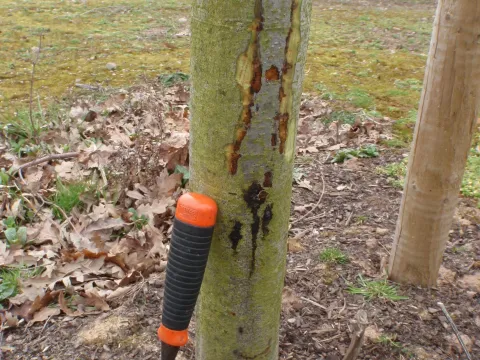
A diagnostic sign is the formation of necrotic lesions on the root collar and the lower part of the trunk. Beneath the bark, the wood shows a characteristic brown or reddish-brown discoloration that can extend upwards.
In areas affected by necrosis, there is often heavy bleeding or tarry spots, which indicates severe disruption of the tree's vascular conduction system.
The damaged root system loses its ability to absorb water and nutrients, eventually leading to the dieback of individual branches or the entire tree crown.
When the bark is removed at the interface of healthy and dead tissue, a distinct dark line is often visible, which is characteristic of infections caused by oomycetes of the Phytophthora genus.
The causative agent is the aggressive microorganism Phytophthora alni, which is a complex hybrid species of oomycetes.
This pathogen specializes in attacking various alder species, most notably occurring on black alder (Alnus glutinosa) in riparian zones.
The organism produces mobile zoospores that swim actively in aquatic environments, facilitating the rapid spread of the infection through water bodies and moist soils.
The biology of the pathogen allows it to survive in the soil for long periods in the form of resting spores that are resistant to unfavorable external conditions.
During infection, the pathogen penetrates via small roots and then gradually colonizes the root collar, blocking the transport of water and nutrients within the plant.
The most favorable conditions for the development of alder Phytophthora are waterlogged soils, particularly in river and stream floodplains.
High levels of humidity and soil moisture during the summer months trigger the mass release of zoospores and their active movement toward healthy trees.
Slow water circulation in stagnant bodies of water promotes the disease by allowing the concentration of infectious propagules to reach critical levels.
A water and soil temperature range between 15 and 25 degrees Celsius is optimal for the pathogen's metabolism and aggressiveness.
Root damage caused by flooding, mechanical impacts, or burrowing animals creates direct entry points for the infection to take hold.
Alder Phytophthora poses a significant ecological threat, leading to the widespread dieback of alder forests across Europe.
The disease causes not only a loss of aesthetic and biological productivity but also the complete mortality of trees within a few growing seasons.
This pathogen disrupts the natural structure of riparian ecosystems, contributing to riverbank erosion and changes in the hydrological regime of forest areas.
Economic damage includes the loss of valuable timber and the high costs associated with sanitary thinning and the removal of deadwood.
The lack of effective curative treatments for mature trees makes this disease exceptionally difficult to manage in forest settings.
The primary prevention method is the use of high-quality, disease-free nursery stock that has undergone strict phytosanitary inspection.
It is essential to restrict the movement of infested soil and water between river basins to prevent the further spread of the pathogen's spores.
In parklands, regular monitoring of tree health is recommended, and suspect trees should be removed immediately to reduce the overall inoculum load.
When working in infested areas, it is vital to disinfect tools and footwear to prevent the mechanical transfer of the pathogen to healthy zones.
- Avoiding alder planting in areas prone to water stagnation.
- Improving site drainage prior to planting.
- Using alder clones or varieties that exhibit increased resistance to Phytophthora infection.