
Sudden oak death
Phytophthora ramorum
The causative agent of the disease is Phytophthora ramorum, an oomycete known for its ability to infect a wide range of woody plants and shrubs worldwide.
What the section contains
Sudden oak death
This pathogen belongs to the class Oomycetes and is notoriously difficult to eradicate once it has established itself in an ecosystem due to its high adaptability.
The organism thrives by producing motile zoospores that can navigate through films of water, allowing it to move rapidly across leaves and tree bark.
It also forms chlamydospores, which are survival structures capable of remaining viable in the soil for extended periods, even when a host plant is absent.
Its biological versatility allows it to cause both localized foliar infections and lethal systemic bark cankers on susceptible host species.
A primary symptom of the disease in oaks is the development of large bleeding cankers on the main trunk, which exude a dark, viscous sap.
The canopy of an infected tree undergoes a color change, turning from green to yellow and finally to brown, often referred to as "foliar flagging."
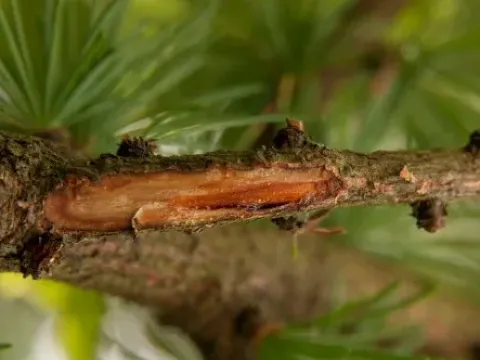
Internal examination of the bark reveals significant tissue discoloration, where the necrotic zone is often clearly demarcated from the healthy tissue.
Leaves of other host plants may exhibit dark, irregular spots or lesions, often accompanied by chlorosis or necrotic tissue spreading from the leaf edges.
As the disease progresses, the weakened tree often becomes a target for secondary attackers like bark beetles, leading to rapid tree death.
The development of Phytophthora ramorum is heavily reliant on environmental conditions, specifically high humidity and moderate temperatures.
Cool, wet springs are the most favorable times for infection, as the moisture provides the necessary environment for zoospores to germinate and spread.
The dispersal of the pathogen is facilitated by wind-blown rain, which carries infectious spores from the upper canopy to the lower trunk and surrounding vegetation.
Human activities, such as the transport of infested firewood, gardening soil, or nursery stock, are the primary vectors for long-distance dissemination.
Dense forest stands with significant understory growth tend to maintain a microclimate that supports the survival and transmission of the pathogen.
The disease causes significant mortality in oak populations, leading to altered forest composition and the loss of critical habitat for wildlife.
Economically, the impact is severe, resulting in timber losses, high management costs for sanitation programs, and reduced property values in forested areas.
Ecological damage extends to the disruption of food webs, as acorn production is severely impacted in infected oak stands.
Nurseries face strict regulatory scrutiny, and trade bans on plants have been implemented in many regions to prevent further spread of the pathogen.
The loss of mature canopy trees increases light penetration to the forest floor, which can lead to the proliferation of invasive, non-native plant species.
Management strategies focus on early detection through surveillance and the implementation of strict quarantine zones to prevent pathogen spread.
Sanitation practices, such as removing and destroying infected plant material, are essential to reduce the local spore load in infested areas.
Decontamination of tools, footwear, and vehicles when leaving an infected site is a critical prevention measure recommended for forest workers.
Research into breeding and selecting resistant tree varieties offers a long-term solution for restoring forest resilience.
- Monitoring and sampling using rapid molecular tests.
- Restricting the movement of forest products out of quarantined areas.
- Applying prophylactic fungicide treatments in controlled nursery environments.
- Managing stand density to improve airflow and reduce humidity.