
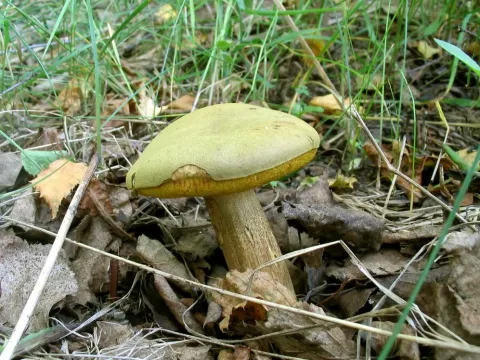
Suede bolete
Xerocomus subtomentosus
The Suede bolete (Xerocomus subtomentosus) is a species of fungus in the family Boletaceae. It is essential to clarify that this fungus is not a plant disease but a beneficial organism that forms symbiotic mycorrhizal relationships with various tree species.
What the section contains
Suede bolete
In forest management, the presence of these fungi indicates a healthy soil microflora, as they assist trees in nutrient uptake rather than acting as a parasitic agent that causes plant decay.
The fruit body features a distinctive velvety cap and a porous hymenophore. The common misconception of it being a plant pathogen stems from its appearance in gardens adjacent to wooded areas, though it does not harm the health of nearby crops or trees.
Biological research focuses on its role in organic matter decomposition, where the mycelium helps break down cellulose and lignin, contributing to forest floor enrichment.
There are no agricultural measures required to treat or prevent this fungus, as it is a natural component of temperate forest ecosystems worldwide.
The species thrives in environments with high moisture levels and rich, humus-containing soils, often found near moss-covered ground beneath both coniferous and deciduous trees.
Optimal development typically occurs during the late summer and autumn months, requiring consistent rainfall and mild temperatures to stimulate the emergence of fruit bodies.
It prefers shaded areas where the soil remains cool and moist, as extreme heat and direct sunlight can be detrimental to the delicate mycelial network beneath the surface.
Dissemination occurs via spores, which are carried by air currents to new locations where the specific tree symbionts are present to support the growth of new colonies.
Because the fungus relies on established tree roots, it is most frequently observed in mature forest stands rather than in cultivated fields with intensive soil tillage.