
Suede Bolete
Xerocomus bubalinus
Description
Symptoms
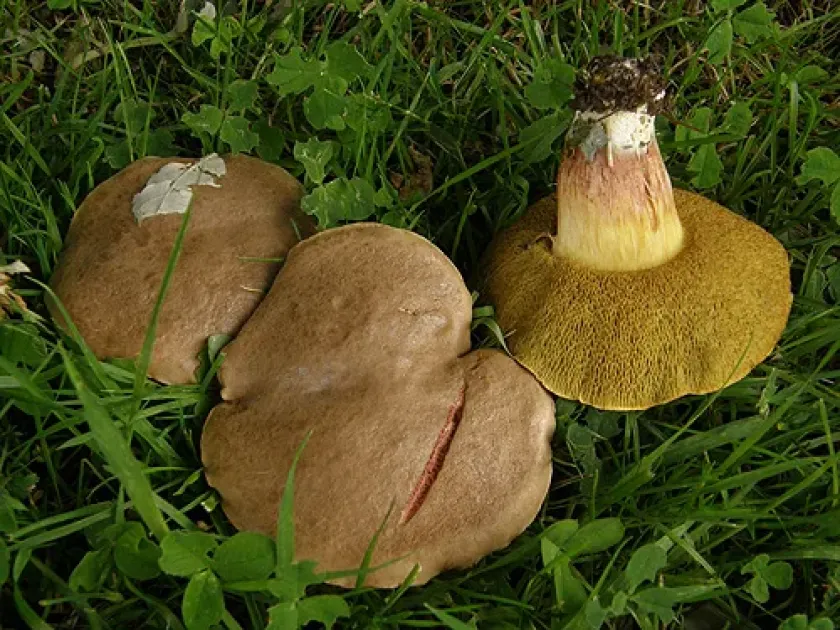
The Xerocomus bubalinus is identifiable by its cap, which usually ranges in color from pale buff to brownish tones, reminiscent of the color of leather. The texture of the cap is often felt-like or velvety, especially when young.
The underside of the cap is covered in a pore surface that is typically bright yellow. When pressed or bruised, these pores may exhibit a slight color change to olive or blue, which is a characteristic feature of many bolete-related fungi.
The stem is generally slender, firm, and colored similarly to the cap, though sometimes it shows subtle reddish hues at the base. It lacks a ring or veil, distinguishing it from many other agaric mushroom species.
The flesh is relatively soft and does not have a pungent smell. It is composed of a dense arrangement of hyphae that provide structural support to the fruiting body during its short lifespan in the wild.
In mature stages, the mushroom cap may show small cracks, revealing the flesh underneath. This phenomenon is often influenced by environmental dryness and is a natural part of the aging process of the fruiting body.
Pathogen
The Suede Bolete, scientifically known as Xerocomus bubalinus, is a basidiomycete fungus belonging to the Boletaceae family. It is vital to clarify that this organism is not a plant disease, but a beneficial forest fungus that forms ectomycorrhizal associations with tree roots.
The fungal mycelium creates an extensive network in the soil that links with the root systems of various tree species. Through this symbiotic relationship, the tree provides the fungus with sugars, while the fungus assists the tree in absorbing water and essential nutrients.
This species is found exclusively in natural forest ecosystems, particularly in association with deciduous trees. Its presence is an indicator of a healthy forest soil structure rather than a sign of agricultural crop infestation.
Xerocomus bubalinus does not produce phytotoxins and does not cause decay, wilting, or lesions on plants. Therefore, it holds no status as a plant pathogen and requires no protective measures or chemical treatment in agricultural or forestry settings.
The biological significance of this mushroom lies in its role as a decomposer and a symbiont, contributing to the overall nutrient cycling within the forest floor without threatening any plant health.
Conditions for development
The growth of Xerocomus bubalinus is highly sensitive to soil moisture and atmospheric temperature. It thrives best in moderate temperatures, typically between 15°C and 20°C, and requires high humidity to emerge from the soil.
Frequent rainfall is essential for the activation of the mycelium. During long dry spells, the underground fungal network remains dormant, waiting for the return of favorable moisture levels in the forest litter.
Soil composition plays a significant role; the fungus prefers humus-rich, well-draining forest soils. It is rarely found in areas with heavy, compacted soil or where intensive agricultural chemicals are used.
The spread of the species is facilitated by wind-borne spores released from the pores on the underside of the cap. These spores settle on suitable soil patches to begin the cycle of colonization again.
Fruiting bodies appear primarily during late summer and autumn. These mushrooms are ephemeral, serving as a seasonal part of the forest cycle by producing spores and eventually breaking down to enrich the soil ecosystem.
Discussion
No discussions yet — be the first.