
Phytophthora root rot of oak
Phytophthora quercetorum
The disease is caused by the microscopic soil-borne oomycete Phytophthora quercetorum. This pathogen specifically targets the root systems of various tree species, invading tissues through the fine feeder roots.
What the section contains
Phytophthora root rot of oak
The life cycle of the pathogen is closely tied to soil moisture, which facilitates the production of motile zoospores that swim toward the host roots. The oomycete can persist in the soil for extended periods as resistant structures called oospores.
Unlike many other Phytophthora species, this pathogen shows a high affinity for species within the Quercus genus. Infection is frequently introduced via infected nursery stock, spreading rapidly once transplanted into forest settings or landscapes.
The pathogen becomes more active when host trees are stressed by adverse environmental factors such as drought or waterlogged soil conditions. The genetic diversity of the fungus allows it to adapt successfully to various climatic conditions.
Dispersal occurs not only through contaminated soil but also through the movement of infected plant material. Forestry tools, machinery, and equipment can also act as vectors, transporting the pathogen from infested to clean areas.
The primary symptom of oak Phytophthora root rot is foliage chlorosis, where the crown loses its natural deep green color, turning yellow or pale green. Leaves may become smaller over time, and premature leaf drop typically starts from the outer edges of the canopy.
A characteristic sign is the gradual dieback of terminal branches and twigs, known as "crown dieback." This indicates that the compromised root system can no longer supply sufficient water and nutrients to the upper parts of the tree.
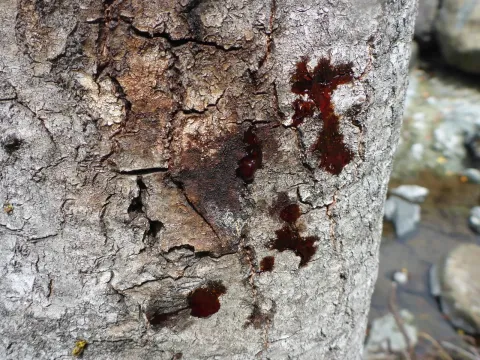
Examination of the root collar often reveals necrotic, discolored bark patches that, when exposed, display a reddish-brown hue. In some cases, active lesions may bleed or ooze sap, providing a clear diagnostic marker of the disease.
The root system itself undergoes severe deterioration: fine feeder roots blacken and decay, losing their ability to absorb moisture. In advanced stages, necrosis spreads to large skeletal roots, significantly weakening the tree's structural integrity.
Affected oaks often exhibit a sparse, thinning canopy that contrasts sharply with healthy neighboring trees. Eventually, the tree reaches a point where photosynthesis cannot sustain life, leading to the total decline and death of the specimen.
Phytophthora quercetorum thrives in environments with high soil moisture, particularly during periods of prolonged rainfall. The pathogen is most prolific in heavy, compacted, or poorly drained soils where water stagnation occurs.
Temperature plays a critical role in spore germination, with the pathogen remaining active across a moderate range of temperatures throughout the growing season. It remains a persistent threat even when environmental conditions are not ideal.
Outbreaks are often triggered by host stress caused by human activities, such as soil compaction from heavy machinery or changes in local groundwater tables. Such stress factors significantly reduce the tree's natural defense mechanisms.
Spore dispersal is frequently facilitated by flooding or surface runoff, which carries infested soil and pathogen spores to new areas. This rapid movement helps create new disease epicenters within diverse forest ecosystems.
Human activity is a primary factor in the spread of this pathogen; the use of infected potting media or contaminated nursery containers is the most common way that Phytophthora is introduced into new forest sites or plantations.
Phytophthora root rot is a major threat to forest management, as it causes large-scale decline and mortality of oak stands. Infected trees lose their aesthetic and commercial value, rendering them unsuitable for timber production.
The disease disrupts the biological balance of forest ecosystems, leading to the loss of dependent plant and animal species. This ecological degradation can result in long-term damage to soil health and changes in the natural flora composition.
Economic impacts include significant costs associated with sanitary thinning, wood disposal, and reforestation efforts. In urban forestry, the removal and replacement of mature, diseased trees represent substantial financial burdens.
The long latent period of the infection makes early detection difficult, which often leads to delayed management responses. By the time visual symptoms appear, a significant portion of the forest stand may already be irreversibly colonized.
The pathogen severely hampers natural regeneration by killing seedlings and saplings before they reach maturity. This leads to a failure in forest recruitment, often causing oak-dominated forests to be replaced by less valuable or non-native species.
A rigorous phytosanitary management program in nurseries is the primary defense against the spread of this disease. All nursery stock must undergo strict quality control and testing for root pathogens prior to final transplanting.
Improving drainage in areas prone to waterlogging is an essential cultural practice. Implementing proper site grading and drainage systems prevents water stagnation and removes the key environmental trigger for pathogen proliferation.
When disease hotspots are identified, it is necessary to carry out sanitary logging by removing infected trees along with their root systems. This approach is vital to reduce the overall inoculum load in the affected area.
The use of phosphite-based fungicides has shown promising results in supporting tree immunity. These treatments can be administered via trunk injections or soil drenches to protect high-value trees in landscape settings.
Prevention also includes the thorough sanitation of equipment and tools used in forest operations to prevent cross-contamination. Furthermore, minimizing root damage during construction or maintenance work is crucial for maintaining tree health and disease resistance.