
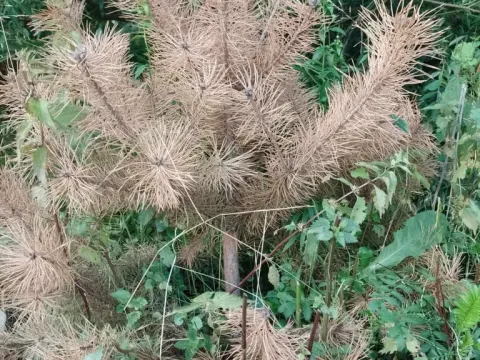
Phytophthora root rot of pine
Phytophthora pini
The disease is caused by Phytophthora pini, an oomycete pathogen commonly found in soil. This microorganism specializes in attacking the root system, leading to rapid tissue decay and tree decline.
What the section contains
Phytophthora root rot of pine
The life cycle of this pathogen is strictly dependent on moisture. It survives in the soil and organic debris, producing zoospores that swim through water films to infect new host roots efficiently.
Phytophthora species are not true fungi but oomycetes, which means they react differently to chemical treatments. Standard fungicides often fail to control them, requiring specific active ingredients designed for water molds.
The pathogen is highly resilient and can persist in dormant structures called oospores, allowing it to survive adverse environmental conditions for extended periods until a host is available.
Spread occurs primarily through contaminated soil, irrigation water, and nursery equipment. A single infected plant in a container can contaminate the entire irrigation system of a nursery.
Initial symptoms are often subtle, manifesting as a general lack of vigor and mild chlorosis of the needles. As the root system deteriorates, the needles turn yellowish and eventually reddish-brown, starting from the lower branches.
A physical inspection of the roots reveals a clear transition from healthy, white tissues to dark, necrotic, and water-soaked areas. The root cortex may slough off easily when touched, indicating advanced rot.
Seedlings often exhibit stunted growth and permanent wilting, even when the soil moisture appears adequate. In many cases, lesions develop at the root collar, eventually girdling the trunk and causing rapid death.
The tree loses its anchorage in the soil due to the extensive destruction of the fine fibrous root system. This makes the tree unstable and prone to toppling during moderate winds.
- Needle chlorosis and subsequent browning.
- Stunted growth and poor development.
- Darkening and softening of root tissues.
- Development of lesions at the root collar.
- Reduced anchorage and tree instability.
Phytophthora root rot thrives in excessively wet conditions. Poorly drained soil or over-irrigation are the primary environmental drivers that favor the proliferation of the pathogen.
Warm temperatures, generally ranging from 18 to 25 degrees Celsius, significantly accelerate the activity of Phytophthora pini. These conditions are common during wet springs and late summer rainy spells.
Heavy, compacted clay soils contribute to low oxygen levels in the rhizosphere, which compromises root health and makes the tree more susceptible to infection by water-loving pathogens.
Physical trauma to the root system, such as damage during transplanting or cultivation, provides easy entry points for the pathogen. Healthy plants can resist infection, but stressed ones are quickly colonized.
In containerized nursery stock, the use of non-sterilized growing media is a major risk factor. Proper drainage management is critical to reducing the incidence of this disease in a nursery setting.
This disease poses a severe threat to both commercial forestry nurseries and urban landscape plantings. High mortality rates are common, especially in young pine stands or recently transplanted saplings.
The economic impact is significant, as infected nursery stock cannot be sold, and the loss of mature specimen trees requires costly removal and replacement procedures.
Since the pathogen is soil-borne, it can create "dead zones" in the landscape where it remains active for years. This limits the choice of future plant species that can be safely grown in the same location.
The disease reduces the long-term aesthetic and ecological value of pine forests. Weakened trees also become more susceptible to secondary attacks from bark beetles and other wood-boring pests.
Management is difficult because early-stage infection is often asymptomatic. By the time visual symptoms appear, the root system is usually too severely damaged for the tree to recover.
Prevention is the most effective management strategy. Only purchase certified disease-free planting material and maintain strict quarantine measures for any new additions to the site.
Improve drainage by incorporating sand or organic matter into heavy soils and avoid deep planting. Ensure irrigation systems do not cause prolonged saturation of the root zone.
Chemical control involves the application of fungicides, specifically those containing fosetyl-aluminum or mefenoxam, as soil drenches to protect vulnerable or exposed plants.
Sterilize all garden tools and equipment after contact with potentially infected soil. Using a bleach solution or high-grade disinfectant helps prevent the mechanical transfer of zoospores.
If a tree is confirmed to have Phytophthora root rot, it should be removed along with the root ball and the surrounding soil. Dispose of the material safely to prevent the pathogen from spreading.