
Biatorella canker
Biatorella
The causative agent of this disease is the ascomycetous fungus Biatorella difformis. It is widely recognized in forestry pathology as a facultative parasite that thrives on weakened woody hosts.
What the section contains
Biatorella canker
The fungus invades the cambium and bark, establishing itself in the living tissues of the stem or branches, often leading to chronic infection cycles.
Biatorella difformis typically persists as a mycelium within the infected tissues, waiting for conditions that favor its reproductive phase.
The dissemination of the fungus occurs through ascospores, which are dispersed primarily by wind and rain splashing, but also through the activity of wood-boring insects.
The life cycle includes the formation of small, often clustered apothecia, which appear on the surface of dead or dying bark as the disease progresses.
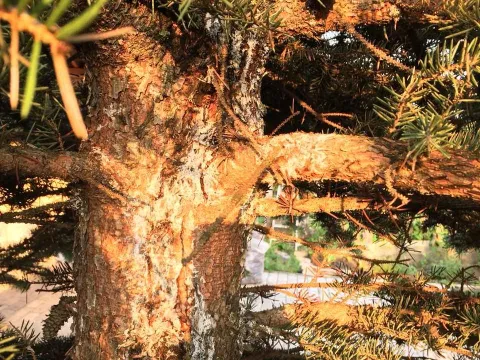
The earliest clinical signs are small swellings or localized necrotic lesions on the bark, which may eventually crack and open.
As the pathogen advances, the bark in the affected areas becomes dry, brittle, and may detach, revealing decaying underlying tissue.
Trees often attempt to compartmentalize the infection by forming a callus, but the aggressive growth of the fungus frequently breaches these defenses.
Diagnostic field markers include the presence of numerous tiny fruiting bodies (apothecia) scattered across the dead bark surface.
Progressive wilting of the foliage or needles above the site of the canker is a significant indicator that the vascular system is being compromised by the fungal activity.
The primary prerequisite for Biatorella canker development is the physiological stress of the tree, caused by environmental factors such as drought or frost.
Physical injuries to the trunk, including sunscald and frost cracks, serve as the primary entry points for fungal spores to settle and germinate.
High humidity levels and lack of proper airflow within dense tree stands facilitate the rapid germination of spores and colonization of adjacent trees.
Poor silvicultural practices, such as incorrect pruning or neglecting sanitation, contribute to the buildup of inoculum in the environment.
Temperate and moist climatic conditions are generally optimal for the maturation of spores and the subsequent spread of the disease within the host population.
Biatorella canker causes significant damage by killing individual branches or even entire trees, depending on the severity of the infection.
The quality of the timber is severely degraded, as the fungal growth causes deep decay and discoloration, rendering the wood unfit for commercial use.
Infected trees become highly susceptible to secondary attacks by pests, which accelerate the deterioration and eventual mortality of the host.
In landscape architecture, the disease ruins the aesthetic value of trees, often necessitating the removal of affected specimens for safety reasons.
The economic impact is particularly pronounced in young plantations, where the disease can cause substantial losses and inhibit healthy forest development.
Effective management begins with strict sanitation, including the prompt removal and destruction of infected branches to reduce the pathogen population.
Preventing physical damage to the trunk and bark during maintenance works is critical to minimizing the sites available for fungal colonization.
The use of fungicide treatments on pruning wounds can protect exposed tissues from infection during the high-risk periods of the growing season.
Selecting disease-resistant species for planting and ensuring appropriate stand density are vital long-term strategies to prevent the spread of the disease.
Regular monitoring of the trees allows for early intervention, enabling the containment of the disease before it achieves systemic spread throughout the stand.