
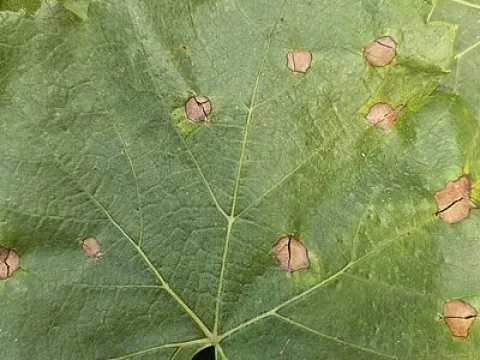
Phomopsis cane and leaf spot
Phyllosticta ampelicida
The disease is caused by the fungus Phyllosticta ampelicida, which primarily attacks the green shoots, leaves, and occasionally the fruit of grapevines.
What the section contains
Phomopsis cane and leaf spot
The fungus overwinters in the form of pycnidia and mycelium within the tissues of infected canes, specifically in the bark of wood from the previous season.
In the spring, during rainy weather, the fungus releases conidia that are splashed by rain onto young, developing tissues of the grapevine.
Infection occurs rapidly when water is present, allowing the spores to germinate and penetrate the epidermis of the vine's green organs.
The pathogen is capable of surviving for long periods in woody debris, making sanitation within the vineyard a crucial aspect of managing the disease cycle.
Initial symptoms on leaves appear as small, irregular black spots often surrounded by a light yellow halo, causing the leaves to pucker and distort.
On green shoots, small dark spots or lesions develop, which eventually expand into elongated, blackened, and cracked areas that can weaken the stem structure.
As the shoots become woody, the affected bark may turn a bleached white color, with small, black, pinhead-like structures known as pycnidia scattered across the surface.
Infection of the rachis and flower clusters can lead to the wilting and drying of the cluster, significantly reducing the potential yield of the vineyard.
- Dark lesions on leaves with yellow halos.
- Cracking and blackening of green shoots.
- Bleached bark on older, woody canes.
- Presence of black pycnidia on wood.
- Drying and browning of flower clusters.
The disease thrives in cool, wet spring weather, which is often ideal for the initial release and dissemination of spores onto young growth.
High humidity levels and extended periods of leaf wetness are essential for the germination of spores and the subsequent infection process of the plant tissues.
Dense canopy management that lacks adequate airflow creates a microclimate with stagnant, moist air, significantly increasing the risk of disease spread.
Early season frost damage can create wounds that serve as entry points for the fungal pathogen, making the vine more susceptible to infection.
Temperatures ranging between 15°C and 25°C are optimal for the pathogen, corresponding with the critical stages of early vegetative vine development.
Severe infections lead to significant defoliation, which reduces the vine's photosynthetic capacity and hinders the proper maturation of the wood.
Weakened shoots are more prone to breaking under the weight of fruit or during strong winds, leading to long-term structural damage to the vine.
The quality of the harvest is compromised not only by yield loss due to cluster death but also by direct infection of berries, which can lead to fruit rot.
Persistent infection over multiple years can result in vine decline, reducing the overall lifespan and vigor of the entire vineyard block.
Economic losses arise from both the reduction in marketable fruit and the increased costs associated with repeated fungicide applications and vine maintenance.
The most important cultural practice is the strict removal and destruction of all infected prunings during the dormant season to eliminate the primary inoculum source.
Preventive fungicide sprays, particularly during the bud break and early shoot development stages, are essential to protect vulnerable young tissues from infection.
Improving canopy ventilation through proper trellis training and timely leaf pulling helps reduce the humidity around the clusters and shoots.
Systemic fungicides should be applied proactively if weather conditions remain consistently rainy and favorable for the fungal spread throughout the season.
Maintaining a high level of vine health through balanced fertilization and proper irrigation helps the plants resist and recover from stress-induced infections.