
Phomopsis dieback
Diaporthe rudis
Description
Symptoms
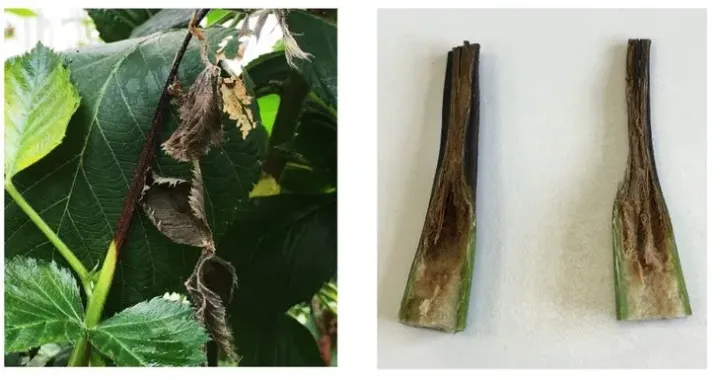
The most characteristic symptom is the progressive dieback of twigs and branches, which often starts from the tip and moves downwards toward the base of the plant.
Affected stems develop elongated, necrotic lesions that may eventually cause the bark to crack and peel, exposing the underlying woody tissue to further decay.
In later stages of the infection, tiny, black, pimple-like structures known as pycnidia emerge through the surface of the bark, signaling the pathogen's sporulation.
Leaves on infected branches often undergo premature discoloration, turning shades of yellow or red before drying out and clinging to the stem, which helps in early visual diagnosis.
- Sudden wilting and tip dieback of young shoots.
- Necrotic lesions and bark cracking on stems.
- Visible black pycnidia on dead wood.
- Premature leaf senescence and retention on dead branches.
Pathogen
The disease is caused by the ascomycete fungus Diaporthe rudis, a pathogen responsible for twig blight and dieback in various woody and fruit-bearing plants.
The fungus survives primarily in infected plant tissues and debris, where it produces specialized fruiting bodies known as pycnidia to store its infectious conidia.
Rain splash and wind are the primary vectors for spore dispersal, carrying the pathogen from overwintered sources to susceptible new growth during the spring.
The pathogen acts as a facultative parasite, often taking advantage of wounds or environmental stress to colonize the xylem and phloem, effectively girdling the affected branches.
Blueberries, particularly highbush varieties, are among the most frequently affected crops, making Diaporthe rudis a significant concern for commercial berry growers.
Conditions for development
Warm and humid weather conditions are ideal for the development of Diaporthe rudis, as moisture is essential for the germination of conidia and infection of host tissues.
Prolonged spring rains provide a perfect environment for spores to be washed onto new growth, leading to rapid disease escalation across the plantation.
Poor air circulation within the plant canopy due to dense planting leads to prolonged leaf wetness, which significantly increases the susceptibility of the bushes.
Mechanical injuries caused by pruning tools, hail damage, or frost cracks provide direct pathways for the fungus to bypass the natural protective barriers of the plant.
Environmental stress, such as drought or waterlogging in the root zone, weakens the plant's natural defense mechanisms and makes it more vulnerable to fungal attack.
Why it matters
Phomopsis dieback causes significant economic losses by reducing the total productive surface area of the bushes, leading to a direct decline in annual berry yields.
The systemic nature of the infection disrupts the flow of nutrients and water, often resulting in smaller, underdeveloped, and poor-quality fruits that lack market value.
Chronic infestation can lead to the death of entire branches or even the whole plant, necessitating costly replanting and resulting in long-term production gaps.
Increased management costs arise from the need for intensive fungicide programs and the labor-intensive task of removing and burning all infected woody material.
If left unmanaged, the pathogen becomes established in the plantation, creating a recurring source of infection that requires constant vigilance and expensive control measures.
Protection
The primary control measure is strict sanitation: all infected branches must be pruned well below the site of the infection and removed from the field to prevent sporulation.
Disinfecting pruning shears between cuts is a critical practice to stop the inadvertent transfer of spores from diseased wood to healthy plants during the dormant season.
A preventative fungicide schedule, focusing on key phenological stages such as bud break, can significantly reduce the pressure of the pathogen during the early season.
Proper site preparation and plant spacing are essential to ensure adequate airflow, which keeps the foliage dry and limits the conditions required for fungal growth.
Cultivating resistant varieties and maintaining overall plant health through balanced fertilization helps enhance the plant's inherent resistance to Diaporthe rudis.
Discussion
No discussions yet — be the first.