
Phomopsis dieback of ash
Diaporthe scobina
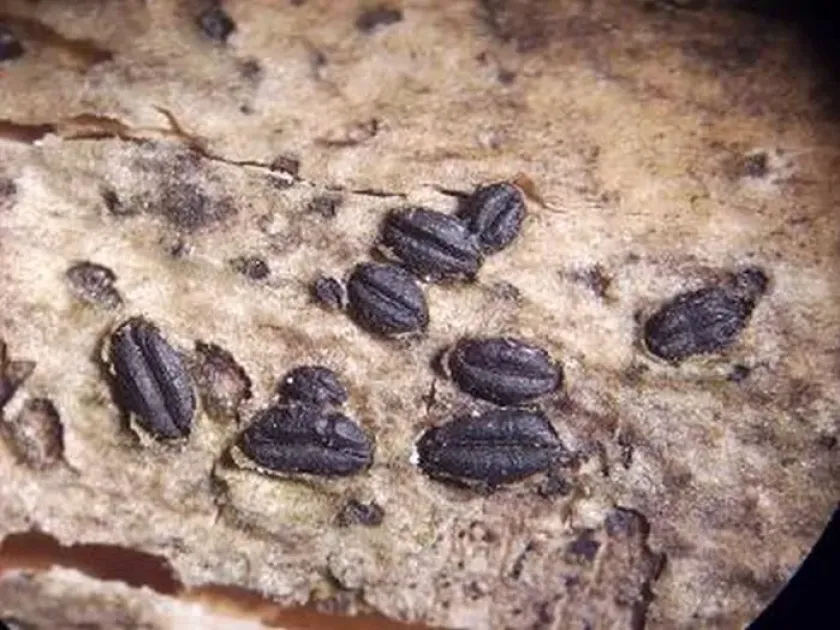
Description
Symptoms
The first sign of the disease is the appearance of specific necrotic patches on the bark of young branches and shoots. Affected areas eventually darken, sink, and become cracked.
Within the necrotic areas, numerous small pycnidia form under the epidermis. They appear as small dark bumps that protrude through the bark surface after the tissues rupture.
In later stages of infection, drying of individual branches is observed, and if the infection progresses, the entire crown of the tree may die. Leaves on infected branches turn yellow and drop prematurely.
When trunks are infected, localized ulcers may develop, eventually encircling the trunk, which restricts sap flow and causes the death of distal parts of the tree.
- Darkening and cracking of the bark
- Formation of pycnidia as dark bumps
- Premature yellowing and leaf drop
- Dieback of the crown and branches
Pathogen
The disease is caused by the fungus Diaporthe scobina (anamorph stage: Phomopsis scobina). It is a phytopathogenic microorganism belonging to the class Ascomycetes that primarily infects weakened woody plants.
The pathogen is capable of both saprotrophic and parasitic lifestyles. The fungal life cycle includes both asexual stages (pycnidia) and sexual stages (perithecia), ensuring its high survival rate in various environments.
The infection persists in infected bark, fallen branches, and other plant debris. During the spring and summer, the fungus actively produces spores that are dispersed by wind or splashing rain.
The fungus enters ash tree tissues through mechanical bark damage, pruning wounds, or natural openings in the epidermis. As it develops, the mycelium destroys the cambium and phloem of the plant.
Pathogen spread typically occurs in dense stands, where a favorable microclimate for spore germination and tissue colonization is maintained.
Conditions for development
High humidity and moderately warm weather favor the development of Phomopsis. Rainfall plays a key role in the dispersal of fungal spores throughout the tree canopy.
Weakened trees suffering from nutrient deficiencies, drought stress, or pest damage are the most susceptible to infection by Diaporthe scobina.
Dense plantings with poor air circulation and high moisture retention provide an ideal environment for rapid disease development within forest stands.
The optimal temperature range for mycelial growth is 20–25°C, although the fungus remains active at lower temperatures during the spring period.
Open wounds on the wood caused by hail, insect activity, or improper pruning significantly facilitate the penetration of the infection.
Why it matters
Phomopsis dieback of ash causes significant damage to forestry and landscape plantings, reducing the aesthetic value and longevity of the trees.
The harm includes the death of young shoots, which leads to crown deformation and disrupted plant development, thereby slowing annual growth rates.
Mass infestation of stands contributes to premature aging of ash trees, making them more susceptible to secondary infections and colonization by stem-boring pests.
Severe necrosis can lead to the death of young trees, especially in nurseries where strict monitoring of planting stock quality is required.
Economic losses arise from the necessity of sanitary logging, maintenance costs for diseased trees, and reduced wood quality in commercial timber production.
Protection
The primary control method involves strict adherence to silvicultural practices aimed at increasing stand resistance to environmental stressors.
It is essential to conduct timely sanitary pruning of infected branches, followed by their incineration, to prevent the spread of the infection to healthy parts of the tree.
When pruning, tools must be disinfected to prevent the mechanical transfer of fungal spores from infected specimens to healthy trees.
The use of copper-based fungicides or systemic chemical treatments in nurseries helps protect young saplings during periods of high infection risk.
Maintaining optimal stand density to ensure air circulation within the canopy and applying fertilizers to bolster tree immunity are critical components of an integrated management strategy.
Discussion
No discussions yet — be the first.