
Phomopsis dieback
Cumuliphoma omnivirens
Description
Symptoms
The earliest symptom is the yellowing or browning of needles at the tips of branches, which eventually spreads inward toward the trunk of the tree.
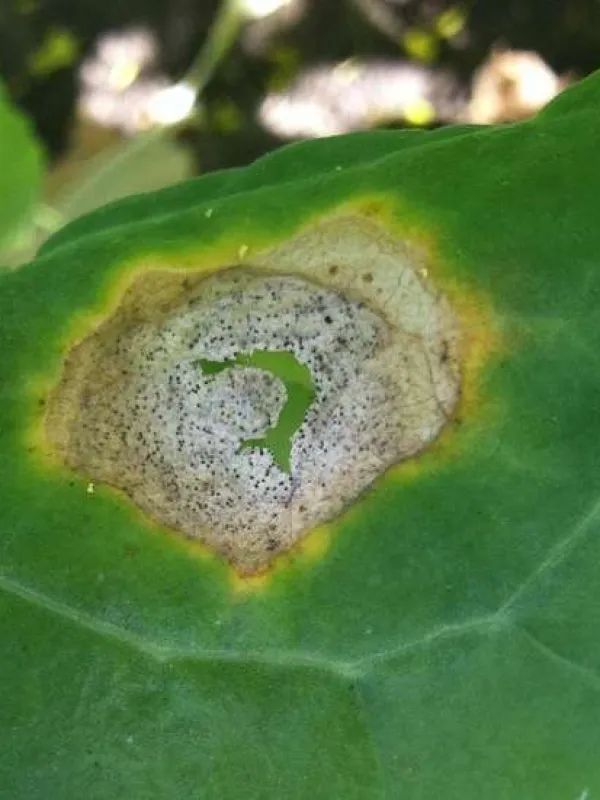
Visible pycnidia, appearing as tiny black spots, emerge on the infected bark or needles, serving as the most reliable diagnostic sign of the disease.
Infected shoots frequently exhibit curling or bending, and the affected areas eventually become brittle, leading to permanent dieback of the branch tips.
In humid conditions, a fine coating of spores may appear on the diseased tissue, which can be observed under low magnification for positive identification.
As the disease progresses, the tree loses significant amounts of foliage, resulting in a thin, ragged appearance and a noticeable decline in overall plant vigor.
Pathogen
The causative agent of this disease is the micromycete Cumuliphoma omnivirens. This fungal pathogen specifically targets various coniferous tree species, affecting their needles and shoots.
The pathogen completes its life cycle within the host tissues, creating complex structures known as pycnidia that serve as a source for fungal spores during the growing season.
The fungus is highly resilient and capable of surviving in dead plant debris, which acts as a reservoir for the infection to persist throughout the year.
Dissemination of the pathogen typically occurs through splashing rain, wind currents, and the mechanical movement of infected nursery stock or gardening tools.
As a specialized parasite, Cumuliphoma omnivirens disrupts the vascular and photosynthetic systems of conifers, leading to progressive tissue degradation.
Conditions for development
High relative humidity and moderate temperatures are the most critical factors that trigger the activation and rapid spread of the fungal spores.
Dense planting schemes that restrict airflow allow moisture to linger on the foliage, creating an ideal micro-environment for the fungus to flourish.
Conifers experiencing environmental stress, such as drought, nutrient deficiency, or root damage, are significantly more susceptible to infection.
Frequent rainfall during the spring and early summer seasons significantly increases the likelihood of an outbreak due to the dispersal of spores by water droplets.
Accumulated debris, including fallen needles and dead branches on the soil surface, provides a continuous source of inoculum for reinfection each spring.
Why it matters
The primary harm caused by Phomopsis is the severe reduction in the aesthetic value of ornamental conifers, often rendering them unsuitable for display.
Continuous infection weakens the tree's physiological status, making it vulnerable to opportunistic secondary pests and environmental extremes.
In commercial nurseries, this pathogen can cause substantial financial losses by destroying young seedlings and preventing their sale.
The loss of photosynthetic needle tissue leads to stunted growth, preventing the tree from reaching its natural size and structural integrity.
If left unmanaged, the cumulative damage can lead to the death of the entire plant, necessitating its removal to prevent the pathogen from spreading to nearby healthy specimens.
Protection
Management must focus on a combination of cultural practices and chemical interventions to effectively suppress the development of the fungus.
Pruning out infected branches is the most effective cultural practice, provided that the cuts are made well into healthy tissue and the debris is immediately destroyed.
The application of preventive fungicides is recommended during periods of high humidity and vulnerability, particularly for high-value ornamental trees.
Maintaining adequate space between plants and ensuring proper watering techniques are vital to minimize humidity around the foliage.
- Regular sanitation of tools with disinfectant solutions.
- Monitoring trees for early symptoms of needle browning.
- Removing and burning fallen needles and debris.
- Applying systemic fungicides at the start of the spring season.
Discussion
No discussions yet — be the first.