
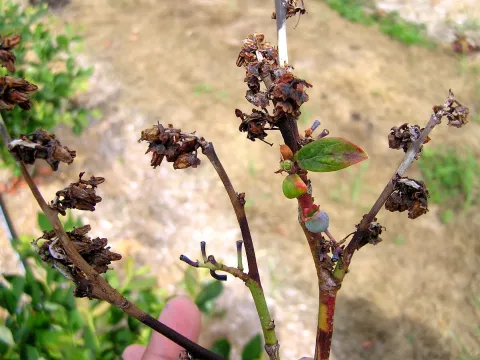
Phomopsis dieback
Phomopsis myrtilli
The disease is caused by the fungus Phomopsis myrtilli, a common pathogen affecting blueberry plantations worldwide.
What the section contains
Phomopsis dieback
The fungus overwinters in infected canes and leaf litter, releasing spores during the growing season when environmental conditions become suitable.
It acts as a wound pathogen, entering the plant through pruning cuts, frost damage, or physical injuries to the bark.
Once inside, the fungus colonizes the vascular system, effectively girdling the stem and cutting off the supply of water and nutrients.
Mycelial growth is relatively slow but persistent, gradually spreading from individual stems into the crown and roots if left untreated.
The most characteristic symptom is the sudden wilting and drying of the upper portions of young blueberry shoots.
Affected stems often show brown or greyish-brown lesions, which are usually centered around the point of infection.
Over time, the bark in these areas becomes dry, brittle, and cracked, often appearing sunken compared to healthy tissue.
Tiny black fruiting bodies, known as pycnidia, appear on the surface of the dead wood under humid conditions, releasing infectious spores.
The leaves on infected branches may turn yellow or reddish-brown and remain attached long after the branch has died.
Phomopsis dieback is heavily influenced by high humidity and frequent rainfall, which facilitate spore germination and dispersal.
Poorly drained soils or waterlogged conditions increase plant stress, making blueberries more susceptible to the fungal invasion.
Warm temperatures, ranging between 15°C and 25°C, create the ideal environment for the rapid development of the pathogen.
Cultural practices that lead to mechanical damage, such as improper pruning or rough handling, provide easy entry points for the fungus.
Overcrowded plantings that lack proper air circulation prevent the canopy from drying out, allowing spores to persist on foliage.
The disease causes significant economic loss by killing productive branches and reducing the overall lifespan of the blueberry bush.
Yield loss is significant because the destruction of vascular tissues prevents fruit from developing properly, resulting in small, shriveled berries.
If the infection reaches the base of the plant, it can lead to the death of the entire bush, causing gaps in the plantation.
The progressive nature of the disease means that without management, it will quickly spread from a few infected plants to the entire field.
Management of the disease requires high labor costs due to the need for continuous monitoring and pruning of infected material.
Sanitation is the most important control measure, involving the systematic pruning and destruction of all infected canes.
Chemical control using fungicides, particularly those containing copper, helps protect new growth and prevents the spread of spores.
- Remove all dead wood back to healthy tissue
- Disinfect pruning tools with a 10% bleach solution
- Maintain optimal soil moisture and pH levels
- Ensure proper spacing for ventilation
- Apply fungicide sprays in spring and after harvest
Encouraging good plant vigor through balanced fertilization helps the blueberry bushes naturally resist the establishment of the fungus.
Selecting resistant cultivars and sourcing nursery stock from certified disease-free suppliers is essential for long-term prevention.