
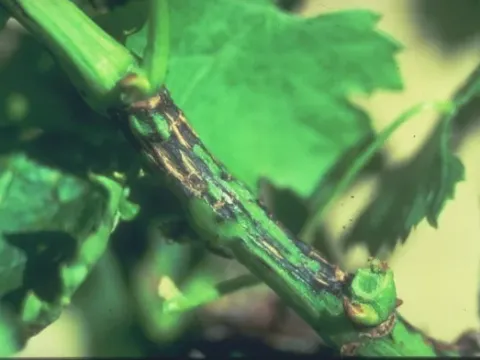
Phomopsis cane and leaf spot
Phomopsis viterbensis
The causative agent of Phomopsis cane and leaf spot is the fungus Phomopsis viticola. It is a persistent pathogen that affects various parts of the vine, including canes, leaves, and fruit clusters, potentially causing severe damage.
What the section contains
Phomopsis cane and leaf spot
The fungus survives the winter as dormant mycelium and pycnidia within the bark of infected canes. When conditions become favorable in early spring, these structures produce spores that are splashed onto new growth by rainfall.
Infection cycles occur throughout the growing season, particularly during wet and cool weather. The spores require a film of water on plant surfaces to germinate and successfully penetrate the grapevine tissue.
The pathogen is host-specific to grapevines. It can colonize tissues even in early development stages, establishing a long-term presence within the vineyard if not managed through proper sanitation.
Understanding the life cycle is crucial because the primary inoculum remains in the vineyard on old, infected wood, making site hygiene a foundational component of effective disease management.
The first symptoms appear in spring on young shoots as small, dark brown or black spots, often with chlorotic halos. As the shoots expand, these spots can elongate and merge into larger lesions.
Infected areas of the canes may crack, leading to deep lesions or cankers. These structural weaknesses often cause shoots to break under their own weight or in windy conditions, reducing the number of productive shoots.
Leaves show small, dark spots with yellow margins, leading to tissue necrosis. Severe leaf infections can cause the leaves to curl, distort, and drop prematurely, which impacts the vine's photosynthetic capacity.
Fruit clusters can also be infected, resulting in brown lesions on the rachis (cluster stem). In extreme cases, the entire cluster may wither, or berries may become discolored and develop a bitter taste.
- Dark, necrotic lesions on basal internodes.
- Splitting and scarring of the bark on canes.
- Chlorotic and deformed leaf patterns.
- Withering of rachis and fruit shriveling.
- Reduced vigor of individual vine shoots.
The disease thrives in cool and wet conditions, especially during the early stages of bud break and shoot growth. Spore dissemination is heavily dependent on splashing rain and high relative humidity.
Poor canopy management, leading to low airflow and slow drying of foliage, creates a microclimate conducive to infection. Dense foliage prevents sunlight and wind from reaching the inner canopy.
Failure to prune and remove infected wood significantly increases the amount of overwintering inoculum. Vines left with debris from the previous season are at a much higher risk of early-season infection.
Persistent fog or dew in the morning hours provides the necessary moisture for the fungus to complete its infection process. High humidity levels are often more dangerous than the temperature alone.
Improper viticultural practices, such as excessive nitrogen fertilization, lead to lush, soft growth that is more susceptible to rapid fungal penetration and systemic colonization.
Phomopsis causes significant economic damage by reducing vine productivity. Chronic infections weaken the permanent wood, leading to the gradual decline and death of vine arms or cordons.
The structural damage caused by cankers necessitates expensive corrective pruning, which can permanently alter the vine's shape and future bearing capacity.
Marketable yield is reduced because of damaged fruit clusters and lower quality berries. Infected grapes are often rejected or command significantly lower prices due to their poor appearance and quality.
The disease reduces the cold hardiness of the grapevine. Infected canes fail to mature properly, making them highly vulnerable to winter injury and potential loss of entire sections of the vineyard.
Long-term infestation leads to increased chemical costs, as growers are forced to implement aggressive fungicide programs to protect the foliage and fruit from annual reinfection.
The primary control method is sanitation: the complete removal and destruction of all infected canes during winter pruning. Minimizing the amount of overwintering fungus is the most effective preventative measure.
Canopy management, including leaf removal and timely shoot positioning, promotes airflow and rapid drying of tissues, effectively disrupting the environment that the pathogen needs to flourish.
Early-season fungicide applications are critical. Treatments should ideally begin at the bud break stage, when shoots are just a few centimeters long, to protect new growth from the initial primary inoculum.
Copper-based fungicides and modern systemic compounds, such as strobilurins or triazoles, are effective when applied according to regional risk models and weather forecasts.
Resistance management is vital; rotating fungicides with different modes of action prevents the fungus from developing tolerance, ensuring the long-term effectiveness of the disease control program.