
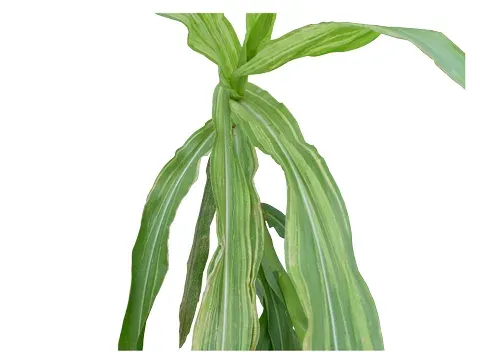
Sorghum and maize downy mildew
Peronosclerospora miscanthi
The causal agent of this disease is the obligate oomycete Peronosclerospora miscanthi. This pathogen is specialized in infecting grasses, causing systemic downy mildew that affects all parts of the host plant throughout its development.
What the section contains
Sorghum and maize downy mildew
The oomycete can persist in the soil as oospores for several years, making it highly resistant to harsh environmental conditions. The infection pathway usually starts from the soil or via contaminated seeds, attacking seedlings at the earliest growth stages.
The pathogen utilizes conidia for rapid secondary spread during the growing season. These spores are easily dispersed by wind and splashing rain, allowing the disease to move quickly through the fields whenever the conditions are favorable.
The mycelium colonizes the plant's vascular tissues and interspaces, extracting vital nutrients and obstructing water and nutrient movement. This leads to the classic symptoms of systemic growth retardation and necrosis.
Its biological cycle is strictly dependent on the host plant's physiology. The pathogen maximizes its reproduction rate during periods of rapid vegetative growth, especially when temperature and humidity are within the optimal range for the species.
The earliest symptom is the appearance of chlorotic streaks or lesions on the leaves, which run parallel to the veins. As the infection progresses, these streaks enlarge and can eventually turn necrotic.
Affected plants exhibit significant stunting, reduced height, and shortened internodes compared to healthy plants. They often appear malformed and lose their normal structural integrity as the disease spreads systemically.
Under high humidity or dew conditions, a diagnostic white, fuzzy growth appears on the lower surface of the leaves. This is the sporulation of the pathogen, consisting of masses of conidiophores and conidia.
In systemic infections, the formation of ears and tassels is severely impaired. Plants may fail to develop flowers at all, or produce barren, twisted, and distorted heads that yield absolutely no grain.
As the disease reaches its final stages, the leaves become brittle and tend to shred along the vascular bundles. This gives the plant a distinct ragged or tattered appearance, often leading to total plant collapse.
The development of the disease is highly favored by warm temperatures, typically ranging from 20 to 30 degrees Celsius. These temperatures act as a major driver for the proliferation of the oomycete.
High relative humidity and the presence of free water (such as fog, heavy dew, or rain) are mandatory for the germination of spores. Without sufficient moisture, the infection process is significantly curtailed.
Dense planting patterns tend to exacerbate the problem by creating a microclimate with stagnant air and high humidity levels. This environment is ideal for the rapid spread of spores from leaf to leaf.
The presence of overwintering oospores in the soil is the primary inoculum source for the next season. Continuous cropping of maize or sorghum on the same land significantly increases the disease pressure over time.
Irrigation practices that maintain constant humidity levels in the canopy can unexpectedly fuel an epidemic if the pathogen is present. Careful water management is therefore essential in disease-prone areas.
The primary harm is the total loss of marketable grain yields. Because the disease is systemic, infected plants are essentially non-productive, representing a direct economic loss for the grower.
In addition to grain yield losses, the quality of forage for livestock is severely compromised. Infected plants lack nutritional value and may pose risks to animal health if harvested as silage.
Epiphytotic spread of the disease can devastate large plantations within a few weeks. This risk forces farmers to incur higher production costs related to seed treatments and potential field decontamination.
The long-term persistence of oospores in the soil limits land use for sensitive crops. It complicates standard rotation practices and requires significant financial investment to manage the residual soil inoculum.
Phytosanitary risks mean that contaminated fields may require strict quarantine measures to prevent the spread of the pathogen to neighboring farms, impacting regional agricultural trade.
The most effective strategy is the use of resistant or tolerant maize and sorghum hybrids. Breeding for resistance remains the cornerstone of integrated disease management against Peronosclerospora miscanthi.
Implementing a strict crop rotation schedule is vital. By avoiding the cultivation of susceptible hosts for several years, growers can effectively reduce the level of primary inoculum present in the soil.
Deep plowing or moldboard plowing helps bury infected crop debris, promoting their decomposition and reducing the survival rate of the oospores before the next planting season begins.
Seed treatment with systemic fungicides, particularly those belonging to the phenylamide class, is highly recommended to protect seedlings during the susceptible period of germination and emergence.
Field sanitation, including the removal of wild grass species that may serve as alternative hosts, helps limit the pathogen's ability to survive and replicate outside of the main crop area.