
Sorghum cercospora leaf spot
Cercospora sorghi
Description
Symptoms
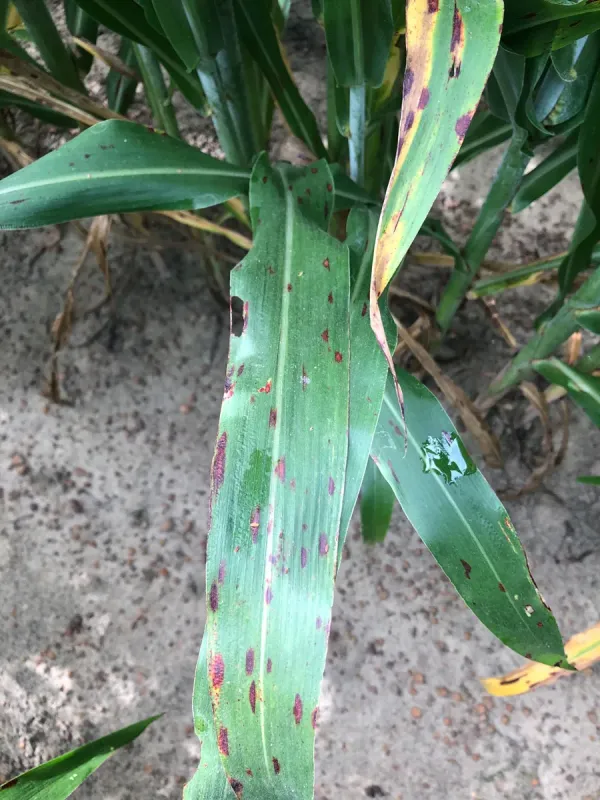
Initial symptoms include small chlorotic spots that gradually develop into distinctive, elongated or rectangular lesions limited by leaf veins.
The lesions typically display a reddish-brown, dark purple, or violet coloration, which serves as a key diagnostic indicator for this specific disease.
In high humidity, a grayish or olive-colored fungal growth appears in the center of the spots, consisting of conidiophores and spores.
As the disease progresses, these lesions merge, leading to extensive necrosis and the subsequent yellowing and drying of the leaf blade.
Infection usually starts on lower leaves and moves upward, significantly reducing the overall canopy health of the plant.
Pathogen
The disease is caused by the fungus Cercospora sorghi, which belongs to the class of Hyphomycetes and specifically targets sorghum tissues.
The pathogen overwinters as mycelium and conidia in infected crop residues left on the soil surface, acting as the primary inoculum for the next season.
During the growing season, conidia are dispersed by wind, splashing rain, or insects, initiating new infection cycles on susceptible leaves.
The lifecycle of the fungus is highly dependent on environmental moisture, allowing for multiple infection cycles during a single growing period.
Beyond cultivated sorghum, the pathogen can infect various related grasses, which serve as alternate hosts and reservoirs for the disease.
Conditions for development
Warm and humid weather conditions are the most favorable for the rapid development and spread of Cercospora sorghi in the field.
The optimal temperature range for conidia germination is between 22 and 28 degrees Celsius, which is typical for the peak summer growing season.
Persistent moisture on the foliage, such as heavy dew, fog, or frequent rainfall, is essential for the infection process to occur successfully.
Dense planting patterns can restrict airflow, creating a localized humid microclimate that drastically favors fungal growth and disease spread.
Fields with high levels of remaining crop debris from previous sorghum crops provide a perfect environment for early seasonal infection.
Why it matters
The primary impact of the disease is the destruction of leaf tissue, which inhibits the plant's photosynthetic ability and reduces energy production.
Reduced photosynthesis leads to lower grain weight, poor grain filling, and an overall decrease in yield potential for the affected crop.
Severe infections can cause plants to become more vulnerable to secondary stresses, including lodging and sensitivity to drought conditions.
In cases of early-season outbreaks, the disease can cause significant stunting and loss of vigor, impacting the plant's overall development.
Economic losses vary depending on the severity of the outbreak, but in high-pressure years, yield reduction can reach 20-30% or more.
Protection
Implementing a robust crop rotation program is the most effective way to break the disease cycle and reduce the local inoculum load.
Thorough soil tillage practices that incorporate crop debris effectively speed up the decomposition process and minimize the survival of the fungus.
Selecting and planting resistant or tolerant hybrid varieties is the best long-term management strategy for minimizing disease impact.
Effective weed management, particularly of wild grasses, is crucial to eliminate potential hosts that maintain the pathogen in the environment.
When environmental conditions favor severe outbreaks, the application of registered foliar fungicides can help protect the crop and limit losses.
Discussion
No discussions yet — be the first.