
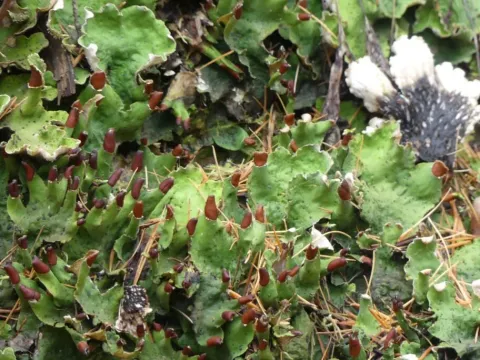
Peltigeraceae lichens
Peltigeraceae
Peltigeraceae lichens typically present as large, foliose structures that adhere to the bark or soil, characterized by their lobed shape.
What the section contains
Peltigeraceae lichens
The upper surface may appear brownish or gray, while the underside often displays a distinct network of veins typical for this family.
They are frequently found in patches on tree trunks, often becoming more prominent and darker in color during periods of high humidity.
These organisms do not have roots; they attach via rhizoids, meaning they do not directly invade the host tree's living tissues.
Presence of these lichens often indicates a mature tree with slower bark renewal, where the surface has become stable enough for colonization.
The causative agent is a symbiotic organism comprising a fungus and a photosynthetic partner, either green algae or cyanobacteria.
These are not pathogenic in the traditional sense, as they do not consume the tree's sap or nutrients, acting instead as epiphytes.
They represent a natural biological component of the environment, often serving as indicators of air quality and ecological health.
Reproduction occurs through spores or vegetative fragments, which are dispersed by wind across the landscape to colonize new substrates.
Their biological function is limited to surface growth, though they can significantly alter the microclimate of the tree's bark surface.
Development thrives in environments characterized by high ambient humidity and poor air circulation within the tree canopy.
Shaded areas of the garden are particularly susceptible, as a lack of direct sunlight prevents the bark from drying out sufficiently.
Dense planting schemes that restrict airflow create the micro-environment necessary for the initial settlement of lichen spores.
Trees with thin, slow-growing, or aging bark are more likely to support larger colonies compared to vigorous, young saplings.
A lack of regular garden sanitation and pruning practices provides a stable, undisturbed environment for colonization to occur.
The primary concern is the creation of a habitat for insect pests, including scale insects and mites, which hide beneath the lichen mats.
Heavy coverage can interfere with the bark's gas exchange, potentially stressing the tree if the infestation is particularly widespread.
By retaining excessive moisture against the bark, lichens can contribute to the development of fungal decay or wood rot in crevices.
Aesthetic damage is significant in ornamental nurseries, where clean, smooth bark is essential for market value and overall health appearance.
Their presence can mask underlying bark diseases, making it difficult for growers to notice early symptoms of more serious infections.
Effective control begins with proper pruning, which increases light penetration and airflow, making the bark surface less hospitable.
Mechanical removal using soft wire brushes or scrapers is highly recommended for individual trees to clear existing colonies.
Application of ferrous sulfate solutions is a proven chemical method to manage and eliminate lichen growth without harming the tree.
Regular whitewashing of trunks with calcium-based mixtures helps prevent re-colonization and serves as a preventive barrier.
- Crown thinning and pruning
- Mechanical bark scrubbing
- Ferrous sulfate sprays
- Protective whitewashing