
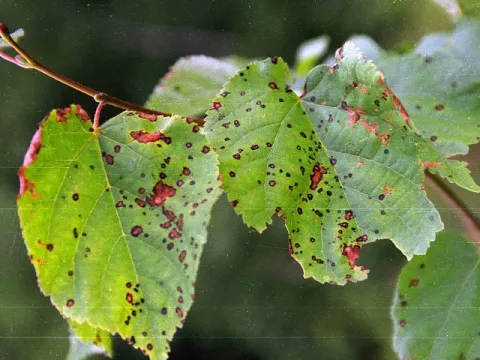
Linden leaf spot
Paracercosporidium microsorum
The causal agent of this disease is the micro-fungus Paracercosporidium microsorum, which belongs to the class of fungi imperfecti. Previously, this pathogen was widely classified under the name Cercospora microsora.
What the section contains
Linden leaf spot
This fungus acts as a specialized parasite of linden trees (Tilia spp.), primarily targeting the foliage. It reproduces by forming conidia, which serve as the primary inoculum for spreading the infection during the growing season.
The pathogen survives the winter in the form of mycelium and conidia on fallen linden leaves remaining under the canopy. As temperatures rise in spring, the fungus reactivates and begins producing new spores.
Initial infection of healthy leaves occurs through stomata or mechanical injuries on the leaf surface. Once inside, the mycelium colonizes the leaf tissue, gradually breaking down photosynthetic cells.
The life cycle can repeat multiple times throughout the summer, potentially leading to an epiphytotic spread of the disease if environmental conditions remain favorable.
The primary symptoms appear as localized spots on the linden leaves. Initially, these spots are pale green or yellowish, eventually turning brown or dark grey as the tissue dies.
A distinctive feature of this leaf spot is the presence of a dark border surrounding the necrotic area. Over time, a characteristic grayish or brownish fungal growth appears in the center of the spots.
As the disease progresses, these spots often coalesce, covering a significant portion of the leaf blade. This results in severe leaf deformation and localized tissue desiccation.
Heavy infection frequently leads to massive premature leaf yellowing and dropping, which can commence as early as mid-summer in severe cases.
Diagnosis is confirmed through microscopic analysis, identifying the specific conidiophores and spores characteristic of this fungal pathogen on the underside of infected leaves.
High humidity and moderate temperatures are the most critical factors driving the development of this fungus. Prolonged rainy periods significantly accelerate spore germination and transmission.
Dense tree plantings with poor crown ventilation create a microclimate that prevents leaves from drying out, which is ideal for the rapid colonization of the pathogen.
Trees that are weakened by nutritional deficiencies, drought, or poor soil conditions exhibit increased susceptibility to the infection compared to healthy, vigorous specimens.
The presence of large amounts of infected plant debris under the canopy provides the fungus with a perfect environment for successful overwintering and inoculum accumulation.
Conversely, hot and dry weather acts as a natural inhibitor, as these conditions suppress the viability of conidia and prevent the fungus from forming new reproductive structures.
The main damage is caused by the impairment of the photosynthetic process due to widespread leaf infection. This leads to reduced energy production and stunted overall growth of the tree.
Premature leaf drop prevents the tree from storing sufficient carbohydrates before the onset of winter, resulting in increased susceptibility to frost damage.
Chronic infestation over several consecutive seasons severely reduces the aesthetic value of urban park trees and ornamental avenues.
Stressed trees are significantly more prone to secondary attacks by pests and opportunistic wood-decay fungi, which can ultimately shorten the lifespan of the tree.
Economic losses include the increased costs of maintenance, sanitation, and potential tree replacement in landscaped urban areas.
The foundation of effective management is sanitation, which involves the thorough collection and removal of fallen leaves in autumn to eliminate the primary source of infection.
Regular pruning is essential to improve crown aeration, ensuring that foliage dries quickly after rain and reducing the duration of humidity-rich conditions.
If symptoms appear, applying copper-based fungicides or appropriate systemic treatments can effectively prevent the further spread of the disease during the growing season.
Maintaining tree vigor through proper fertilization and irrigation helps the linden tree develop natural resistance and recover more effectively from fungal stressors.
- Thorough removal of fallen leaves.
- Sanitary thinning of the tree crown.
- Application of copper-based fungicides.
- Maintaining optimal soil health and hydration.