
Linospora leaf spot
Linospora
Description
Symptoms
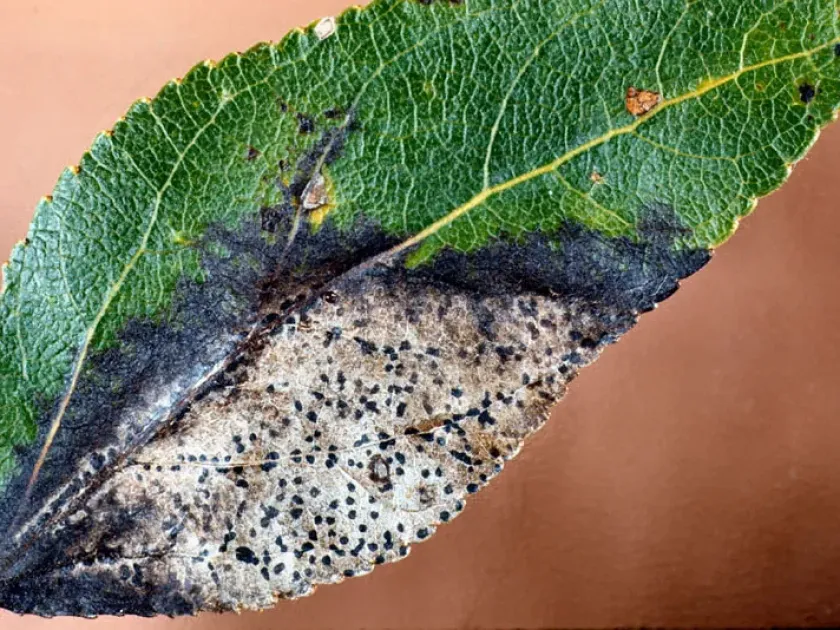
The primary visual symptom of Linospora leaf spot is the appearance of distinct spots on the foliage. These lesions change color from yellowish hues to deep brown or black as the infection progresses.
Small black fruiting bodies appear on the surface of the lesions, primarily on the upper side of the leaf. These structures indicate that the fungus has successfully colonized the leaf tissue.
In later stages of the disease, the necrotic tissue within the spots may tear or drop out, leading to a shothole effect on the leaves. This gives the canopy a tattered and unhealthy appearance.
Severe infestations lead to premature yellowing and leaf drop. By mid-summer, heavily infected trees may lose a significant portion of their canopy, which disrupts their growth cycle.
Early symptoms are often overlooked, appearing first in the lower, more shaded parts of the tree where moisture levels remain higher for longer periods of time.
Pathogen
The disease is caused by a fungus belonging to the genus Linospora. This pathogen is a specialized parasite that primarily targets the leaves of deciduous trees, with a focus on poplar species.
The life cycle of the pathogen is closely tied to the host's foliage. The fungus invades the leaf cells, drawing nutrients required for its mycelial growth and subsequent spore production.
Spore dispersal occurs during periods of high humidity or rainfall, allowing the fungus to spread to adjacent leaves and neighboring trees within the same stand.
The fungus overwinters in fallen leaves on the forest floor or garden soil. These infected residues serve as the primary inoculum for the infection of new leaves in the spring.
Biological survival of the pathogen depends on its ability to wait for the host's bud break, aligning its reproductive cycle with the availability of fresh green tissue.
Conditions for development
Linospora development is favored by warm, wet weather. Prolonged rainy periods during the spring and early summer are critical for the successful germination of fungal spores.
High-density plantings that restrict air movement around the trees create a microclimate with high humidity. This environment prevents leaves from drying quickly, facilitating rapid infection.
Trees that are under stress—whether from drought, poor soil fertility, or physical damage—exhibit higher susceptibility to fungal colonization compared to healthy, vigorous specimens.
Optimal temperatures for the fungus typically range between 18 and 25 degrees Celsius. In these favorable conditions, the incubation time between infection and symptom expression is minimized.
Accumulation of leaf litter around the base of trees provides a dense reservoir of spores, which increases the likelihood of severe outbreaks during subsequent growing seasons.
Why it matters
The major impact of Linospora is the reduction in photosynthetic capacity due to premature defoliation. This limits the energy available for the tree's growth and root development.
Persistent infection weakens the overall health of the tree, making it less capable of storing the reserves required to survive cold winters or withstand other environmental stresses.
In ornamental and urban forestry, the aesthetic damage is significant. Blighted foliage reduces the visual value of parks, street trees, and private landscapes.
Repeated yearly infections can lead to tree decline, characterized by shorter annual growth and reduced branch vitality, eventually leading to stunted development.
For tree nurseries, this disease is particularly harmful as it ruins the appearance of stock, leading to economic losses due to the inability to market infected plants.
Protection
The most effective management practice is the removal and destruction of fallen leaves during the autumn. This eliminates the overwintering sites for the fungal pathogen.
Fungicide applications are recommended in nurseries or high-value landscapes where the disease causes recurring problems. Proactive timing is essential for effective results.
Improving the cultural environment, such as spacing trees appropriately and pruning to encourage better airflow, helps to decrease humidity within the canopy.
Maintaining tree vigor through proper fertilization and irrigation helps the plant build natural defenses against fungal attack, limiting the severity of the symptoms.
- Sanitation: removing all leaf debris
- Application of copper-based fungicides
- Thinning of tree canopies to improve airflow
- Monitoring the lower canopy for early detection
Discussion
No discussions yet — be the first.