
Lindtneria leucobryophila
Lindtneria leucobryophila
Description
Symptoms
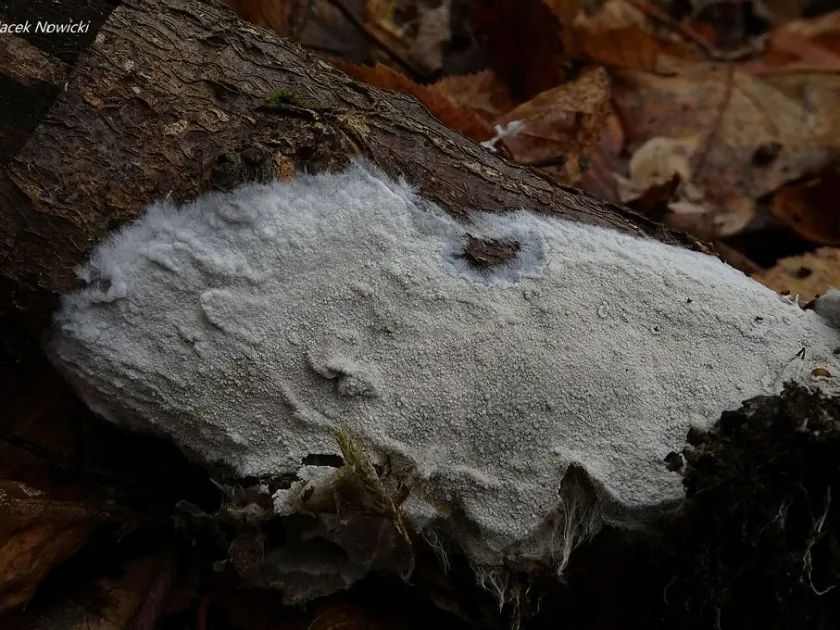
A primary external manifestation of Lindtneria leucobryophila is the formation of a specific fungal coating that densely covers the surface of the affected plant tissue.
The appearance of the lesion often resembles a whitish or creamy mycelium that gradually densifies into a characteristic, firm texture over time.
The mycelium typically penetrates deeply into the structure of organic residues, accelerating their decomposition and turning the tissues into dark brown shades.
During the final stages of the pathogen's development, hymenophores may form, appearing as spreading films with an uneven, sometimes reticulate or porous surface.
The infestation is accompanied by a distinctive musty odor, and the plant tissues within the affected zone become brittle, losing their mechanical integrity.
Pathogen
The causal agent is the fungus Lindtneria leucobryophila, which belongs to the phylum Basidiomycota, class Agaricomycetes, order Polyporales.
This microorganism is classified as a wood-decaying fungus that, under certain environmental conditions, may act as an opportunistic pathogen on weakened crops.
Biologically, the species is categorized as a corticioid fungus capable of existing on various types of plant debris, primarily in moist ecological niches.
The life cycle includes the production of spores that are disseminated by air currents, water, or insects, ensuring the rapid colonization of new areas.
The fungus possesses high enzymatic activity, allowing it to efficiently break down lignin and cellulose, which is essential for its metabolic requirements.
Conditions for development
The development of Lindtneria leucobryophila is strictly limited by moisture levels, as it prefers environments with persistent dampness or high soil humidity.
Optimal temperature ranges for active mycelial growth are moderate, typical of forest floors or shaded areas within agricultural fields.
Lack of proper aeration and stagnant air create an ideal microclimate for the formation of colonies of this pathogen on cultivated plants.
The accumulation of plant residues and the failure to perform sanitary field cleaning facilitate the persistence of the inoculum in the soil for multiple seasons.
Dense planting patterns and improper irrigation schedules, resulting in prolonged wetting of the root zone, provoke disease outbreaks in the agro-ecosystem.
Why it matters
The harmfulness of Lindtneria lies in its direct degradation of plant tissues, which leads to premature senescence of plant organs or the death of the entire plant.
The pathogen disrupts the normal transport of nutrients and water within stems, resulting in overall stunted growth and reduced crop vigor.
Fungal metabolites may exert toxic effects on the plant, weakening its natural immune system and increasing its susceptibility to secondary infections.
Economic losses are associated with the loss of product marketability, decreased yields, and the need for additional costly control interventions.
In cases of widespread infestation, the fungus can deplete organic matter in the soil, impoverishing its quality and making it unsuitable for sensitive crops.
Protection
The primary control measure involves adhering to strict agronomic standards aimed at reducing humidity and improving air circulation within the plantings.
It is essential to promptly remove and destroy all plant debris that may serve as a reservoir and nutrient source for the fungal colonies.
The application of systemic fungicides effective against basidiomycetes is recommended upon the first signs of infection to prevent further spore production.
Preventative practices include deep tillage, which disrupts the integrity of fungal colonies and accelerates their natural decomposition without harming the soil.
Proper drainage of fields and crop rotation play a vital role in restricting the development cycles of specific pathogens that are selective to certain crops.
Discussion
No discussions yet — be the first.