
Lingonberry phacidium blight
Phacidium vaccinii
The disease is caused by the fungus Phacidium vaccinii, which primarily affects plants belonging to the Ericaceae family.
What the section contains
Lingonberry phacidium blight
The pathogen completes its life cycle by forming apothecia, which contain spores that spread via wind and rain splashes.
The fungus overwinters effectively in plant debris, such as fallen leaves and infected stems, making sanitation a critical management step.
The pathogen becomes active in early spring as temperatures rise and moisture levels increase, triggering spore germination.
As a parasitic organism, it attacks plant tissues, causing necrosis and significantly weakening the host plant's overall vitality.
Early symptoms appear in spring on leaves that have overwintered, manifesting as grayish-brown spots.
The infection spreads across the leaf surface, leading to premature drying and leaf drop, which leaves the plant weakened.
During humid conditions, tiny black structures known as apothecia develop on the underside of infected leaves.
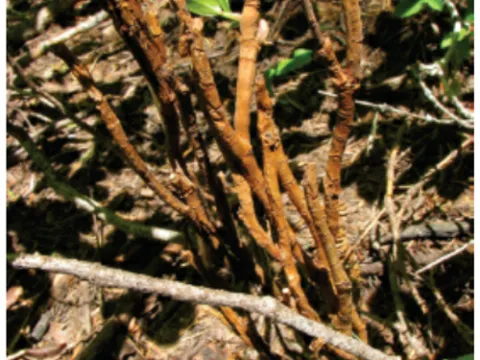
Infected stems show dark, sunken lesions that may eventually lead to the girdling and death of the entire branch.
Severely infected bushes exhibit stunted growth, reduced leaf density, and dieback starting from the tips of the shoots.
Prolonged spring rains and high humidity are the primary environmental drivers for the rapid development of Phacidium blight.
Poor aeration in dense plantings creates a stagnant microclimate that allows the fungal spores to colonize surrounding bushes easily.
Fields with inadequate drainage or areas where water collects are more susceptible to severe infection outbreaks.
A mild winter with intermittent thawing periods can support the survival of the fungus, allowing it to start the infection cycle earlier.
Accumulated plant debris acts as a reservoir for the pathogen, fueling the disease pressure for the subsequent growing season.
The disease causes significant economic loss by reducing berry yield due to the loss of functional leaf area and shoot dieback.
Photosynthetic capacity is severely compromised, leading to smaller, lower-quality fruits and stunted plant growth.
Loss of terminal buds on affected branches directly limits the reproductive potential of the lingonberry bushes for future harvests.
Extensive infections can cause entire patches of the plantation to die, necessitating costly replanting and soil management efforts.
Infected plants become more stressed, making them more prone to secondary attacks by other pests and environmental stressors.
Effective management begins with rigorous field sanitation, including the removal and destruction of all fallen leaves and infected plant parts.
Maintaining proper plant spacing is essential to ensure adequate airflow and prevent the buildup of excess humidity within the canopy.
Applications of copper-based fungicides in early spring are effective in reducing the primary inoculum before the growing season starts.
- Avoid overhead irrigation during humid weather to prevent leaf moisture.
- Regularly monitor fields for the first signs of lesion formation.
- Use certified healthy planting material to avoid introducing the fungus.
Integrated disease management, combining cultural practices and chemical control, is the best strategy to keep the infection below the economic threshold.