
Lindtneria panphyliensis
Lindtneria panphyliensis
Description
Symptoms
The visual symptoms of an infection by Lindtneria panphyliensis often remain hidden inside the trunk for a significant period. However, internal decay eventually leads to noticeable structural changes.
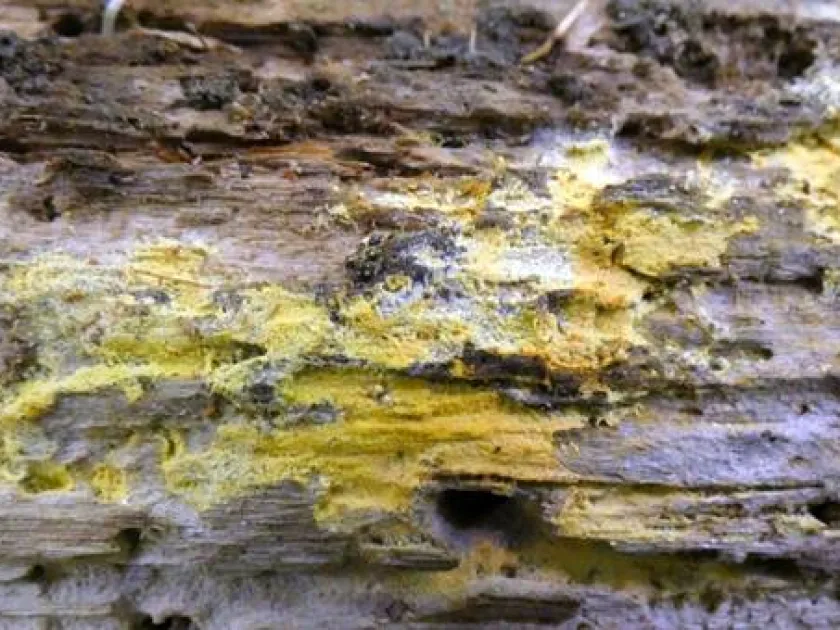
Signs of infestation include a bleaching effect on the wood, where the affected areas appear lighter and lack the density of healthy heartwood. As the rot progresses, the wood becomes increasingly soft and easily crumbly.
On the exterior, the presence of flat, crust-like fruiting bodies on the bark or around cracks is a diagnostic indicator. These structures may appear after significant moisture exposure.
Trees affected by the fungus often show signs of overall decline, such as canopy thinning and reduced leaf or needle density, due to the compromised transport of water and nutrients through the stem.
In advanced stages, the tree may exhibit structural instability. Cracks, longitudinal fissures, and the presence of hollow sections are clear signals of advanced internal decay caused by the fungal activity.
Pathogen
Lindtneria panphyliensis is a species of wood-decaying basidiomycete fungus. It is recognized as a pathogen involved in the decomposition of woody substrates within forest ecosystems.
The fungus operates by colonizing the interior tissues of trees, where its mycelium spreads through the xylem and phloem. Through the secretion of specific enzymes, it actively degrades the structural components of wood.
The fruiting bodies of this fungus are typically resupinate, meaning they grow flat against the surface of the wood. These structures are crucial for the release and dispersal of spores, which facilitate the spread of the pathogen to new hosts.
As a white rot agent, the fungus specifically targets lignin, leaving the cellulose structure exposed and weakened. This process significantly alters the internal composition of the timber, making it brittle and fibrous.
Understanding the life cycle of Lindtneria panphyliensis is essential for mycologists and forest managers aiming to mitigate its impact on tree health and forest productivity.
Conditions for development
The development of Lindtneria panphyliensis is heavily influenced by environmental moisture. Consistent humidity is required for the spores to germinate and for the mycelium to expand successfully.
Damage to trees caused by frost, wind, or human activity serves as an entry point for the fungus. Fresh wounds on the trunk act as perfect sites for the initial infection to take hold.
Warm and temperate climatic conditions provide the most favorable environment for the growth of the fungus. Increased temperatures generally accelerate the metabolic activity of the pathogen during the growing season.
Poorly managed forest stands with high tree density and lack of airflow create a humid microclimate. This environment promotes the accumulation of spores and increases the risk of transmission between adjacent trees.
The presence of decaying wood debris in the forest floor can also act as a reservoir for the pathogen, from which it can spread through root contacts or during periods of high humidity to living trees.
Why it matters
The primary harm caused by Lindtneria panphyliensis is the physical degradation of tree structures. This significantly reduces the mechanical strength of the trunk, putting the tree at risk of failure.
Economically, the fungus causes substantial losses in timber quality. Wood affected by white rot loses its commercial value and cannot be used for high-strength structural applications or fine carpentry.
In forest ecosystems, the presence of the pathogen weakens tree populations, making them susceptible to secondary infestations by bark beetles and other borers that accelerate the death of the host.
Safety risks are a major concern in urban or park settings. Trees weakened by the fungus can pose a danger to public safety as branches or entire trunks may fall without prior warning.
The long-term impact involves a reduction in the overall vitality of the forest stand, potentially altering species composition and leading to the replacement of susceptible tree species by more resistant ones.
Protection
Effective control requires strict forest hygiene practices. Removing and disposing of infected trees and deadwood is crucial to reduce the overall inoculum load in the forest.
Preventative care, such as protecting tree trunks from mechanical injury during logging or maintenance, is essential to minimize the risk of fungal entry through wounds.
Thinning operations help optimize the density of the stand, ensuring better light penetration and airflow, which naturally discourages the moist conditions required by the fungus to spread.
Chemical control via fungicides may be applied in specific, high-risk cases where early detection is made. These applications serve to protect wounded areas on valuable specimens until the tree's natural defense mechanisms take over.
Continuous monitoring of forest health is the most reliable strategy. Early detection and rapid intervention at the localized stage can prevent a single infection from developing into a larger outbreak.
Discussion
No discussions yet — be the first.