
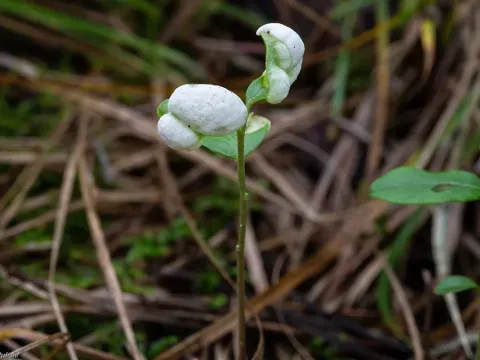
Lingonberry Exobasidium
Exobasidium juelianum
The first sign of the disease is the appearance of pale green or yellowish spots on the lingonberry leaves. These spots gradually become more prominent and change color.
What the section contains
Lingonberry Exobasidium
A dense, waxy-looking coating forms on the underside of the affected leaves. This layer consists of spores that represent the reproductive stage of the fungus.
Infected leaves often become deformed, thickened, and curled. As the pathogen progresses, the tissue within the spots dies, causing premature drying and leaf drop.
The fungus can eventually spread to young stems, causing distortion. This damage weakens the entire plant and impacts its ability to store nutrients for the following season.
Visual identification is most effective during the active growing season, when the spore layer on the underside of the leaves is easily visible to the naked eye.
The causative agent is the fungus Exobasidium juelianum. It is a highly specialized parasite that exclusively infects plants within the Ericaceae family, particularly lingonberries.
The fungus acts as an obligate parasite, penetrating plant cells and extracting nutrients. Its mycelium grows within the leaf tissue, leading to the observed physiological disruptions.
Reproduction occurs via spores produced in specialized structures called basidia. These emerge through the plant's epidermis, facilitating the spread of the disease to adjacent healthy foliage.
The fungus survives the winter as mycelium within infected stems or fallen plant debris. This survival strategy ensures a reservoir of infection that can reactivate when conditions permit.
Its biological cycle is finely tuned to the host's phenology, allowing it to time its sporulation with the most favorable periods for infection and dispersal.
High humidity is the primary driver for the development of the disease. Frequent rain, heavy dew, and morning fog are ideal conditions for fungal spore germination.
Poor air circulation within dense, overcrowded plantings significantly increases the risk of infection. Lack of ventilation prevents foliage from drying out after precipitation.
The pathogen thrives in moderate temperatures. Consistent moisture coupled with mild warmth creates the perfect environment for a rapid outbreak on a plantation.
Excessive nitrogen fertilization can lead to overly lush, soft tissue that is more susceptible to fungal penetration, increasing the overall vulnerability of the crop.
Low-lying areas or sites with poor soil drainage are hotspots for the fungus, as these locations retain moisture for longer periods, promoting fungal growth.
The primary impact of the disease is the impairment of photosynthesis. As the leaf area is damaged, the plant struggles to produce sufficient energy, slowing growth and vigor.
Infected plants suffer from reduced cold hardiness, which may lead to winterkill. This is particularly problematic in regions where lingonberries are exposed to harsh frost.
Yield reduction is a common consequence. The energy that should go into fruit development is redirected to fighting the infection, resulting in smaller and fewer berries.
If left unmanaged, the fungus can decimate an entire plantation within a few growing seasons, leading to significant economic losses and the loss of the crop.
The aesthetic degradation of the plants is also a concern, especially in managed agricultural settings where high-quality produce is required for marketability.
Cultural practices are the first line of defense. Proper spacing and regular pruning are essential to improve air circulation and sunlight penetration within the canopy.
Sanitation is critical; all fallen leaves and infected plant parts should be removed and destroyed by burning to minimize the primary inoculum for the next season.
The application of fungicides, particularly copper-based products, can effectively manage the disease when applied at the first sign of infection during the growing season.
Balanced fertilization, avoiding high-nitrogen programs, helps the plants maintain a tougher, more resilient cell wall structure, which acts as a barrier to infection.
Preventative sprays applied before the flowering stage provide a protective shield for the leaves, significantly reducing the probability of successful pathogen colonization.