
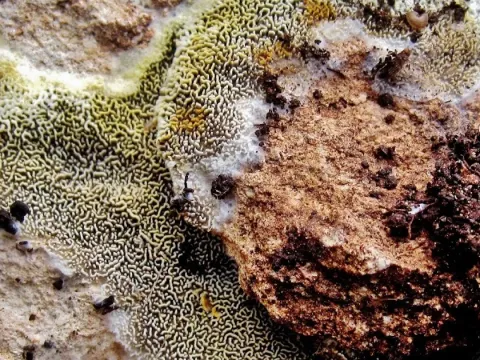
Lindtneria
Lindtneria
Lindtneria is a genus of fungi within the order Polyporales, known for its role as a wood-decay pathogen. In agricultural and forestry contexts, it is identified as a primary cause of wood degradation.
What the section contains
Lindtneria
The fungus operates as a xylotroph, secreting enzymes that decompose cellulose and lignin, which are the fundamental structural components of woody plants. This action leads to the softening and fragmentation of tree tissues.
Mycelium of Lindtneria penetrates deep into the sapwood and heartwood, thriving through the mobilization of carbon sources within the tree. It is known for forming spread-out (resupinate) fruiting bodies on bark surfaces.
Dissemination of the pathogen occurs via microscopic spores dispersed by wind, rain, or contaminated pruning tools. Its ability to persist in decaying plant material makes it a challenging pathogen to eradicate.
Biologically, Lindtneria exhibits significant enzymatic efficiency, allowing it to colonize both weakened and seemingly healthy trees once a suitable entry point is established.
Initial symptoms are often internal and therefore difficult to detect early. The primary indicator is localized discoloration of the wood, which gradually turns brownish or yellowish as the rot advances.
As the infection progresses, one can observe the formation of characteristic fungal fruiting bodies on the trunk or branches. These appear as flattened, parchment-like, or membranous patches with colors ranging from cream to ochre.
The host tree often exhibits symptoms of water stress, including chlorosis and premature leaf drop. This occurs because the internal decay disrupts the vascular system, preventing efficient nutrient and water transport.
Deep cracks appearing on the bark surface are a severe warning sign. Upon inspection, the wood underneath these cracks often displays a cubical fracture pattern, which is typical for advanced brown rot.
In terminal stages, whole branches or the entire canopy may die back. The tree loses its structural integrity and becomes prone to windthrow or snapping, even under minimal physical pressure.
High humidity and moisture levels are the most critical factors for the development of Lindtneria. The fungus flourishes in environments where trapped moisture allows spores to germinate on bark tissues.
Open wounds serve as the primary entry points. Frost cracks, sunscald injuries, or poorly executed pruning cuts provide the ideal environment for the mycelium to initiate colonization.
Poorly ventilated stands with dense canopy cover create a microclimate with high humidity, significantly increasing the risk of spore germination and establishment of the fungal colonies.
Trees experiencing physiological stress, whether from nutrient deficiency, drought, or previous pest damage, have compromised defense systems, making them highly susceptible to Lindtneria infection.
Accumulations of woody debris, old stumps, and deadfall near living trees act as massive reservoirs of inoculum, significantly raising the infection pressure within the orchard or forest area.
The most severe danger of Lindtneria is its stealthy nature; it causes significant structural decay before external symptoms become obvious. This poses a safety risk, as trees can collapse unexpectedly.
Productivity is severely impacted by the infection. Trees affected by wood decay often produce fewer, smaller, and lower-quality fruits, leading to substantial economic losses in commercial orchards.
The long-term impact on tree vitality is devastating. Infected trees become weaker over time, showing reduced frost hardiness and a higher sensitivity to other environmental stresses and secondary pest attacks.
Management costs are high, as severely infected trees often need to be removed to prevent the spread of the fungus to adjacent, healthy specimens, necessitating significant investment in site sanitation.
If left unmanaged, the pathogen can spread through a plantation, potentially resulting in the loss of a large percentage of mature trees and significantly shortening the lifespan of the entire stand.
Effective management begins with strict sanitation practices during pruning. All major cuts must be treated with appropriate pruning sealants or fungicides to protect the exposed wood from spore ingress.
Immediate intervention is required if fruiting bodies are observed. The infected area must be excised down to healthy wood, and all removed material should be burned or disposed of off-site to contain the pathogen.
Preventive trunk whitening using lime-based mixtures with copper sulfate helps create a protective barrier against fungal pathogens, reducing the likelihood of spore establishment in bark crevices.
Application of systemic fungicides during the early spring and post-harvest periods can effectively suppress fungal activity and reduce the overall spore load in the orchard environment.
- Always disinfect pruning tools between trees.
- Protect tree trunks from mechanical damage during soil tillage.
- Clear the area of rotting stumps and dead wood.
- Ensure proper spacing for optimal air circulation.