
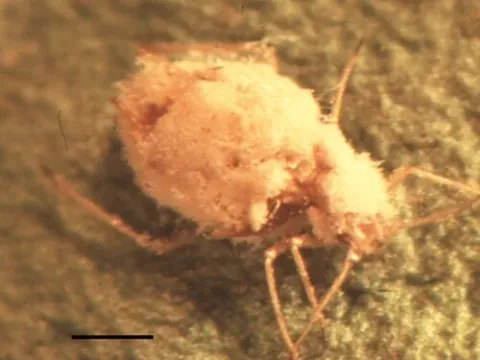
Pandora blunckii
Pandora blunckii
Pandora blunckii is an entomopathogenic fungus belonging to the order Entomophthorales. It serves as a specialized parasite that exclusively targets invertebrates, particularly insects.
What the section contains
Pandora blunckii
This microorganism plays a crucial role in natural ecosystems by acting as a biological regulator of pest populations. Unlike plant pathogens, it does not infect the plant tissue itself.
The fungus completes its lifecycle by invading the host insect through its cuticle. Once inside, the fungal mycelium consumes the internal organs of the insect to sustain its growth and reproduction.
The reproduction cycle ends with the formation of conidia, which are then dispersed to infect other individuals within the same population. This allows for rapid horizontal transmission of the pathogen.
Understanding the biology of Pandora blunckii is essential for integrated pest management, as it provides a natural alternative to chemical insecticides.
The development and spread of Pandora blunckii are highly dependent on environmental conditions, particularly high humidity. Relative humidity close to saturation is often required for successful infection.
Moderate temperatures are ideal for the fungus to thrive. Extremes, such as intense heat or prolonged drought, can significantly inhibit the development of conidia and mycelial growth.
Presence of dew or high moisture on leaf surfaces facilitates the transmission of spores between host insects. This is why epizootics often occur after periods of rainfall or humid weather.
Dense crop canopies provide a protective microclimate that supports the survival and spread of the fungus, allowing it to reach and infect hidden pest populations.
Environmental stability, combined with the presence of susceptible hosts, creates the perfect conditions for the pathogen to establish a long-term presence in an agricultural field.
For agricultural crops, Pandora blunckii is beneficial rather than harmful. It causes the mortality of various insect pests, effectively reducing their numbers without the need for chemicals.
The fungus stops pest feeding and reproductive cycles almost immediately upon successful infection, preventing extensive damage to crops such as cereals or vegetables.
Epizootics triggered by this fungus can lead to a drastic decline in pest populations over a very short period, providing a highly effective natural control mechanism.
The fungus exhibits high host specificity, which ensures that non-target organisms, including beneficial pollinators and predators, remain largely unaffected.
While effective, the main limitation of its impact is the reliance on specific weather conditions; during dry spells, its effectiveness as a control agent diminishes significantly.
Since Pandora blunckii acts as a natural ally for farmers, control measures focus on conservation. Practices that protect natural fungal diversity should be prioritized in agricultural management.
Reducing the use of broad-spectrum chemical fungicides is critical, as these can negatively impact populations of entomopathogenic fungi and disrupt natural control cycles.
Integrated pest management strategies should incorporate the monitoring of naturally occurring mortality factors to determine if chemical intervention is actually necessary.
Maintaining a healthy, biodiverse field edge can provide reservoirs for beneficial organisms, including the natural fungal pathogens of crop pests.
- Monitor fields for signs of natural pest mortality before applying insecticides.
- Minimize the use of broad-spectrum fungicides.
- Promote microclimate conditions that favor beneficial biological agents.