
Panellus
Panellus
Description
Symptoms
The first external sign of infection is the development of shelf-like or fan-shaped fruit bodies on the surface of the trunk or branches.
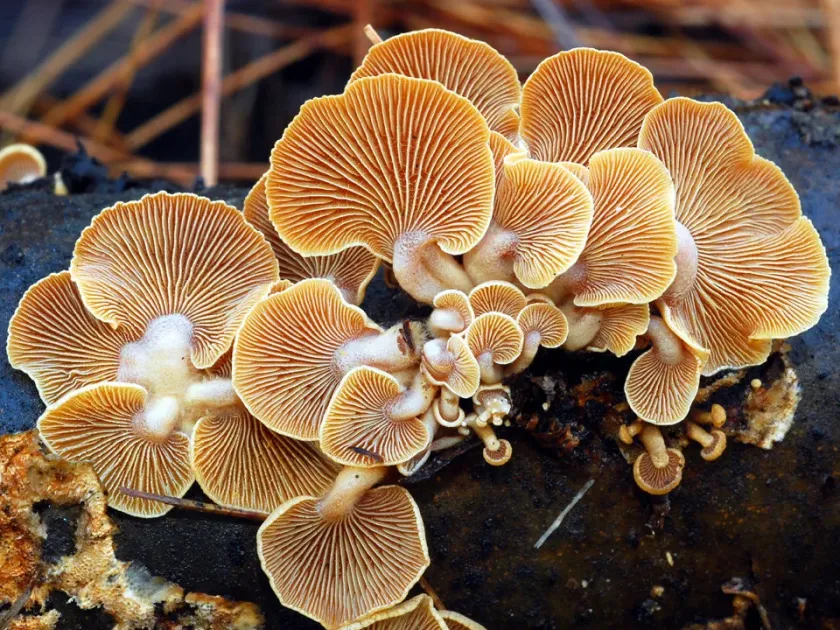
The caps are typically leathery, tan or yellowish-brown in color, and feature a crowded gill structure on the underside that radiates toward the stem.
Inside the wood, the fungus causes a distinctive white rot. Infected tissue loses its structural integrity, becomes spongy or fibrous, and lightens in color.
White, thread-like mycelial fans or cords may be observed under the bark or in the crevices of the wood when the infestation is advanced.
Advanced infection often leads to structural failure, visible as deep cracking of the bark or a total loss of branch strength, resulting in limbs breaking off.
Pathogen
The genus Panellus represents a group of wood-decay fungi within the family Mycenaceae. These organisms act primarily as saprotrophs, playing a vital role in decomposing dead organic matter.
The most widely recognized species, Panellus stipticus, is notable for its bioluminescent properties, which allow the fruit bodies to emit a faint light in the dark.
The fungus propagates through spores that travel through the air or via insects, landing on exposed wood surfaces, bark cracks, or pruning wounds.
While often associated with deadwood, the mycelium can colonize weakened living trees, gradually infiltrating the structural tissues and cambium layer.
Biologically, these fungi are specialized in breaking down lignin and cellulose, which are the main structural components of tree wood.
Conditions for development
The development of Panellus is strongly favored by high humidity levels and cool to moderate temperatures, typically occurring in the spring and autumn.
Damp, shaded environments such as dense forests or poorly pruned orchards provide the necessary stable moisture for mycelial growth and fruit body production.
Trees that have suffered from winter injury, drought stress, or mechanical damage are significantly more susceptible to successful fungal colonization.
Lack of proper sanitation, such as leaving logs or stumps in the garden, increases the local spore pressure and the risk of tree infection.
Trees growing in stagnant, poorly ventilated areas are at a much higher risk of moisture buildup on the bark, which facilitates fungal entry.
Why it matters
The primary concern is the progressive degradation of wood, which severely compromises the structural stability of infected trees, increasing the risk of breakage.
In forest management, the fungus reduces the timber quality, making the wood unsuitable for construction or high-end woodworking applications.
In ornamental and fruit tree settings, the decay process can eventually lead to the death of the tree, causing significant economic or aesthetic loss.
The presence of rot hampers the tree's ability to transport water and nutrients, leading to poor canopy health and reduced fruit yields.
Once established, the fungus is difficult to eliminate, often requiring the removal of infected parts or the entire tree to prevent further spread.
Protection
Sanitation is the most critical management strategy; remove and destroy all infected wood, dead branches, and old stumps to eliminate inoculum sources.
Apply proper pruning techniques, ensuring that cuts are clean and treated immediately with appropriate wound dressings or fungicidal pastes.
Protect trees from physical damage, such as mower or trimmer impacts, which create entry points for spores and weaken the tree's defense system.
Maintain tree vigor through correct fertilization, consistent watering, and pest management, as healthy trees have better resistance to wood-decay fungi.
- Monitor tree trunks regularly for fungal growth or bark distress.
- Ensure adequate spacing between trees to improve air circulation.
- Dispose of infected material by burning or deep burial away from the garden.
- Disinfect pruning tools with a 10% bleach solution between cuts.
Discussion
No discussions yet — be the first.