
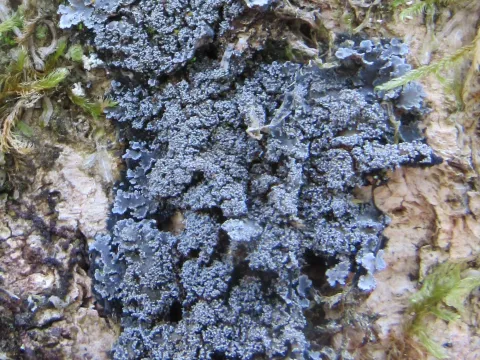
Pannaria conoplea
Pannaria conoplea
Pannaria conoplea is not a parasitic pathogen that infects plant tissues, but rather a foliose lichen species classified as an epiphyte within the Pannariaceae family.
What the section contains
Pannaria conoplea
This organism represents a sophisticated biological symbiosis consisting of a fungal partner and a cyanobacterial photobiont (Nostoc), enabling it to perform nitrogen fixation.
In an agricultural context, it is typically observed on the bark of older, mature trees in orchards where the canopy density and humidity levels are conducive to its colonization.
While it does not derive nutrients directly from the tree, its presence is a biological indicator of the environmental microclimate and the structural condition of the orchard.
The lichen is widespread in regions with oceanic or humid climates, where it thrives on various deciduous tree species with rough or furrowed bark textures.
The primary identification sign of Pannaria conoplea is the formation of grayish-brown or bluish-green foliose thalli that adhere closely to the tree bark.
The edges of the thallus are often ascending and slightly curled, displaying a lighter, sometimes whitish appearance which gives the colony a scale-like texture.
Under moist weather conditions, the thallus absorbs water and changes to a distinct greenish color, revealing the vibrant activity of the cyanobacterial component.
Colonies are frequently distributed on the shaded, northern, or wind-protected sides of tree trunks and major branches, where moisture persists for longer periods.
It is important to visually distinguish this lichen from fungal cankers or bark necrosis, as the lichen thallus does not cause degradation of the underlying living tissue.
High relative humidity and poor air circulation within the orchard canopy are the primary drivers for the successful colonization and expansion of this lichen.
Neglected orchards that lack regular pruning and maintenance provide an abundance of stable, humid micro-niches, specifically on mature bark and dead wood.
Low light intensity, typical of overly dense or overgrown tree crowns, allows the lichen to grow without the risk of desiccation caused by direct, harsh sunlight.
A pollution-free environment is essential for the growth of this species, as it is highly sensitive to sulfur dioxide and other air pollutants common in industrial areas.
Rough bark surfaces, which naturally retain more water and debris, provide the most favorable physical substrate for the settlement of lichen spores.
Although it does not act as a direct parasite, the dense colonization of bark by Pannaria conoplea can become problematic if it covers significant portions of the trunk.
Persistent moisture held by the lichen layers can create localized conditions that favor the development of harmful secondary fungi or bacterial pathogens on the bark surface.
The lichen provides a perfect refuge for various orchard pests, including scale insects, mites, and overwintering larvae, which can hide under its foliose structure.
Extensive coverage of the bark may also slightly interfere with gas exchange and the physiological surface processes of the tree, potentially affecting the vigor of weakened plants.
From a commercial perspective, the heavy growth of epiphytes can reduce the perceived value of the orchard and may be a sign of a decline in overall tree vitality.
The most effective management strategy is regular maintenance pruning, which significantly improves air ventilation and increases sunlight penetration throughout the canopy.
Mechanical removal of lichen colonies using soft brushes or wooden scrapers during the dormant season is a safe and effective way to clean the tree trunks.
Standard orchard hygiene practices, such as lime washing of trunks with copper-based additives, help maintain clean bark surfaces and inhibit new colonization.
Applying copper-based fungicides as a prophylactic measure during early spring can suppress the growth of lichen spores and help keep the bark in a healthy state.
- Regular thinning of the tree canopy to reduce microclimate humidity.
- Prompt removal of dead or damaged branches to eliminate substrates.
- Consistent monitoring and periodic manual cleaning of the bark.