
Pannariaceae
Pannariaceae
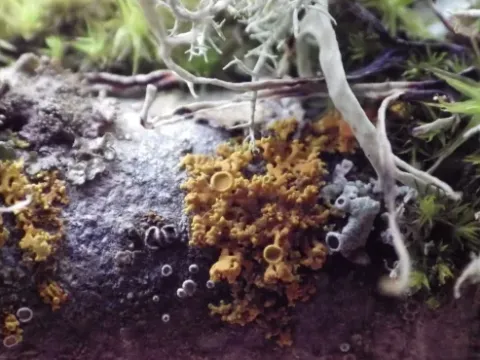
Pannariaceae are a family of lichens that typically appear as crustose or foliose patches on tree bark or mossy substrates in gardens.
What the section contains
Pannariaceae
The thallus often displays shades of grey, brown, or bluish-grey, providing a distinct visual contrast against the bark of fruit and ornamental trees.
Unlike parasitic fungi, these lichens do not penetrate deep into the cambium or wood, living strictly on the outer layer of the bark surface.
Common signs include small, disc-shaped fruiting bodies called apothecia, which may have reddish-brown margins, making them easily identifiable.
Over time, these colonies may cover significant areas of the trunk, masking the natural texture of the bark and creating a distinctive aged appearance.
From an agronomic perspective, Pannariaceae are not considered true pathogens because they do not extract nutrients from the host plant.
These organisms are symbiotic entities composed of a fungus and a cyanobacterial partner (often Nostoc), which provide energy through photosynthesis.
They utilize the tree bark merely as a substrate for physical anchorage, similar to how mosses or certain ferns grow on trees.
They do not cause necrosis, rot, or physiological damage to the host plant, as they maintain a non-parasitic relationship with the tree.
Therefore, their presence should be classified as a botanical occurrence rather than a destructive disease in the traditional agricultural sense.
The growth and distribution of Pannariaceae are heavily influenced by high atmospheric humidity and the absence of strong air circulation.
Orchards with neglected, dense canopies that prevent rapid drying of branches after rain create ideal environments for these lichens to flourish.
Older trees with slow bark regeneration are preferred hosts, as they provide stable, long-term surfaces for the spores to colonize.
These lichens are highly sensitive to air pollutants such as sulfur dioxide, making their presence a bioindicator of good local air quality.
Extended periods of fog or moderate temperatures during the growth season accelerate the development of the thallus on bark surfaces.
The primary concern regarding Pannariaceae is their role as a harbor for overwintering pests, such as mites, scales, and small insects.
In cases of extreme coverage, they may slightly interfere with gas exchange in young trees by covering the lenticels on the bark.
Their presence can mask underlying bark diseases, mechanical injuries, or borer activity, complicating the early detection of serious plant ailments.
Dense lichen cover may retain moisture against the bark for extended periods, potentially creating a localized environment prone to secondary fungi.
The aesthetic impact is significant, often signaling a lack of proper tree maintenance or the advanced age of the tree population in the orchard.
The most effective strategy involves cultural practices, specifically regular pruning to increase air circulation and sunlight penetration in the canopy.
Physical removal using specialized bark brushes or scrapers during the dormant season is the most direct method to clear heavy colonies.
- Application of 3-5% iron sulfate solutions to suppress lichen development.
- Whitewashing tree trunks with lime to alter the pH of the bark surface.
- Ensuring proper plant vigor through balanced fertilization and hydration.
Copper-based fungicides, often used to prevent fungal diseases, have a secondary effect of inhibiting the growth of lichen thalli.
Maintaining high tree vitality encourages the natural shedding of outer bark, which prevents long-term colonization by lichen species.