
Otidea
Otidea
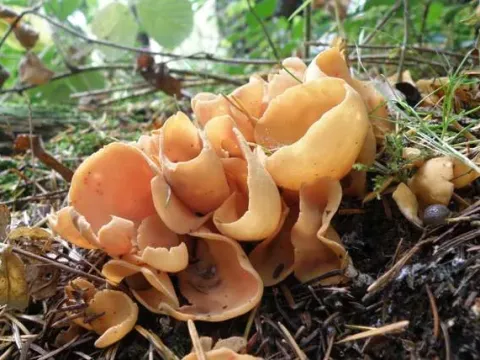
Otidea is a genus of ascomycete fungi that form distinctive fruit bodies characterized by an ear-like or cup-shaped appearance. They often grow in dense clusters, appearing tightly packed together in their natural habitat.
What the section contains
Otidea
The surface of the fungus is typically smooth or slightly powdery, with colors ranging from cream and ochre to deep brown. The inner surface of the fruit body is usually more vibrantly colored than the exterior.
These mushrooms lack a clearly defined stem and often resemble a funnel split down one side. Their size can vary significantly, usually ranging from 2 to 10 centimeters in diameter depending on the specific species.
The fungus is only visible to the naked eye during its active fruiting period. During the rest of the year, the vegetative mycelium remains hidden within the soil or the forest floor litter.
Distinguishing between different Otidea species often requires microscopic analysis of their spores, as their macroscopic appearance can be quite similar and confusing even to experts.
The organism belongs to the genus Otidea, which falls under the phylum Ascomycota. These are highly specialized fungi closely linked to forest ecosystems.
Most Otidea species are saprotrophs living in soils rich in organic matter. They play a vital ecological role in breaking down plant debris and leaf litter.
There is some discussion among mycologists regarding potential mycorrhizal associations with tree roots, although these claims often remain a subject of scientific debate.
The life cycle involves the formation of apothecia, which are cup-shaped fruit bodies where spores mature inside asci. These spores are then dispersed by wind and water droplets.
Biologically, these fungi are not considered plant pathogens, as they do not attack living plant tissues and thrive primarily on dead organic substrates.
Otidea species prefer shaded, moist areas of forests, most commonly found in broad-leaved or mixed woodland environments with nutrient-rich soils.
Optimal conditions for the emergence of fruit bodies include high air humidity and moderate soil temperatures, typical of the late summer and autumn seasons.
The fungus thrives in soils rich in humus where significant accumulations of leaf litter, pine needles, or decaying organic material occur.
Spore dispersal occurs predominantly during periods of frequent rainfall, as raindrops facilitate the ejection of spores from the apothecia and their transport to new locations.
Any significant disruption to the microclimate of the forest floor, such as excessive clearing or drainage, can lead to the rapid decline of local populations.
Otidea does not pose a direct threat to agricultural crops, fruit trees, or ornamental plants grown in garden settings.
These fungi serve more as indicators of a healthy forest floor and soil microflora rather than as pests capable of causing economic damage.
In rare instances, massive fungal growth may locally alter the physical structure of the topsoil layer, but this process does not negatively impact surrounding vegetation.
The fungus is non-toxic to plants and does not produce phytotoxins that could induce diseases or wilting in nearby cultivated plants.
Therefore, the presence of Otidea on a property is a sign of a healthy, functioning organic decomposition cycle rather than a reason for concern.
Specific control measures against Otidea are not necessary as they are not classified as plant pathogens and do not cause crop damage.
If the presence of these fungi is undesirable for aesthetic reasons in parks or flower beds, improving soil aeration and reducing excessive moisture is recommended.
Mechanically removing the visible fruit bodies is largely ineffective for eliminating the fungus, as the mycelium remains deep within the soil.
The use of chemical fungicides against this fungus is completely unjustified and may disrupt the natural ecological balance of beneficial soil microorganisms.
The best preventive method is maintaining optimal moisture levels and timely removal of excess organic debris if it contributes to water stagnation in the area.