
Oomycetes
Oomycetes
Oomycetes, often referred to as water molds, are a distinct group of eukaryotic microorganisms belonging to the Stramenopila kingdom. Despite their superficial resemblance to true fungi, they have a unique genetic makeup and cell walls composed primarily of cellulose and glucans, rather than chitin.
What the section contains
Oomycetes
These organisms are notorious plant pathogens responsible for some of the most devastating agricultural diseases, including late blight, downy mildew, and various root rots. They can act as either necrotrophs or hemibiotrophs, effectively killing plant tissues.
The life cycle of Oomycetes is characterized by the production of zoospores, which are motile spores equipped with flagella. These spores can move actively through films of surface water, allowing the pathogen to spread rapidly across fields during humid conditions.
Infection begins when zoospores attach to the surface of a host plant, germinate, and penetrate the tissue. Thanks to their high-speed asexual reproduction, these pathogens can colonize large areas in just a few days if environmental conditions are favorable.
Inside the plant, the pathogen spreads intercellulary, deploying specialized structures called haustoria to extract nutrients from host cells. This resource depletion inevitably leads to the senescence and death of the infected plant parts.
The primary symptoms of Oomycete infection typically manifest as chlorotic, diffuse spots on the upper side of the leaves, which eventually turn necrotic. Under high humidity, a characteristic white or grayish fungal-like growth appears on the leaf underside.
Root-infecting species often cause systemic wilting, which is difficult to diagnose early on. Roots become discolored, water-soaked, and eventually rot, rendering the plant unable to transport water and essential nutrients from the soil.
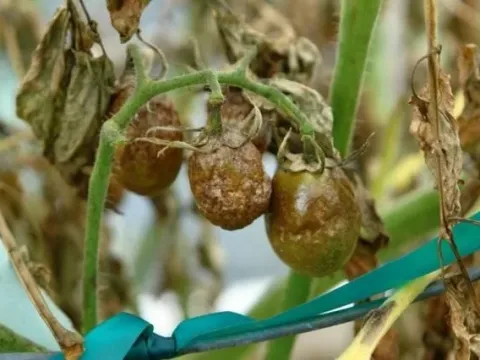
Fruits and tubers affected by Oomycetes develop sunken, dark lesions that can penetrate deep into the flesh. In potatoes, for example, late blight infection results in a firm, reddish-brown rot that can consume entire tubers in storage.
Stems may also exhibit dark, expanding lesions. When these lesions encircle the stem, they cause girdling, which results in the wilting and collapse of all plant parts located above the infected zone, a common sight in tomato fields.
- Yellowing and necrosis of leaf tissue.
- White or grey sporulation on the underside of leaves.
- Root and crown rot symptoms leading to sudden wilting.
- Sunken, rotted lesions on fruits and tubers.
- Deformation of plant tissues under high moisture.
Excess moisture is the primary driver of Oomycete disease outbreaks. Standing water on leaves, heavy dew, or frequent rainfall provides the perfect medium for zoospore movement, germination, and subsequent host penetration.
Temperature plays a critical role in disease development. Most Oomycetes thrive in moderately cool to temperate conditions, typically ranging from 15°C to 22°C (59°F–72°F). Rapid development occurs when these temperatures coincide with high humidity.
Poor air circulation, often caused by overly dense planting or high-density greenhouse conditions, prevents foliage from drying out. Persistent moisture on plant surfaces drastically increases the likelihood of an epidemic.
The presence of oospores (sexual spores) in the soil allows the pathogen to survive harsh conditions for several years. Poor crop rotation practices contribute to the build-up of this inoculum, leading to recurring infections season after season.
Waterlogged soil conditions, often caused by poor drainage, create a perfect environment for soil-borne Oomycetes like Pythium. Plants struggling with root hypoxia are significantly more susceptible to these soil-dwelling pathogens.
Oomycetes pose a significant threat to global food security, causing massive annual losses in crops such as potatoes, grapes, onions, and various ornamental plants. The speed of disease progression can lead to total crop failure in a matter of weeks.
Beyond direct yield reduction, these pathogens destroy the quality of produce, making it unsuitable for storage or fresh market sale. Secondary bacterial rots often follow the initial Oomycete infection, further degrading the agricultural output.
The economic impact is exacerbated by the high cost of intensive fungicide applications required to control outbreaks. For many growers, the reliance on chemical control methods significantly reduces their profit margins.
Oomycetes possess a high degree of evolutionary plasticity, leading to the rapid emergence of fungicide-resistant strains. This makes long-term chemical management increasingly difficult and environmentally taxing.
In regions heavily dependent on susceptible staples like potatoes, outbreaks of late blight have historically caused famine, highlighting the catastrophic potential of these pathogens when not properly managed.
The foundation of Oomycete control lies in strict phytosanitary practices. Removing and destroying infected plant debris is essential to reduce the inoculum load in the field for the following seasons.
The use of resistant cultivars and hybrids is the most sustainable strategy for disease prevention. Breeders prioritize resistance traits to minimize the need for chemical intervention in commercial agriculture.
Cultural methods include optimizing plant spacing to improve ventilation, switching to drip irrigation to keep foliage dry, and ensuring good soil drainage to prevent the development of root-borne infections.
Chemical control should rely on specialized fungicides with systemic or translaminar properties. Applications must be timed based on infection risk models rather than just reactive treatments to be truly effective.
Integrated Pest Management (IPM) programs, which combine weather monitoring, early detection, and strategic pesticide rotation, are the gold standard for protecting crops from Oomycetes while maintaining sustainable production practices.