
Normandina
Normandina
It is important to clarify that Normandina (specifically Normandina pulchella) is not a plant disease or a pathogen. It is a lichen, a symbiotic organism consisting of a fungus and algae.
What the section contains
Normandina
Normandina is classified as an epiphyte, meaning it grows on the surface of tree bark, mosses, or rocks without parasitizing the host plant.
The organism does not penetrate plant tissues, nor does it feed on the nutrients or sap of the tree. Its existence is entirely independent of the plant's metabolic functions.
Scientific literature confirms that lichens like Normandina utilize the tree substrate only for attachment, serving as a sign of environmental health rather than pathology.
Therefore, any reports of "Normandina disease" in agricultural contexts are scientifically inaccurate and should be treated as a misunderstanding of lichen biology.
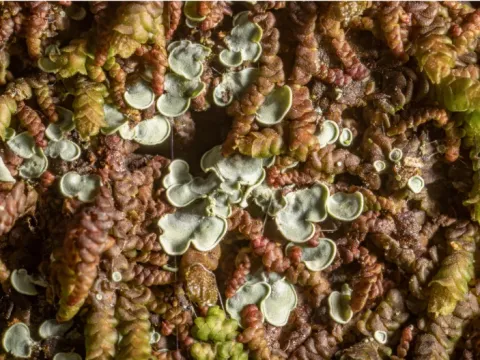
The visual characteristics of Normandina include small, scale-like structures (squamules) that are rounded with slightly upturned edges, resembling tiny cups.
The color of the thallus ranges from pale green to olive, often appearing more vibrant and noticeable under moist conditions when the lichen absorbs water.
It is typically found on the lower sections of tree trunks, especially on tree species with rough or moisture-retentive bark, and in shaded areas.
Unlike pathogenic fungal infections, Normandina does not cause lesions, necrotic spots, rotting tissues, or abnormal growth on leaves and shoots.
Upon physical examination, the lichen can be easily removed from the bark, leaving the underlying tissue of the tree completely intact and healthy.
Normandina thrives only in environments with clean, unpolluted air, making it a valuable bioindicator for air quality in forests and managed landscapes.
High relative humidity is essential for its survival and growth, which is why it is most frequently observed in damp, shaded, and sheltered environments.
The species prefers stable microclimates where it is protected from extreme temperature fluctuations and direct, harsh sunlight that could cause dehydration.
Its growth rate is exceptionally slow, meaning it colonizes new areas only when environmental conditions remain stable over long periods of time.
Lack of industrial pollutants and the presence of mature trees are the primary environmental drivers that support the establishment of Normandina populations.
Normandina does not pose any threat to agricultural crops, ornamental plants, or fruit trees as it is not a parasite and does not inhibit plant physiological processes.
Common myths suggesting that lichens steal nutrients from trees are unfounded, as the lichen produces its own energy via photosynthesis and absorbs minerals from rain and dust.
The presence of this lichen does not lead to tree decline, reduced yield, or the development of rot, nor does it interfere with the tree's bark-breathing capacity.
In many cases, the presence of various lichen species on tree bark is interpreted by ecologists as a sign of a diverse and undisturbed ecosystem.
No agricultural economic losses are associated with Normandina; therefore, it is considered a harmless component of the natural environment in gardens and orchards.
Specific control or protection measures against Normandina are not necessary because it is not a pest or a disease-causing agent for plants.
For those who prefer a clean aesthetic in their gardens, mechanical removal using soft brushes during the dormant season is a safe and effective way to clean the bark.
The application of fungicides or chemical pesticides to remove lichens is strongly discouraged as it creates unnecessary environmental contamination without any biological benefit.
Effective prevention of lichen buildup is best achieved through routine pruning and orchard maintenance, which improves airflow and light penetration throughout the tree canopy.
Maintaining the overall vigor of the tree through proper fertilization and irrigation is the best approach to ensuring a healthy, balanced garden ecosystem.