
Northern leaf blight
Exserohilum
Northern leaf blight is caused by the fungus Exserohilum turcicum, an ascomycete pathogen known for its ability to cause severe damage to various grass species.
What the section contains
Northern leaf blight
The fungus survives between growing seasons as dormant mycelium and conidia in infected leaf debris and other crop residues left in the field.
During the growing season, conidia are dispersed by wind and rain splashes to new host tissues, initiating the infection process under favorable conditions.
Exserohilum turcicum exhibits high genetic variability, leading to the development of various races that can overcome host resistance mechanisms.
The pathogen primarily colonizes the leaf tissues, creating a systemic infection that eventually leads to the necrotic death of the host plant cells.
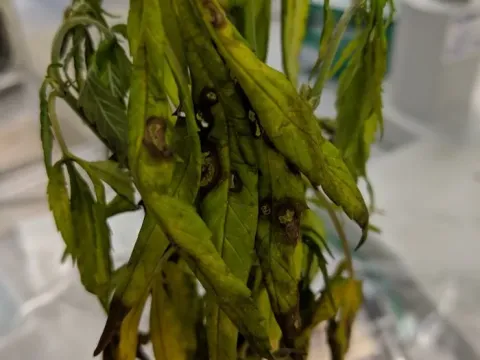
Early symptoms appear as small, elliptical, pale green or grayish lesions that gradually expand into characteristic cigar-shaped spots.
These lesions can grow several centimeters in length, often exhibiting a dark brown or tan color with distinct chlorotic halos around the margins.
Under humid conditions, the surface of the lesions becomes covered with a dense, olive-green to black velvety layer of conidiophores and spores.
As the disease progresses, multiple lesions merge, resulting in large necrotic patches that cover most of the leaf surface, causing it to wither.
Severe infestations can progress from the lower leaves to the upper canopy, significantly limiting the plant's ability to undergo photosynthesis.
The development of Northern leaf blight is strongly favored by prolonged periods of moderate temperatures ranging from 18 to 28 degrees Celsius.
High relative humidity and frequent rainfall or heavy dew provide the necessary moisture for the germination of fungal spores on plant surfaces.
The disease spread is most aggressive in regions with consistent wet weather, which supports the repeated production of secondary inoculum cycles.
Poor agricultural practices, such as minimal tillage that leaves high levels of crop residue on the surface, increase the local inoculum potential.
Dense planting configurations that restrict airflow within the canopy maintain a persistent microclimate that is conducive to rapid fungal colonization.
The primary impact of the disease is the substantial reduction in leaf surface area, which leads to decreased grain filling and lower overall yields.
Photosynthetic efficiency is severely compromised, causing the plant to redirect energy away from grain production, resulting in smaller and lighter kernels.
Infected plants often experience premature senescence and stalk weakness, which significantly increases the risk of lodging before the harvest period.
The disease can cause a rapid decline in crop quality, reducing the market value and storability of the harvested agricultural produce.
Under favorable disease development conditions, total grain yield losses can reach significant levels, sometimes exceeding 30–40 percent in susceptible hybrids.
The most effective strategy for managing Northern leaf blight is the deployment of commercial hybrids that possess genetic resistance to the pathogen.
Implementing crop rotation programs helps to decrease the accumulation of inoculum in the soil by separating susceptible hosts by at least two seasons.
Deep plowing and tillage practices that effectively bury crop residues are crucial for accelerating the decomposition of infected plant materials.
Fungicide applications are recommended when early symptoms are detected in fields with high disease pressure to prevent widespread economic loss.
- Selection of resistant or tolerant crop varieties.
- Strategic removal and destruction of crop debris.
- Optimization of nitrogen fertilization to avoid excessive vegetative growth.
- Scouting of fields during the critical stages of ear formation.