
Northern corn leaf blight
Exserohilum turcicum
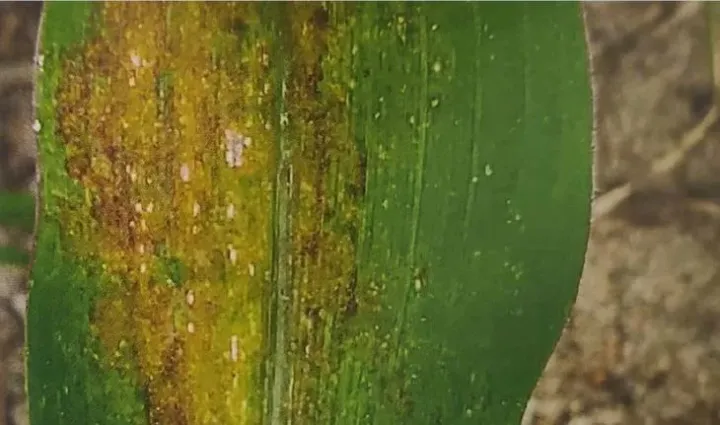
Description
Symptoms
Symptoms typically begin on the lower leaves as small, elliptical, pale-green or gray-green lesions that enlarge over time to become distinctively cigar-shaped.
These lesions can grow up to 15 centimeters in length and usually turn tan or brown with a dark, necrotic center as the leaf tissue dies.
A dark, olive-colored velvety layer, representing the fungal spores, often develops on the surface of the lesions during periods of high moisture, creating a characteristic appearance.
As the disease progresses, lesions coalesce and cover large areas of the leaf, causing the entire leaf to wither and turn necrotic, which significantly reduces the photosynthetic capacity of the plant.
In severe cases, the blight can spread to the husks and ears, causing premature plant death and predisposing the plant to stalk rot and lodging.
Pathogen
Northern corn leaf blight is caused by the fungus Exserohilum turcicum (formerly classified as Helminthosporium turcicum). It is a major fungal pathogen that affects corn crops globally, especially in regions with high humidity.
The fungus overwinters in infected crop debris as mycelium and conidia. In the spring, spores are disseminated by wind and splashing rain to the leaves of young corn plants, initiating the infection cycle.
As an obligate parasite, the fungus requires living tissue to develop, but it survives effectively on residues, which serves as the primary inoculum for the next growing season.
The life cycle of the pathogen is relatively short, and under favorable weather conditions, it can produce multiple generations of spores within a single season, leading to rapid spread.
Host susceptibility varies depending on the corn hybrid, and the pathogen can adapt to new environments, making it a persistent challenge for corn growers worldwide.
Conditions for development
The development of Northern corn leaf blight is strongly favored by moderate temperatures, typically between +20°C and +25°C, and prolonged periods of high humidity.
Frequent rainfall, heavy dew, and persistent cloud cover create an ideal microclimate for fungal sporulation and spore germination on the corn leaves.
High plant population densities increase leaf shading and moisture retention within the canopy, which significantly promotes the spread of the pathogen from lower to upper leaves.
The presence of significant surface residue from previous corn crops is the most critical factor, as it provides a readily available source of inoculum to infect the new crop.
Furthermore, plants that are stressed by nutrient deficiencies, particularly low potassium levels, are more susceptible to infection and exhibit more severe symptoms.
Why it matters
The primary damage caused by this disease is the loss of photosynthetic leaf area, which prevents the plant from effectively producing grain and filling the ears.
When the disease reaches the upper leaves early in the season, yield losses can be substantial, often resulting in smaller, lighter grains and significantly reduced overall production.
The weakening of the stalks due to early leaf senescence and the diversion of nutrients to combat the fungus increases the risk of lodging, which complicates harvesting and causes further yield loss.
In highly susceptible hybrids, epidemic outbreaks can lead to yield reductions exceeding 50%, posing a serious economic threat to corn production in affected regions.
Additionally, the quality of the harvested grain may be diminished, and heavily infected crops may not be suitable for high-value uses or long-term storage.
Protection
The most reliable strategy for managing Northern corn leaf blight is the use of resistant or tolerant corn hybrids, which help minimize the impact of the disease.
Cultural practices are essential, including crop rotation with non-host crops and the burial or management of crop residues to reduce the initial fungal inoculum load in the field.
Maintaining balanced soil fertility, especially adequate potassium, improves plant vigor and resistance, making it harder for the pathogen to establish a severe infection.
Fungicide applications are highly effective when timed correctly, usually at the onset of symptoms or in anticipation of favorable weather conditions for disease development.
- Utilizing disease-resistant corn hybrids.
- Practicing crop rotation to reduce inoculum levels.
- Tillage practices that incorporate infected crop debris into the soil.
- Scouting fields regularly to detect early infection symptoms.
- Applying fungicides (e.g., strobilurins or triazoles) at the V6–V10 growth stage.
Discussion
No discussions yet — be the first.