
Normandina pulchella
Normandina pulchella
Description
Symptoms
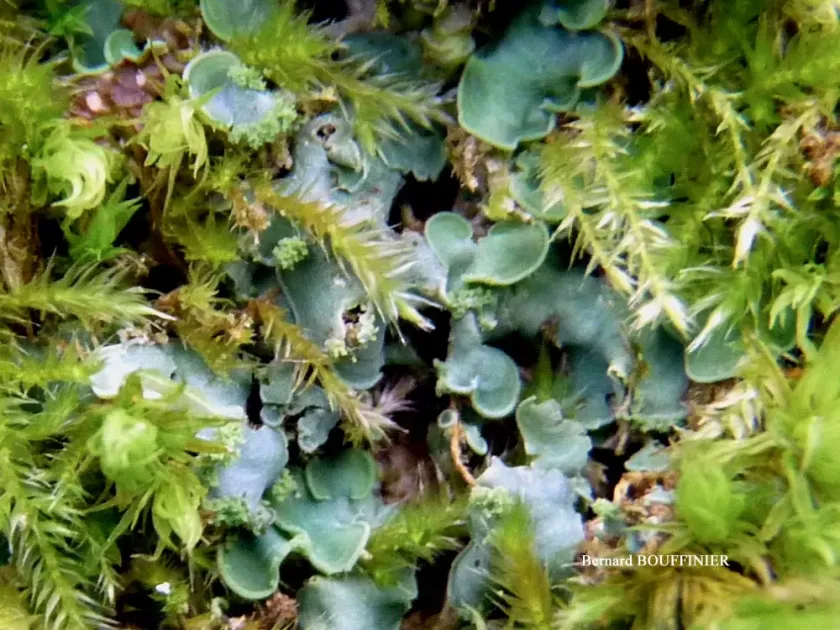
Normandina pulchella is a small, squamulose lichen that often grows on the bark of old trees or mossy surfaces.
Its thallus consists of small, rounded, light green or gray-green scales that are tightly pressed to the substrate.
A distinctive feature of this species is the presence of small, granule-like structures called soredia, which facilitate its asexual reproduction.
These colonies appear as thin patches on the bark, often blending in with other mosses or lichen species in the ecosystem.
When moist, the lichen becomes brighter green, but in dry conditions, it appears dusty or gray, which is typical for many shade-loving species.
Pathogen
This organism is strictly an epiphyte and is not considered a plant pathogen or a disease that damages living plant tissues.
It forms a symbiotic relationship between a fungus and a photosynthetic alga, living entirely on the surface of the bark.
Unlike parasitic fungi, it does not penetrate the cambium or vascular system of the tree to extract nutrients or water.
Its biological function is related to atmospheric nitrogen fixation and water retention on the bark surface.
Therefore, classifying it as a plant "disease" is botanically incorrect, as it causes no negative physiological impact on the host tree.
Conditions for development
Normandina pulchella thrives in environments with high relative humidity and moderate shading, typical of old-growth forests or unmaintained orchards.
It prefers bark with a rough texture that can hold moisture and organic debris for colonization.
It is sensitive to air pollution, particularly sulfur dioxide, and is often used as a biological indicator for clean air.
Stable microclimatic conditions without drastic changes in humidity promote the colonization of tree trunks over many years.
It often grows alongside other lichens and bryophytes, forming complex communities on tree stems and branches.
Why it matters
There is no evidence that this lichen causes harm to the tree's vitality, growth, or fruit production.
While some gardeners fear it blocks the bark from "breathing," the gas exchange capacity of mature bark is unaffected by this thin epiphyte.
It does not produce any toxins that could negatively affect the plant cells underneath its thallus.
The only minor concern is the potential for small pests like scale insects to harbor underneath the lichen patches.
Overall, the presence of Normandina pulchella is harmless and indicates a stable ecological environment.
Protection
No chemical pesticides or fungicides are required to manage this lichen, as it poses no threat to plant health.
If removal is desired for aesthetic reasons, gentle mechanical brushing with soft tools is the only recommended approach.
Good horticultural practices, such as proper pruning, improve canopy airflow and light penetration, which naturally discourages excessive lichen growth.
White-washing trunks with lime remains the traditional method for keeping bark clean and suppressing epiphyte colonization.
- Regular tree canopy management.
- Sanitary pruning of dead branches.
- Monitoring overall tree health.
- Manual bark cleaning if strictly necessary.
Discussion
No discussions yet — be the first.