
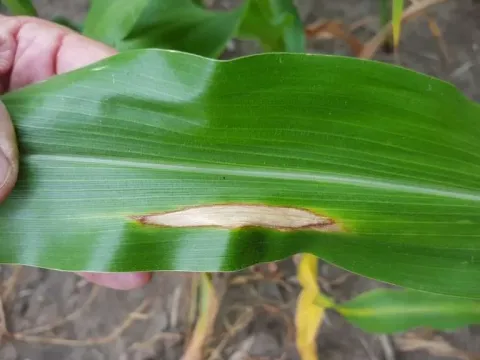
Northern corn leaf blight
Maize leaf
Northern corn leaf blight (NCLB) is caused by the fungus Exserohilum turcicum, which is a major foliar pathogen affecting maize production worldwide.
What the section contains
Northern corn leaf blight
The fungus thrives in environments with high moisture and moderate temperatures, surviving through the winter on infected corn debris left in the field.
The life cycle begins when conidia are spread by wind or water splashing from residues onto the lower leaves of the developing corn plant.
Under favorable conditions, the pathogen produces new spores on the lesions, allowing the disease to progress rapidly upward to the upper canopy.
This pathogen has specialized races, which makes the breeding of resistant corn hybrids a continuous process to keep pace with the fungal evolution.
The primary symptom is the appearance of characteristic elongated, cigar-shaped lesions that are typically grayish-green to tan in color.
As the infection matures, these lesions grow larger and may merge, eventually covering the entire surface of the leaf and causing it to die.
Under high humidity, a dense, dark-colored layer of fungal spores appears on the surface of the lesions, facilitating further spread of the blight.
Early-stage infection starts on the lower leaves and progresses upward, giving the plant a scorched or burnt appearance if the weather remains wet.
In severe cases, the blight can spread to the husks and ears, causing grain mold and potentially reducing the viability of the seeds for future planting.
Disease development is heavily favored by prolonged periods of leaf wetness caused by frequent rain, heavy dew, or persistent foggy weather.
Optimal temperatures for the growth and reproduction of the fungus range from 18°C to 27°C, which are typical for mid-summer corn growth.
Reduced tillage practices can increase disease pressure because they leave significant amounts of infested crop debris on the soil surface.
High plant density and limited air movement within the canopy maintain the humidity levels necessary for spore germination and lesion expansion.
Environmental stress, such as nitrogen deficiency or drought, can weaken the plant and make it more susceptible to successful fungal colonization.
The most significant damage is caused by the extensive destruction of leaf tissue, which drastically reduces the plant's photosynthetic capacity.
Yield losses can be catastrophic, often exceeding 30-50% if the disease becomes widespread during the critical grain-filling stages of the plant.
Reduced photosynthesis leads to smaller ears, lower grain weight, and an overall decrease in the nutritional quality of the harvested corn kernels.
The weakened stalks, resulting from the plant drawing energy from the stalk to survive, become prone to lodging and stalk rot diseases.
Economic losses also accumulate due to the need for chemical interventions, harvesting complications, and potential downgrading of grain quality.
Selecting and planting genetically resistant hybrids is considered the primary and most cost-effective strategy for managing Northern corn leaf blight.
Practicing crop rotation with non-host species, such as soybeans or wheat, helps reduce the inoculum levels present in the field's soil.
Implementing deep tillage to bury crop residues helps in the decomposition process, thereby reducing the survival rate of the fungal pathogen.
Foliar fungicide applications during the vegetative or early reproductive stages can significantly limit the spread of the disease in high-risk areas.
Monitoring field conditions and scouting for early lesions allows farmers to make timely decisions about fungicide usage before the blight becomes epidemic.