
Naetrocymbaceae
Naetrocymbaceae
The Naetrocymbaceae family belongs to the order Chaetothyriales, comprising fungi that typically live as epiphytes on the bark of woody plants.
What the section contains
Naetrocymbaceae
These organisms often exist in lichenized states or as lichenicolous fungi, forming symbiotic associations with algae or cyanobacteria on plant surfaces.
While often viewed as non-aggressive, they thrive in habitats where moisture levels remain consistently elevated, colonizing bark and woody tissues.
The primary mode of dissemination involves the release of spores, which are spread by wind currents and splash dispersal during rainy seasons.
Biologically, these fungi are specialized to utilize the outer bark layer, often forming extensive mycelial networks that persist over several growing seasons.
Typical signs of Naetrocymbaceae colonization include the appearance of dark, crust-like or powdery patches on the tree stems and branches.
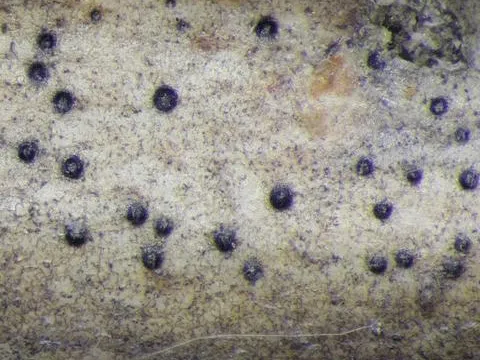
Close inspection often reveals numerous small, black perithecia embedded in the fungal growth, appearing as scattered dots on the surface.
The bark may take on a discolored appearance, often shifting to shades of gray, dark brown, or olive, depending on the fungal species and substrate.
In cases of heavy infestation, the fungal layer may become thick enough to interfere with the natural texture and elasticity of the tree bark.
These infections are frequently localized but can spread across the entire canopy if environmental conditions favor the development of the fungal colonies.
Humidity is the most critical factor for the growth of Naetrocymbaceae, with high rainfall and frequent fog providing ideal conditions.
Poorly ventilated canopies, resulting from lack of pruning or overcrowding, facilitate a humid microclimate that favors fungal colonization.
Older trees with rough, fissured bark provide the perfect anchoring points for spores to germinate and establish long-lasting mycelial mats.
Reduced solar exposure within the inner parts of the tree allows moisture to linger on the surface of the bark, accelerating fungal spread.
Trees undergoing physiological stress, whether from drought, nutrient deficiency, or pest attacks, are significantly more susceptible to these fungi.
The primary concern is the creation of a physical barrier that restricts the gas exchange of the bark, potentially stressing the underlying vascular tissues.
The fungal growth often serves as a substrate for secondary pathogens, which may exploit the humid environment provided by the initial colony.
While not primary killers of healthy trees, these fungi contribute to the gradual decline of tree vigor, especially in neglected orchard environments.
Extensive coverage of young twigs may interfere with the plant's ability to maintain optimal physiological processes during the growing season.
Their presence is a diagnostic indicator that the tree environment lacks the necessary cultural maintenance to prevent minor biotic stressors.
Effective management begins with improving airflow within the canopy through regular, strategic pruning of dead or overlapping branches.
Mechanical removal of mosses, lichens, and fungal crusts using stiff brushes during the dormant season helps eliminate the primary habitats.
Copper-based fungicides are highly recommended for washing down trunks and branches to eradicate spores and inhibit further mycelial growth.
Maintaining tree vigor through proper fertilization and watering schedules makes plants less conducive to opportunistic fungal infections.
Applying traditional horticultural whitewash (lime-based mixtures) to the main stem acts as a preventative measure to disinfect and seal the bark surface.