
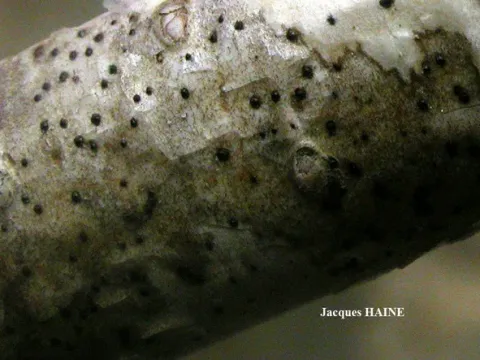
Naetrocymbe punctiformis
Naetrocymbe punctiformis
The pathogen Naetrocymbe punctiformis is a fungus belonging to the group of lichenized ascomycetes. It is an epiphytic organism that colonizes the bark of various deciduous trees.
What the section contains
Naetrocymbe punctiformis
Unlike aggressive parasitic fungi, this species often behaves as a minor pathogen or a symbiont. It forms small, black, dot-like fruiting bodies called perithecia on the surface of the bark.
Taxonomically, it is classified within the order Chaetosphaeriales. The biological cycle of the fungus is strictly dependent on moisture availability on the bark surface.
The fungal mycelium spreads within the outer layers of the periderm. It does not penetrate deep into the woody tissue, which limits its immediate destructive capacity on the host tree.
It is widely recognized in mycology as a component of the diverse microflora living on the trunks of forest and fruit trees, often manifesting in favorable climatic conditions.
The primary symptom is the appearance of numerous small, black, point-like fruiting bodies scattered across the bark surface. These spots are often visible to the naked eye upon closer inspection.
Infection is most commonly observed on smooth bark surfaces, particularly on young trees or specific sections of older, mature trunks. The bark may take on a grayish or brownish cast.
There are no deep lesions, fissures, or exudates typical of severe canker diseases. However, prolonged colonization may result in minor flaking or peeling of the outermost bark layer.
Symptoms are usually most concentrated in areas with high humidity, such as the shaded side of a tree trunk or in dense parts of the canopy where airflow is restricted.
- Numerous tiny black spots on the bark surface.
- Dull or grayish discoloration of the bark.
- Localized thinning or peeling of the periderm.
The development of Naetrocymbe punctiformis is driven by high humidity and poor ventilation. Crowded orchards or locations with restricted airflow create a perfect microclimate for this fungus.
Frequent rainfall, fog, and dew provide the necessary moisture for spore germination on the bark. Environments where tree surfaces remain wet for extended periods are the most susceptible.
Trees with weakened vigor are more likely to harbor this fungus compared to healthy, robust trees. Poor nutritional status or stress from environmental factors makes the bark more prone to colonization.
Inadequate light exposure is another major factor. Ultraviolet radiation has an inhibitory effect on many epiphytic fungi, so well-pruned and exposed trunks are generally more resistant.
The fungus thrives within a temperature range of 15°C to 25°C. It demonstrates high resilience and can persist during periods of unfavorable weather conditions until moisture returns.
The direct damage caused by Naetrocymbe punctiformis is considered low in terms of crop yield loss. It does not obstruct nutrient transport or cause systemic tree decline.
However, heavy infestation can interfere with gas exchange through the lenticels on the bark. This stress can contribute to the physiological weakening of the tree over time.
In nurseries and ornamental settings, the fungus significantly degrades the aesthetic value of the trees, making them less marketable due to the discolored and spotty appearance of the bark.
The presence of this fungus can act as an indicator of poor tree care or management. Furthermore, the altered surface of the bark may facilitate the colonization of more dangerous secondary pathogens.
Economic risks are primarily associated with the need for extra labor in managing tree appearance and the potential for cumulative stress on high-value fruit production trees.
The most effective strategy is the maintenance of proper pruning practices. Regular thinning of the canopy ensures sufficient light and airflow, creating an environment unsuitable for fungal growth.
Good horticultural practices, including balanced fertilization and timely pest control, ensure the tree maintains natural resilience against superficial fungal infections.
For ornamental or high-value trees, manual cleaning of the bark using a soft brush during the dormant season can remove a significant portion of the fungal fruiting bodies.
Application of copper-based fungicides at the start of the growth season (the "green cone" stage) effectively suppresses spore germination and halts the spread of the disease.
Regular monitoring and keeping the orchard floor properly drained will help lower the relative humidity within the tree canopy, significantly reducing the risk of infestation.