
Nalanthamala
Nalanthamala
The disease is caused by a fungal pathogen belonging to the genus Nalanthamala. A significant and well-documented species is Nalanthamala vermoeseni, which is known for its ability to cause severe damage to woody plant tissues.
What the section contains
Nalanthamala
This microscopic fungus acts as an aggressive parasite. It colonizes the bark and woody tissues of the host plant, disrupting internal processes and leading to the progressive deterioration of the tree's health.
The life cycle of the pathogen involves the prolific production of spores. These spores are dispersed by wind, splashing rain, and physical movement, ensuring the rapid spread of the disease across orchards or forest stands.
The fungus secretes enzymes that break down complex plant fibers. By degrading the internal structures of the host, the pathogen effectively starves the tree and compromises its physical integrity.
Laboratory identification of this fungus is crucial for accurate diagnosis. Microbiologists analyze the morphology of spores and mycelial structures to distinguish it from other wood-decaying organisms present in the environment.
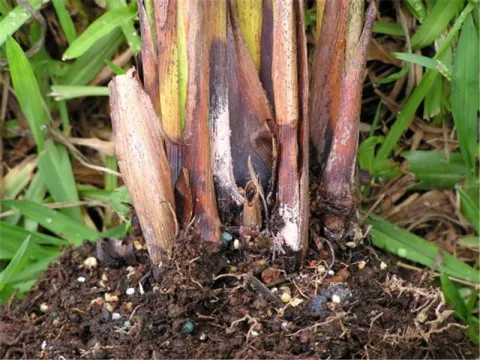
The most prominent sign of Nalanthamala infection is the development of extensive necrotic lesions on the bark and trunks of the trees. These lesions often start as small, darkened areas that gradually expand over time.
A distinctive indicator is the presence of fungal sporulation structures on the surface of the bark. These appear as small, often pinkish or cream-colored cushions, which are particularly visible in humid conditions.
Infected trees often exhibit significant gummosis, where sap or resin oozes from the affected areas. This is a stress response, but it fails to contain the fungus, which continues to penetrate deeper into the wood.
Branches affected by the pathogen show signs of dieback, starting from the tips and progressing toward the main stem. Leaves may turn yellow, lose turgor, and drop prematurely, leading to a sparse canopy.
If the infection girdles the trunk or a main branch, the parts above the necrotic area will eventually die. Under the bark, the tissues may feel soft or spongy, often emitting a distinct odor of decomposition.
High humidity and consistent rainfall are the primary drivers of this disease. The fungus thrives in moisture-rich environments, which facilitate spore germination and the rapid infection of new host tissues.
Moderate temperatures during the spring and autumn months are ideal for the growth and spread of the pathogen. These conditions allow the fungus to proliferate before the tree can mount an effective defense.
Mechanical injuries are a major factor in the transmission of Nalanthamala. Pruning wounds, insect damage, or physical abrasions from equipment create entry points that the fungus exploits to invade the plant.
Trees that are under stress, such as those suffering from nutrient deficiency, drought, or poor soil conditions, are significantly more susceptible. Their weakened immune systems cannot effectively stop the fungal colonization.
Poor orchard or garden management, such as overcrowding, restricts air circulation. This results in prolonged leaf wetness and high local humidity, creating a perfect habitat for the fungus to spread from tree to tree.
The primary impact of Nalanthamala is the premature death of valuable trees. If left untreated, the infection can kill mature specimens within a few seasons, causing significant loss of biodiversity and assets.
Economic damage is particularly severe in plant nurseries, where the disease can force the destruction of large quantities of planting stock. This leads to direct financial losses and increased production costs.
In landscaping and urban forestry, the disease drastically reduces the aesthetic value of trees. Dead branches, discolored bark, and sparse foliage make the trees unsuitable for decorative purposes.
The pathogen interferes with the transport of water and nutrients within the tree. This starvation slows growth, makes the tree more prone to secondary infections, and significantly shortens its natural lifespan.
Implementing control measures is expensive and labor-intensive. It requires regular monitoring, the use of specialized fungicides, and the removal and disposal of large amounts of infected organic material.
The most effective strategy for managing Nalanthamala is rigorous sanitation. All infected branches or entire trees must be removed and destroyed by burning to eliminate the inoculum source.
Disinfecting pruning tools after every cut is mandatory to prevent the transmission of the fungus between healthy and infected trees. Alcohol-based solutions or specialized disinfectant sprays should be used.
Proper agricultural practices are essential to keep trees healthy. This includes ensuring adequate nutrition, regular watering, and maintaining a growth-friendly environment that strengthens the tree's natural defenses.
Preventative fungicide applications can be beneficial, particularly after pruning or during periods of high environmental risk. Choosing the right chemical agent for fungal control is vital for success.
- Regular monitoring and early detection of disease symptoms.
- Using resistant varieties for new plantings if available.
- Applying wound dressings to major cuts to seal the bark.
- Maintaining good spacing to ensure optimal air circulation.