
Nakatea
Nakatea
The disease is caused by the fungus Nakatea sigmoidea (formerly known as Leptosphaeria salvinii, with the anamorph Sclerotium oryzae). It is a persistent ascomycete fungus affecting cereal crops.
What the section contains
Nakatea
The pathogen survives in soil and crop debris as microsclerotia, which are highly resilient structures capable of remaining viable for several years in harsh conditions.
The infection cycle begins when sclerotia float to the water surface during field flooding, germinating to produce conidia that spread through irrigation water.
The fungus attacks the root system and the lower stem, penetrating the plant tissue through natural openings or wounds created by pests or agricultural machinery.
Inside the host, the fungus forms new sclerotia, which are released back into the soil upon plant death or harvest, ensuring the continuation of the disease cycle.
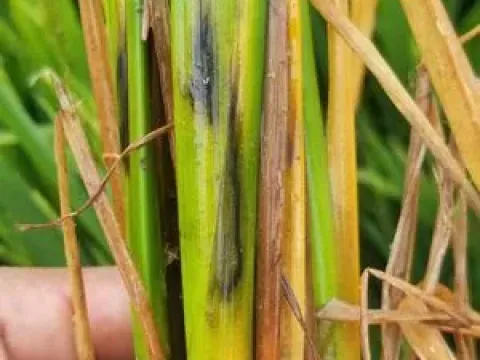
Early symptoms appear as small, dark brown or black spots on the leaf sheaths that are in direct contact with the water line of the rice field.
As the infection progresses, these spots expand, become irregular in shape, and merge, eventually covering a significant portion of the stem circumference.
A distinctive feature of the disease is the whitening of the center of the spots, while the margins remain dark, creating a characteristic blotchy appearance.
Internal tissue decay is common, with the stem becoming soft and fragile, often showing a mass of dark, spherical sclerotia inside the infected tissues.
Severe infestations lead to premature lodging of the plants, as the weakened stems are unable to support the weight of the developing panicles.
High humidity and prolonged flooding of rice fields are the primary environmental conditions that favor the germination and spread of the pathogen.
The fungus thrives in temperatures ranging from +25°C to +30°C, which perfectly aligns with the active vegetative growth phase of rice in major production regions.
Over-application of nitrogen fertilizers makes plants more succulent and vulnerable to fungal penetration, significantly increasing the severity of the infection.
Poor aeration in the canopy and stagnant water conditions create microclimates that are ideal for the rapid dispersal of spores between plants.
Dense planting patterns reduce airflow and sunlight penetration to the base of the plant, further promoting the buildup of the fungal population.
Nakatea is a highly destructive disease, with yield losses often ranging from 20% to 50% depending on environmental factors and cultivar susceptibility.
The main impact is the disruption of nutrient and water flow to the panicle, resulting in unfilled or poorly developed grains with reduced quality.
Lodging caused by the structural degradation of the stem makes mechanical harvesting extremely difficult and leads to significant grain wastage in the field.
The quality of the harvested grain is significantly lowered, exhibiting lower milling recovery and lower overall market value compared to healthy crops.
The long-term accumulation of sclerotia in the soil poses a persistent threat to future cropping seasons, necessitating long-term disease management strategies.
Implementing crop rotation is a primary preventative measure to reduce the soil inoculum pressure by removing the host crop for at least one or two seasons.
Post-harvest sanitation, including the removal of infected stubble and deep plowing, helps to bury and accelerate the decay of fungal sclerotia.
Selecting and planting resistant or tolerant rice varieties is the most effective approach to minimize the risk of infection and reduce production costs.
Proper water management, including periodic draining of the fields, can significantly inhibit the development of the disease and limit spore spread.
- Application of systemic fungicides from the triazole or strobilurin groups during the tillering stage.
- Balanced fertilization strategies to avoid excessive nitrogen levels that predispose plants to decay.
- Effective weed control to eliminate alternative hosts for the pathogen.