
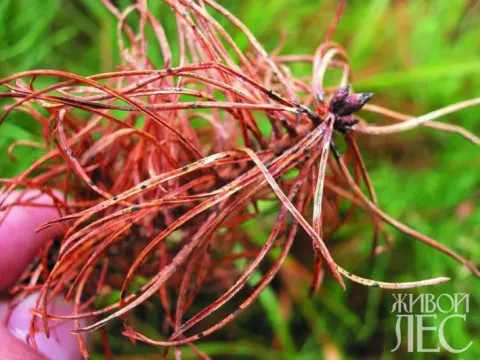
Naemacyclus needle cast
Naemacyclus
The causative agent of this disease is the ascomycete fungus Cyclaneusma minus (synonym Naemacyclus minus). It is a specialized pathogen primarily affecting various species of the genus Pinus.
What the section contains
Naemacyclus needle cast
The fungus reproduces through the formation of small fruiting bodies called apothecia, which appear directly on the needles. These structures are the source of spores that spread the infection.
It acts as a parasite, invading the needle tissue through the stomata. Once inside, the fungal mycelium colonizes the interior, disrupting metabolic processes and eventually causing cell death.
The pathogen persists in the needles that have fallen to the ground, creating a reservoir of infection that can initiate new cycles of disease in subsequent growing seasons.
The biology of Cyclaneusma minus is characterized by a latent period, during which the infection progresses inside the needle before any visible signs appear on the outer surface.
The first symptoms are the appearance of yellow or brownish spots and bands on the needles. Over time, these spots enlarge, causing the entire needle to turn brown and shed prematurely.
On the lower surface of the infected or shed needles, small, elliptical, pale-colored or cream-colored fruiting bodies are visible. These typically form in lines along the central vein of the needle.
The most characteristic symptom is the progressive thinning of the crown. The infection often starts from the lower branches and spreads upward, leaving the tree looking sparse.
Infected needles become brittle and lose their natural color and sheen. When observed under high humidity, the fruiting bodies may swell slightly, indicating active spore production.
In severe cases, the tree loses a significant portion of its foliage, leading to crown dieback, which is a clear indicator of long-term and intensive fungal impact on the tree's health.
The development of Naemacyclus is strongly favored by prolonged periods of cool, wet weather. Moisture is essential for the activation of the fungus and the release of spores.
Dense plantings or trees with poor airflow are particularly susceptible. The lack of air movement prevents the foliage from drying out quickly after rain, which creates a perfect environment for infection.
Trees that are poorly lit or growing in shaded, damp conditions often have reduced natural resistance, making them easier targets for the fungal spores.
Spore dispersal occurs primarily through wind and rain splashes. During rainy springs and autumns, the pathogen can travel significantly, spreading the disease to healthy neighboring trees.
The disease development is optimal within a moderate temperature range, typically observed during spring and autumn seasons when humidity levels are consistently high.
The primary harm is the significant loss of foliage, which reduces the tree's ability to photosynthesize. This results in decreased growth rates and overall weakening of the tree.
Weakened trees are highly prone to secondary infestations by pests such as bark beetles. These pests often exploit the tree's stressed state to complete their life cycles.
In commercial forestry and nurseries, this disease causes considerable economic losses due to the degradation of seedling quality and the reduction of wood yield in timber plantations.
For ornamental landscapes, the disease causes severe aesthetic damage. The thinning of the canopy and premature needle drop make the conifers look unsightly and unhealthy.
Long-term impact can lead to the decline of the tree's vitality, making it unable to recover from stress, which in extreme cases can result in the mortality of the plant.
Sanitation is the most critical control measure. Collecting and destroying all fallen needles prevents the fungus from overwintering and reduces the inoculum load for the next year.
Proper silvicultural practices, such as spacing trees correctly to ensure good ventilation and light penetration, are effective in preventing the buildup of fungal populations.
Applying copper-based fungicides or other systemic protective treatments in the spring and early summer can significantly reduce the incidence and severity of the disease.
Providing the trees with adequate nutrients helps strengthen their natural defense systems, allowing them to better withstand or recover from a fungal attack.
- Remove and burn infected plant debris.
- Ensure adequate crown spacing for airflow.
- Monitor trees for early signs of yellowing.
- Apply fungicide sprays during high-risk seasons.
- Maintain tree vigor through proper fertilization.