
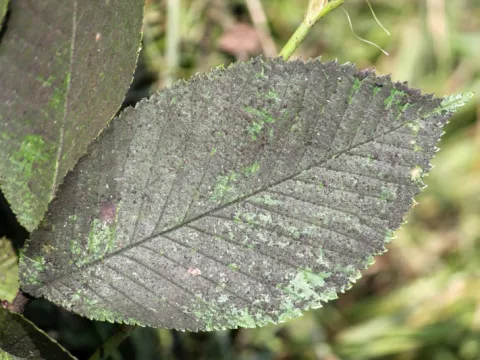
Sooty mold
Metacapnodium
Sooty mold is caused by fungi belonging to the order Capnodiales, specifically species within the Metacapnodium genus. These fungi are saprotrophic, meaning they do not invade the plant tissues directly but thrive on their surface.
What the section contains
Sooty mold
The biology of this pathogen is strictly linked to sap-sucking insects, such as aphids, scale insects, whiteflies, and mealybugs. These insects excrete a sugary substance known as honeydew, which serves as the primary nutritional substrate for the fungus.
The fungal colony appears as a dark, charcoal-like web of hyphae. This black mycelial mat covers leaves, stems, and fruits, creating a coating that blocks light and significantly impacts the plant's physiological functions.
The life cycle of the fungus is entirely dependent on the presence of the insect hosts. As long as the honeydew-producing insects are present, the fungus can continue to propagate and expand its coverage over the host plant.
Under unfavorable conditions, the fungus persists as dormant spores or structures on bark crevices and plant debris. Once the favorable weather returns or the insects reappear, the colonization process begins anew.
The most distinctive symptom of sooty mold is the development of a black, soot-like powder or crust on the upper surface of leaves, stems, and fruits. In the early stages, this coating is easily wiped off, but it thickens over time.
The presence of a sticky residue on the foliage is a key indicator, as the honeydew creates a moist, tacky surface where fungal spores can easily attach and germinate. This often results in a dull, dirty appearance of the entire plant canopy.
Affected fruits show dark patches that can merge into larger, unsightly blotches. This significantly degrades the fruit's cosmetic quality, making it difficult to clean and, consequently, unsuitable for commercial markets.
Leaves covered by the mold often show signs of stress, including chlorosis, curling, or premature yellowing. The blockage caused by the fungal mat prevents the plant from maintaining its healthy metabolic rates.
Diagnosis is usually straightforward due to the visible black coating and the simultaneous presence of aphid or scale infestations. Identifying the source of the honeydew is crucial for accurate diagnosis of the underlying cause.
Sooty mold thrives in humid and warm environments, where moisture persists on leaf surfaces for extended periods. Lack of proper air circulation within the plant canopy creates a microclimate highly conducive to fungal growth.
The primary prerequisite for an outbreak is the presence of honeydew-producing insects. Without this sugar-rich secretion, Metacapnodium spores cannot establish themselves on the surface of otherwise healthy plants.
Shaded areas and densely planted garden beds are particularly susceptible because they retain humidity longer than open, well-ventilated spaces. Stagnant air helps the fungal mats to expand and become more deeply entrenched.
The disease is most prevalent during late spring and summer, correlating with the peak activity of aphids and scale insects. In regions with frequent rain followed by warm spells, the disease can spread rapidly across a landscape.
Poor orchard management, including failure to prune dead branches or neglect in monitoring for insect pests, allows the fungus to establish a permanent presence, turning the garden into a recurring reservoir for infection.
The primary damage caused by sooty mold is the inhibition of photosynthesis. The dense black layer acts as a light-blocking screen, preventing solar energy from reaching the leaf tissue, which halts carbon fixation and sugar production.
Because the plant cannot produce enough energy, it suffers from stunted growth, reduced vigor, and poor development of new shoots. Fruit yields are typically compromised in both quantity and quality, often resulting in smaller, less flavorful produce.
Fungal coverage clogs the plant's stomata, interfering with gas exchange and transpiration. This leads to water-stress symptoms, making the plant more susceptible to drought and leading to premature defoliation.
Marketability is severely impacted because the mold is difficult to remove without damaging the delicate skin of fruits. Even if cleaned, the damage to the fruit's epidermis during the growth period can leave permanent marks and increase rot risk.
Long-term exposure to sooty mold weakens the plant's immune system, making it more prone to secondary bacterial infections or wood-decaying fungi. Over time, this cumulative stress can lead to the death of specific limbs or the entire tree.
Effective management begins with strict control of the sap-sucking insects responsible for the honeydew. Utilizing systemic or contact insecticides targeting aphids, whiteflies, and scales is the most critical step to prevent further colonization.
Regular pruning is essential to improve airflow and light penetration throughout the canopy. A well-managed, open tree structure minimizes the humidity levels that favor fungal development and makes the plant less hospitable to pests.
In cases of existing infestations, washing the foliage and branches with a mild detergent solution or approved horticultural soaps can help remove the black layer mechanically, providing temporary relief and improving plant hygiene.
Copper-based fungicides, such as Bordeaux mixture, can be used to inhibit fungal growth on stems and bark. These treatments should be applied following local regulations and during the dormant season to maximize safety and efficacy.
Long-term prevention focuses on maintaining plant health through balanced fertilization and appropriate irrigation. Strong, well-nourished plants are naturally more resilient and can recover from the stresses of pest and fungal pressure more successfully.