
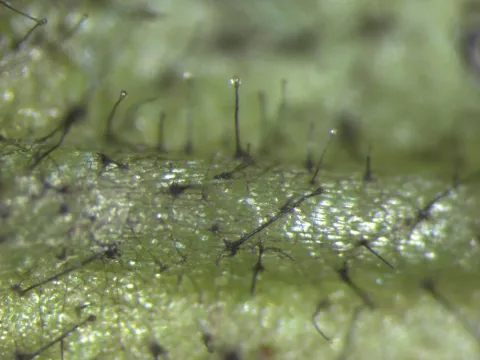
Sooty mold of cereals
Leptoxyphium graminum
The causal agent of this disease is the fungus Leptoxyphium graminum, which belongs to the group of saprophytic or weakly parasitic fungi commonly known as sooty molds.
What the section contains
Sooty mold of cereals
The mycelium of this fungus typically grows on the surface of the plant, forming a dense, dark-colored colony that covers leaves, stems, and spikes.
This pathogen survives on plant debris, in the soil, and within or on seeds, serving as a persistent source of inoculum for subsequent growing seasons.
Unlike obligate parasites, Leptoxyphium graminum acts as a secondary colonizer, frequently attacking plants that have already been weakened by environmental stress or other pathogens.
The life cycle involves the production of numerous conidia, which are efficiently dispersed by wind and rain splashes, allowing the disease to spread rapidly across fields during favorable weather.
The most visible symptom of sooty mold is the development of a black, charcoal-like, or olive-colored powdery coating on the surface of the host plant organs.
This soot-like deposit is superficial and can be easily rubbed off, but it reappears quickly if moisture conditions remain conducive to fungal growth.
When the fungus attacks the grain spike, it penetrates underneath the glumes, leading to the discoloration of the grain and the entire spike structure.
Affected fields often display a dull, dusty appearance, as the dense fungal mat physically blocks the plant's surface and interferes with light absorption.
While the fungus does not usually cause deep tissue necrosis, its heavy presence leads to premature senescence of the affected plant parts.
Sooty mold development is primarily driven by high humidity and prolonged periods of rainfall, especially during the grain ripening stage.
Optimal environmental conditions for the growth and sporulation of Leptoxyphium graminum include temperatures between 15°C and 25°C accompanied by high atmospheric moisture.
Lodged crops are particularly susceptible because the fallen stalks create a stagnant microclimate with reduced airflow and trapped moisture near the soil surface.
High-density planting and excessive nitrogen fertilization can exacerbate the problem by promoting dense canopy growth, which prevents rapid drying of the crop after rain.
Plants damaged by pests or other primary diseases are highly vulnerable as they leak nutrients that provide a perfect substrate for the fungus to thrive.
The primary economic impact of sooty mold is the significant degradation of grain quality, rendering it unsuitable for the milling industry.
The fungal coating causes staining, musty odors, and reduced grain weight, which severely lowers the market value and storability of the harvest.
By covering the green surface of the plant, the fungus inhibits photosynthesis, resulting in reduced grain filling and a lower total yield.
Infected seeds often exhibit reduced germination rates and low vigor, leading to poor establishment in the following season.
Under severe infestation, there is also a potential risk of grain contamination with fungal metabolites, which may pose safety concerns for livestock feed or human consumption.
Effective management begins with sound agronomic practices aimed at maintaining plant health and preventing crop lodging.
Selecting varieties that are resistant to lodging and maintaining appropriate plant density are crucial steps to ensure proper ventilation of the canopy.
Optimizing fertilization strategies prevents excessive lush growth, which helps in maintaining a drier microclimate within the field.
- Timely harvesting to avoid prolonged exposure of grain to high-humidity weather.
- Effective weed control to eliminate alternative reservoirs for the pathogen.
- Use of foliar fungicides during the growing season if environmental forecasts predict prolonged wet weather.
- Rigorous seed treatment with high-quality fungicides to reduce primary infection.
Proper soil management and the destruction or deep incorporation of crop residues help to significantly reduce the inoculum load in the field for the next season.