
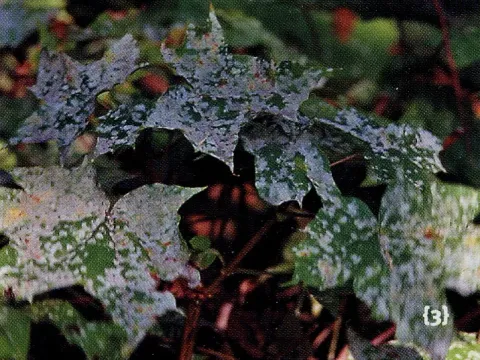
Sooty mold of olive tree
Capnodium elaeophilum
The main external sign of the disease is the appearance of a characteristic black or dark brown coating on the upper side of leaves, shoots, and fruits of the olive tree. This coating visually resembles soot or grime, which can be easily wiped off by mechanical action but quickly reappears.
What the section contains
Sooty mold of olive tree
In addition to leaf discoloration, affected areas lose their natural glossy surface. In severe cases, yellowing and premature leaf drop are observed, which significantly impairs the tree's decorative appearance.
The coating can cover large areas of the canopy, blocking sunlight from reaching plant tissues. This disrupts the normal process of photosynthesis, which ultimately weakens the overall condition of the olive tree.
Often, the infection occurs unevenly, starting from individual branches where secretions from insect pests have accumulated. Over time, the mycelium spreads to cover new parts of the tree if control measures are not taken.
On fruits, the mycelium forms a dense layer that reduces their market value and quality. The fruits themselves may become deformed or drop prematurely due to impaired tree nutrition.
The disease is caused by the fungus Capnodium elaeophilum, which belongs to a group of saprophytic microorganisms. It is important to understand that the fungus does not parasitize the plant's own tissues but uses insect waste products as a nutrient medium.
The primary substrate for mycelium development is honeydew secreted by sucking pests. On olive trees, these pests most often include olive scale insects and certain species of mealybugs.
The fungus does not penetrate into the plant's tissues, but its presence creates a physical barrier on the leaf surface. This disrupts gas exchange and reduces the rate of carbon dioxide absorption, which is essential for plant growth.
The pathogen can survive in plant debris and on tree bark for a long time. Spores are spread by wind, raindrops, and the movement of insect vectors across the canopy.
The biological connection between pests and the fungus determines the disease development dynamics. Suppressing the population of sucking insects is a fundamental stage in controlling the spread of Capnodium elaeophilum.
Active development of sooty mold requires specific conditions of high air humidity, especially during periods of prolonged fog or frequent rainfall. Stagnant air in dense tree canopies also provides a favorable environment.
High air temperature combined with humidity accelerates spore reproduction and colonization of the leaf surface. Under such conditions, the mycelium can cover a significant part of the tree in a short period.
Poor agricultural practices that prevent canopy ventilation significantly increase the risk of infection. Insufficient pruning of olive trees facilitates the creation of a microclimate ideal for pathogen spread.
The presence of large colonies of scale insects and mealybugs in the orchard provides a constant source of food for the fungus. The more pests present, the more abundant the honeydew layer, and consequently, the more actively sooty mold develops.
Seasonality also plays a role: the most intense damage is observed during periods of high pest activity, accompanied by sufficient levels of leaf moisture.
Sooty mold does not kill the tree directly, but it significantly reduces its productivity. Due to the blocking of photosynthesis, the tree lacks the energy needed for fruit formation and setting flower buds for the next season.
A weakened plant becomes more vulnerable to other pathogens and environmental stress factors. Reduced immunity leads to slower growth rates and a decrease in the overall life expectancy of the olive tree.
In commercial olive growing, damaged fruits become unsuitable for sale or processing. The coating is extremely difficult to remove, which requires additional cleaning costs and lowers the quality of olive oil.
Infected trees require more intensive care and frequent application of protection products. This increases production costs and labor demands for agronomists.
In the case of massive infection, defoliation may occur, which critically weakens the tree before winter or drought periods. Without proper intervention, the orchard may lose a significant part of its yield potential.
The primary protection strategy is to control the population of insect pests that secrete honeydew. Using insecticides against scale insects and mealybugs allows the fungal feeding cycle to be broken.
Regular and proper canopy pruning improves air circulation and sunlight exposure. This creates unfavorable conditions for mycelium development and promotes quick drying of leaf surfaces after rain.
To combat the existing coating, treatment with copper-based fungicides, such as Bordeaux mixture, is used. They help clean the leaf surface and prevent further spore spread.
Timely sanitary cleaning of the orchard, including the removal and destruction of heavily infected branches, reduces the total infectious load. In some cases, mechanical cleaning of trunks and large branches is required.
- Application of systemic insecticides to eliminate sucking pests.
- Conducting preventive treatments with copper-based preparations in autumn and spring.
- Adherence to optimal planting schemes to ensure proper ventilation.
- Monitoring canopy status for pest presence throughout the growing season.