
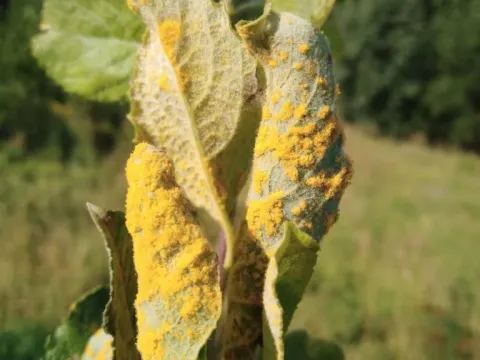
Willow rust
Melampsora ferrinii
Willow rust is caused by the fungal pathogen Melampsora ferrinii, which belongs to the Basidiomycota phylum. It is a highly specialized fungus that thrives specifically on various species of the Salix genus.
What the section contains
Willow rust
The pathogen completes its life cycle by forming several types of spores, which allows it to persist and spread efficiently throughout the growing season. The fungal mycelium invades the leaf tissues, extracting nutrients from the host plant.
Infection cycles are perpetuated by the repeated formation of urediniospores during the summer months. These spores are easily dispersed by wind and splashing rain, leading to rapid disease transmission.
The fungus is an obligate parasite, meaning it requires living host tissue to complete its development. Its adaptability ensures it can survive in various temperate climates where willow trees are grown.
The survival strategy of Melampsora ferrinii involves the production of resistant spores that endure winter conditions on fallen leaves, providing a fresh inoculum for the following spring.
The disease first manifests as small, yellow, or light orange spots appearing on the leaf surfaces. These spots rapidly develop into raised pustules that rupture the epidermis to release powdery spores.
A heavy infestation results in a distinct, rusty-orange appearance on the undersides of the leaves. Infected foliage often shows symptoms of yellowing, curling, and early distortion.
Premature leaf drop is a hallmark sign of severe infection, often leaving the branches bare long before the natural onset of autumn. This can significantly reduce the tree's overall vigor.
In addition to leaves, the fungus may occasionally colonize tender green shoots. This causes local deformations and restricts the normal growth of the branch tips.
During late summer, the pustules may transition to darker colors as the fungus prepares for its overwintering phase. These signs are often clustered, giving the leaves a speckled, sickly look.
Willow rust development is highly dependent on humidity and temperature. Warm, moist conditions with frequent rain or high dew levels create an ideal environment for spore germination.
Poor air circulation within tree stands significantly increases the risk of infection. Densely planted willow thickets trap moisture, allowing the fungus to colonize leaves more effectively.
The presence of overwintered leaf litter near the trees acts as a primary source of infection. Damp spring weather triggers the release of ascospores from this debris, initiating the first cycle.
Optimal temperatures for the fungus range between 18°C and 25°C. In such conditions, the incubation period between initial infection and the appearance of new spores is relatively short.
Trees that are already stressed due to poor soil fertility, drought, or lack of proper pruning are significantly more susceptible to a severe rust outbreak.
The primary damage caused by willow rust is the disruption of the photosynthetic process. As leaves fall early, the tree loses its ability to produce necessary energy reserves.
Reduced vigor makes the trees highly vulnerable to winter injury and frost damage. A willow that enters dormancy in a weakened state is significantly more likely to die during winter.
For growers of ornamental or basket-willow, the disease reduces the quality and marketability of the shoots. Infected stems become brittle and lose their desired flexibility.
Chronic rust infections eventually lead to stunted overall growth and dieback. Over time, the aesthetic appeal of the tree is completely lost, which is detrimental to landscape use.
Large-scale outbreaks in nurseries can lead to the total loss of inventory, as young plants are unable to survive the repeated stress caused by constant fungal infection.
Effective management of willow rust requires a combination of sanitation and cultural practices, supplemented by chemical control when necessary.
- Remove and destroy fallen leaves and plant debris to minimize the source of inoculum for the next season.
- Prune branches regularly to improve air circulation and sunlight penetration in the crown.
- Select willow cultivars known for their resistance to rust diseases whenever possible.
- Ensure proper fertilization to maintain tree health, avoiding excessive nitrogen that promotes overly succulent growth.
- Apply fungicide sprays, particularly those containing copper or systemic active ingredients, if disease pressure remains high.