
Willow tar spot
Rhytisma filamentosum
Description
Symptoms
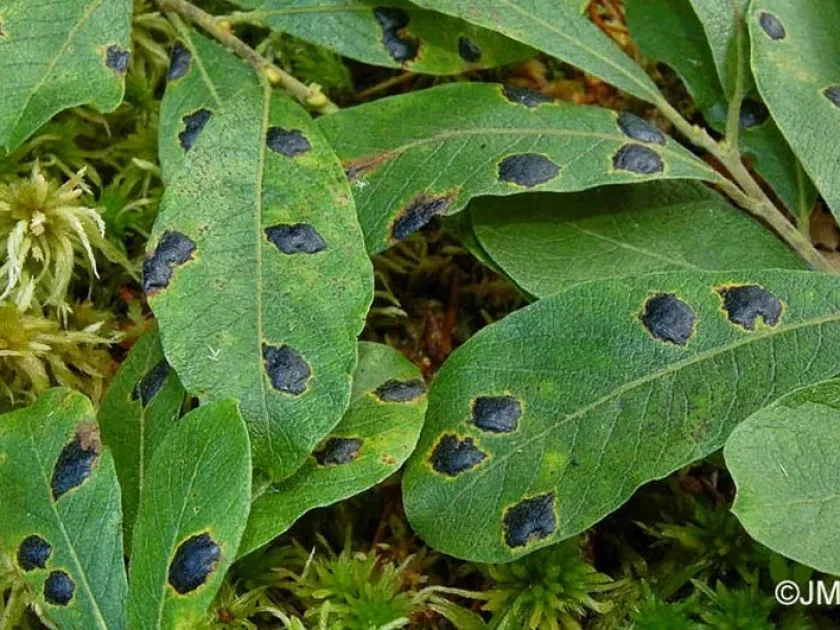
Initial symptoms appear in mid-summer as small, yellow, chlorotic spots on the upper side of the willow leaves. These spots gradually expand in size as the fungus matures.
By late summer, the spots develop into large, shiny, raised, black crusts. These are the fungal stromata, which stand out significantly against the green healthy leaf tissue.
A narrow yellow halo often surrounds these black spots, representing the host plant's physiological response to the fungal colonization.
Heavy infections cause premature yellowing of the foliage. The affected areas of the leaf may become brittle and deformed as the fungal structure replaces the leaf cells.
In severe cases, individual spots coalesce, covering large portions of the leaf blade, which drastically alters the aesthetic appearance of the tree's canopy.
Pathogen
The causative agent of this disease is the ascomycete fungus Rhytisma filamentosum. This pathogen is a specialized parasite that targets various species of the Salix genus, co-evolving with its host's seasonal cycles.
The fungal mycelium develops within the leaf tissues, colonizing the intercellular spaces. As it matures, it forms dense, black, raised stromatic structures on the leaf surface, which serve as the primary diagnostic feature.
The life cycle is closely linked to fallen leaves. The fungus overwinters in these plant residues, continuing its development in a saprotrophic phase until the arrival of favorable spring conditions.
In spring, apothecia (fruiting bodies) develop within the stromata, where ascospores mature. Once mature, these spores are released and dispersed by wind to healthy, growing willow foliage.
The biological success of this fungus relies on its precise synchronization with the host, allowing it to colonize canopy foliage effectively when moisture levels are sufficiently high.
Conditions for development
Disease development is favored by high humidity and frequent precipitation during the summer months. The fungus requires persistent moisture for spore germination and infection.
A critical factor for disease spread is the presence of unraked leaf litter under the trees, which serves as a reservoir for the primary inoculum.
Dense plantings that lack proper air circulation within the canopy create a microclimate of trapped moisture, making these trees highly susceptible to infection.
Stressed trees, particularly those suffering from nutrient deficiencies or poor soil conditions, often show higher infection rates compared to healthy, vigorous specimens.
The period of active infection typically aligns with the time of rapid shoot growth, when new leaves are soft and most vulnerable to the penetration of fungal hyphae.
Why it matters
The primary impact of willow tar spot is premature leaf drop, which prevents the tree from storing sufficient energy reserves for the upcoming winter dormancy.
Affected leaves suffer from reduced photosynthetic capacity as the fungus destroys chloroplasts, weakening the tree and making it susceptible to secondary stressors.
The aesthetic value of willow trees is significantly degraded, as the canopy loses its fullness and vibrant color long before the natural autumn senescence.
In tree nurseries, the disease can stunt the growth of young saplings, reducing their marketability and ability to establish roots effectively after transplanting.
Chronic infestation over several consecutive years can contribute to canopy dieback and the gradual decline of willow trees in landscape settings.
Protection
The most important control measure is the thorough collection and destruction of fallen leaves in the autumn to eliminate the source of the fungal inoculum.
Pruning the canopy to improve air circulation helps reduce the humidity levels within the tree, which hinders the successful germination of fungal spores.
Fungicides containing copper or systemic active ingredients can be applied during the growing season if early symptoms are detected to protect healthy foliage.
Maintaining optimal tree vigor through balanced fertilization and proper irrigation helps the willow build natural resistance against various fungal pathogens.
In large parks, integrating chemical management with cultural practices, such as mulching the root zone, can significantly reduce the infection pressure for the following year.
Discussion
No discussions yet — be the first.