
Willow scab
Venturia chlorospora
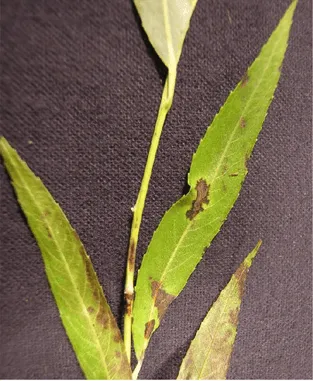
Description
Symptoms
Initial symptoms include the appearance of small, dark brown or black spots on the leaves during the early stages of the growing season.
As the infection progresses, these spots expand, often causing the leaves to curl, wither, and drop prematurely from the branches.
A distinctive velvety olive-black fungal growth can often be seen on the undersides of the leaves, indicating active sporulation.
Infected shoots often twist, turn black at the tips, and may die back, giving the tree a stunted and necrotic appearance.
If left unchecked, the damage can spread across the entire canopy, leading to severe defoliation during mid-summer.
Pathogen
The causative agent of willow scab is the ascomycete fungus Venturia chlorospora, which specifically targets Salix species.
The fungus survives the winter as mycelium within infected twigs and in fallen leaves left on the ground.
In spring, when conditions become favorable, spores are released and spread by wind and rain splashes to new, developing leaves.
Once settled on the host, the pathogen begins its reproductive cycle, producing conidia that can initiate multiple infection waves throughout the season.
The fungus colonizes the epidermal tissue of the leaves, eventually disrupting the plant's photosynthetic capacity.
Conditions for development
Willow scab thrives in environments with high humidity and frequent rainfall, particularly during the spring budding period.
Cool to moderate temperatures, typically between +15 and +20 degrees Celsius, are ideal for the rapid development of the fungus.
Poor air circulation within dense, overcrowded plantings exacerbates the problem by keeping leaf surfaces moist for longer periods.
The presence of old leaves and debris under the tree acts as a primary reservoir for the pathogen to re-infect the tree annually.
Trees that are under stress due to drought, lack of nutrients, or other pests are significantly more susceptible to the disease.
Why it matters
The disease causes major aesthetic degradation, making willow trees look sparse and unhealthy, which is problematic for ornamental landscapes.
Persistent defoliation weakens the tree's overall vigor, depleting energy reserves that are essential for winter survival.
The continuous dieback of shoots ruins the natural branching pattern and grace of weeping willow varieties.
Reduced photosynthetic activity impacts the growth rate and structural integrity of the tree over time.
Repeated annual attacks can lead to the decline of individual branches and, in severe cases, the eventual death of the entire tree.
Protection
Sanitation is the most critical control measure; rake up and destroy all fallen leaves and debris in the autumn to eliminate the overwintering source.
Perform regular pruning to remove infected branches, ensuring that cuts are made well into healthy wood to stop fungal progression.
Fungicide applications, particularly copper-based sprays or systemic treatments, should be applied at bud break to protect new growth.
Maintain tree health through proper fertilization and watering, and avoid overcrowding trees to ensure good air movement.
Selecting disease-resistant willow cultivars is a recommended strategy for long-term prevention in high-risk areas.
Discussion
No discussions yet — be the first.