
Willow scab
Fusicladium romellianum
Description
Symptoms
The first symptoms appear in the spring as small, dark brown or black spots on the leaves and young shoots. These spots quickly enlarge and often cause the leaf to curl.
Infected leaves blacken and wither, leading to premature leaf drop. On the underside of the leaves, a velvety, olive-black layer of fungal spores becomes visible under magnification.
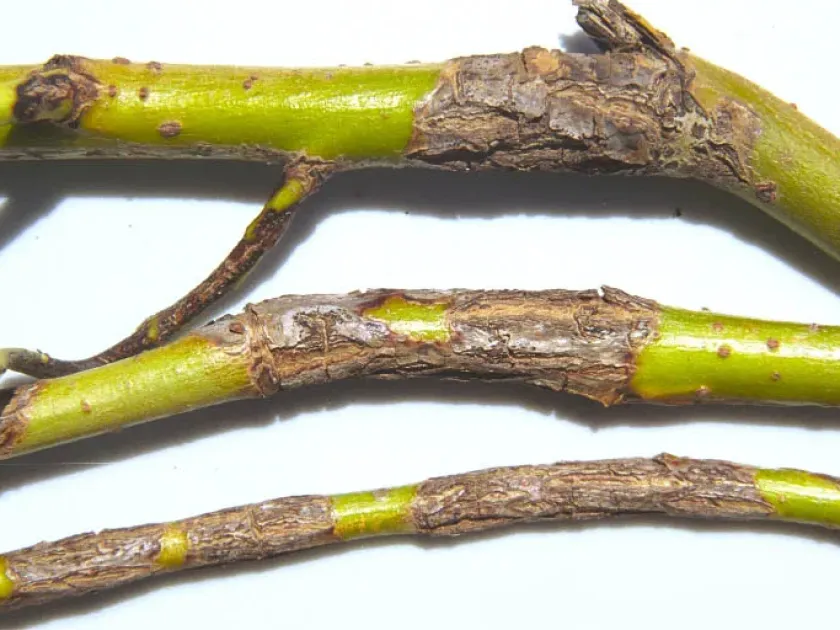
Infection of the shoots results in sunken necrotic lesions. These lesions often cause the young tips to curve or "shepherd's crook," eventually leading to shoot dieback.
Under humid conditions, the fungus spreads rapidly throughout the crown, giving the tree an appearance of being scorched by fire, often mimicking bacterial blight symptoms.
Severe infections can defoliate the entire tree by early summer, leaving the branches bare and significantly diminishing the tree's health and visual appeal.
Pathogen
The causal agent of this disease is the fungus Fusicladium romellianum (synonym Venturia saliciperda), belonging to the Ascomycota phylum. It primarily affects willow species during the active growing season.
The life cycle involves the production of conidia, which are disseminated by wind, rain, and insects. The pathogen overwinters as mycelium in infected fallen leaves and on dead, persistent twigs.
Primary infection occurs in the spring when spores are released from overwintered plant debris. This is a critical period when the young, tender foliage of the willow is most susceptible.
The fungus penetrates the plant tissues through stomata or mechanical wounds. Once inside, it develops in the intercellular spaces, absorbing nutrients and disrupting plant metabolism.
The pathogen is highly specialized and thrives on the rapid growth of succulent willow shoots, making trees particularly vulnerable during the early stages of spring development.
Conditions for development
Willow scab development is favored by cool, wet spring weather. High humidity is essential for the germination of spores and the successful colonization of new shoots.
The optimum temperature for Fusicladium romellianum is between 18°C and 22°C. Under these conditions, the fungus reproduces rapidly, leading to major outbreaks.
Dense plantings and poor air circulation within the canopy create a microclimate that traps moisture and facilitates the spread of the infection between branches.
Shaded locations where dew remains on the foliage for extended periods are particularly susceptible to severe outbreaks, as moisture is necessary for spore attachment and penetration.
Cultural practices that lead to excessive nitrogen fertilization can exacerbate the disease by encouraging the growth of lush, soft tissue that is easily invaded by the fungus.
Why it matters
Willow scab is a destructive disease for ornamental landscapes, as it destroys the foliage and can lead to the death of young branches, permanently disfiguring the tree's form.
Chronic infection weakens the tree, as the premature loss of leaves interferes with photosynthesis, depleting the energy reserves needed for winter survival.
Weakened trees become significantly more susceptible to secondary stressors, including secondary fungal invaders, wood-boring insects, and abiotic winter damage.
In nurseries, this disease can cause total loss of stock, as young willows are unable to withstand repeated cycles of defoliation and tip dieback.
The economic impact involves the loss of ornamental value in parks, the cost of chemical control measures, and the potential need to replace infected, non-viable trees.
Protection
The first line of defense is rigorous sanitation: prune and destroy infected branches and rake up and burn or compost fallen leaves to remove the source of inoculum.
Ensure proper plant spacing and selective thinning of the canopy to promote airflow and light penetration, which helps foliage dry quickly after rain.
Chemical control involves the application of copper-based fungicides or systemic products, particularly during the early bud-break phase when new growth is most vulnerable.
Regular monitoring of trees in early spring is crucial; timely applications of fungicides can prevent the initial infection and stop the disease from becoming established.
Promote overall tree vigor through appropriate fertilization and adequate watering, which helps the tree better withstand the stress caused by fungal pathogens.
Discussion
No discussions yet — be the first.